
Detect fraud in your documents
Koncile combines forensic AI-powered consistency analysis, image analysis, metadata intelligence to detect document fraud others miss.


Most fraud detection tools only look at pixels. We analyze logic and context. We uncover inconsistencies.
How our fraud detection works
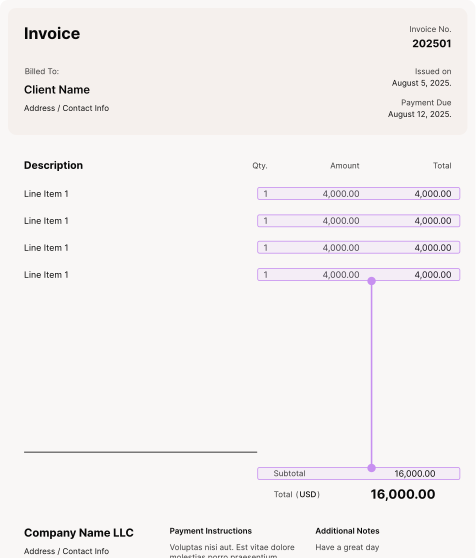
Contextual Consistency Check
- OCR extraction
- Business-rule intelligence
- Regulatory awareness
- Cross-field validation
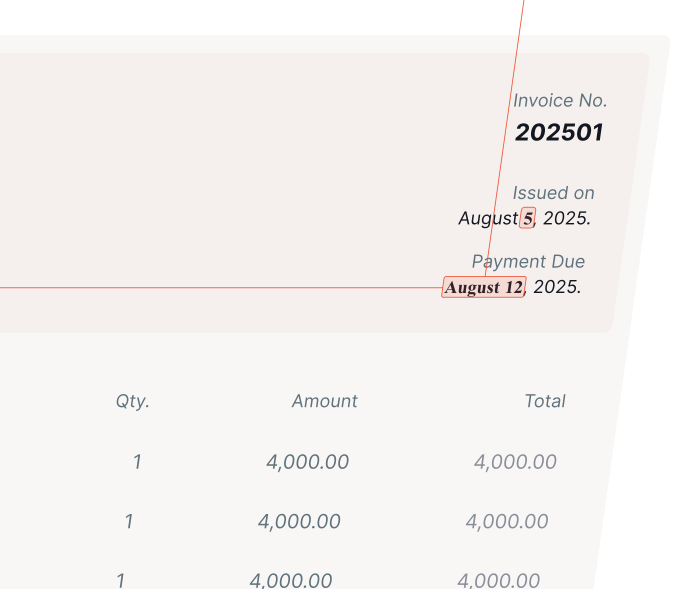
Forensic Detection Layer
- Layer analysis
- Compression artefacts
- Pixel anomalies
- Font inconsistencies
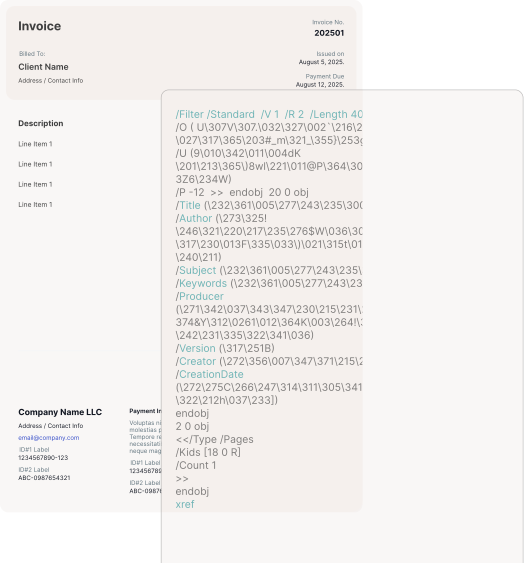
Metadata Analysis
- Creation software mismatch
- Edited timestamps
- Embedded object inconsistencies
- PDF producer anomalies
Fraud detection models, tailored to every document
Every document has its own fraud patterns. We build specialized models to detect them.
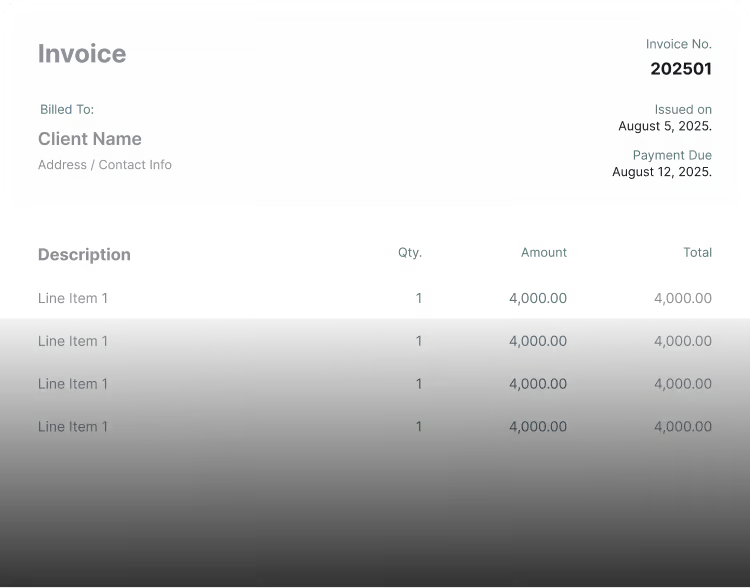
Invoice fraud

Paystub

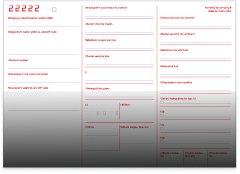
W-2 fraud

1099 fraud

Utility bill fraud
For risk, compliance and operations teams
One platform to extract, control, and secure every document in your pipeline.
KYC
Procurement
Lending
Insurance
Fintech & payment
Marketplaces
An AI OCR tool built for regulated environments
Founded by a former lawyer, Koncile was designed with compliance and data protection at its core. We are independently audited under SOC 2 and compliant with GDPR and HIPAA requirements.





Talk to an expert who knows your industry.
- Get an external expert opinion on your specific use case
- Benchmarks and results from hundreds of clients in your industry
- Help activating the right Koncile features for your workflow
Real life insights on document automation
Document processing and fraud detection: build or buy?
Extracting and structuring document data, enriching it, detecting fraud: with AI, building your own end-to-end solution has never looked so simple. Buying off the shelf still often turns out to be the better option. Here are the thirty-nine difficulties to expect before you start.
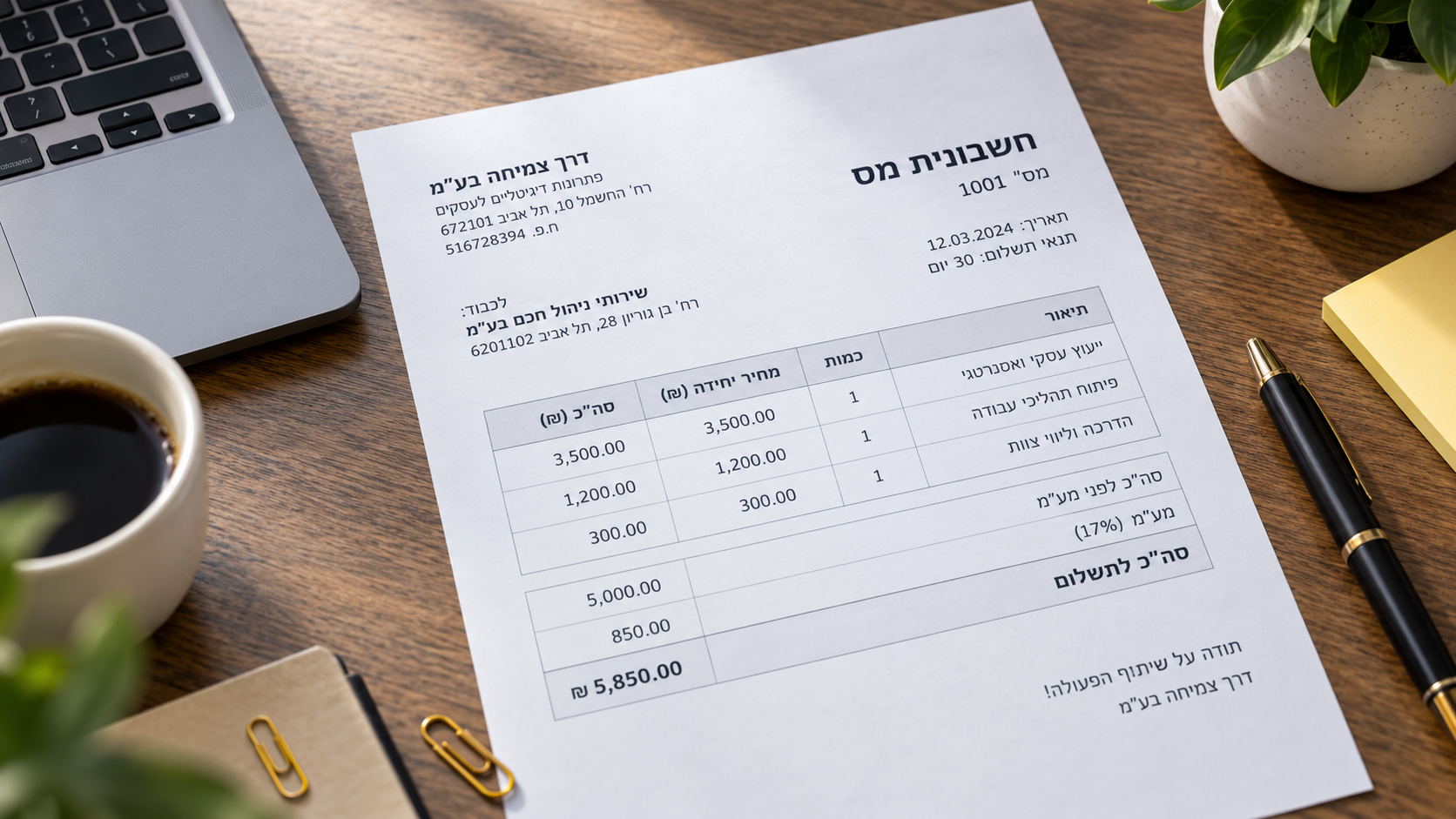
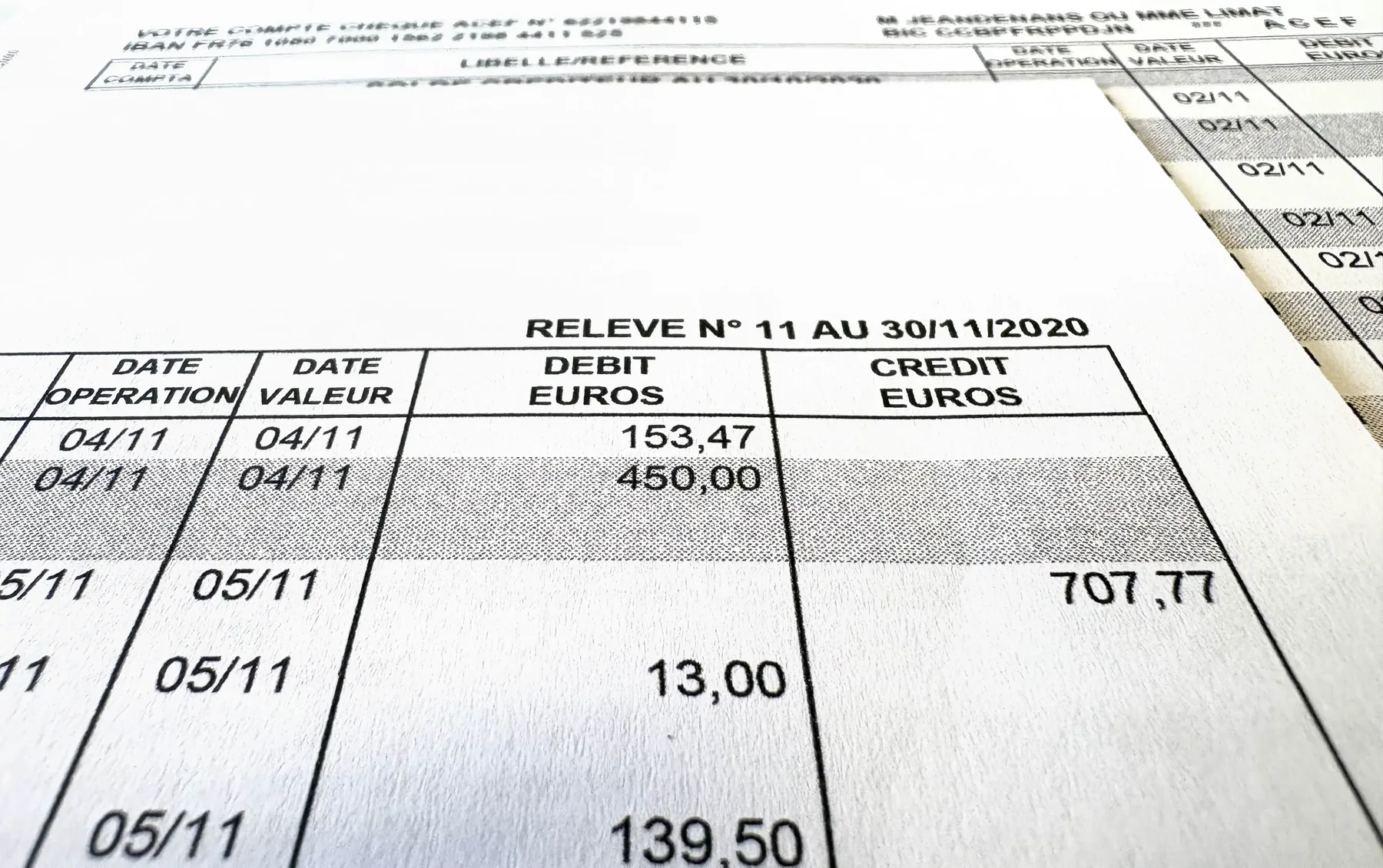
How to Detect a Fake Bank Statement: Our 9 Methods
Bank statements are one of the documents most exposed to fraud. At Koncile, we detect up to 1.4% of edited or tampered statements in a set of 150,000 statements. AI generated deepfakes get a lot of attention, but focusing only on them today would be a mistake.
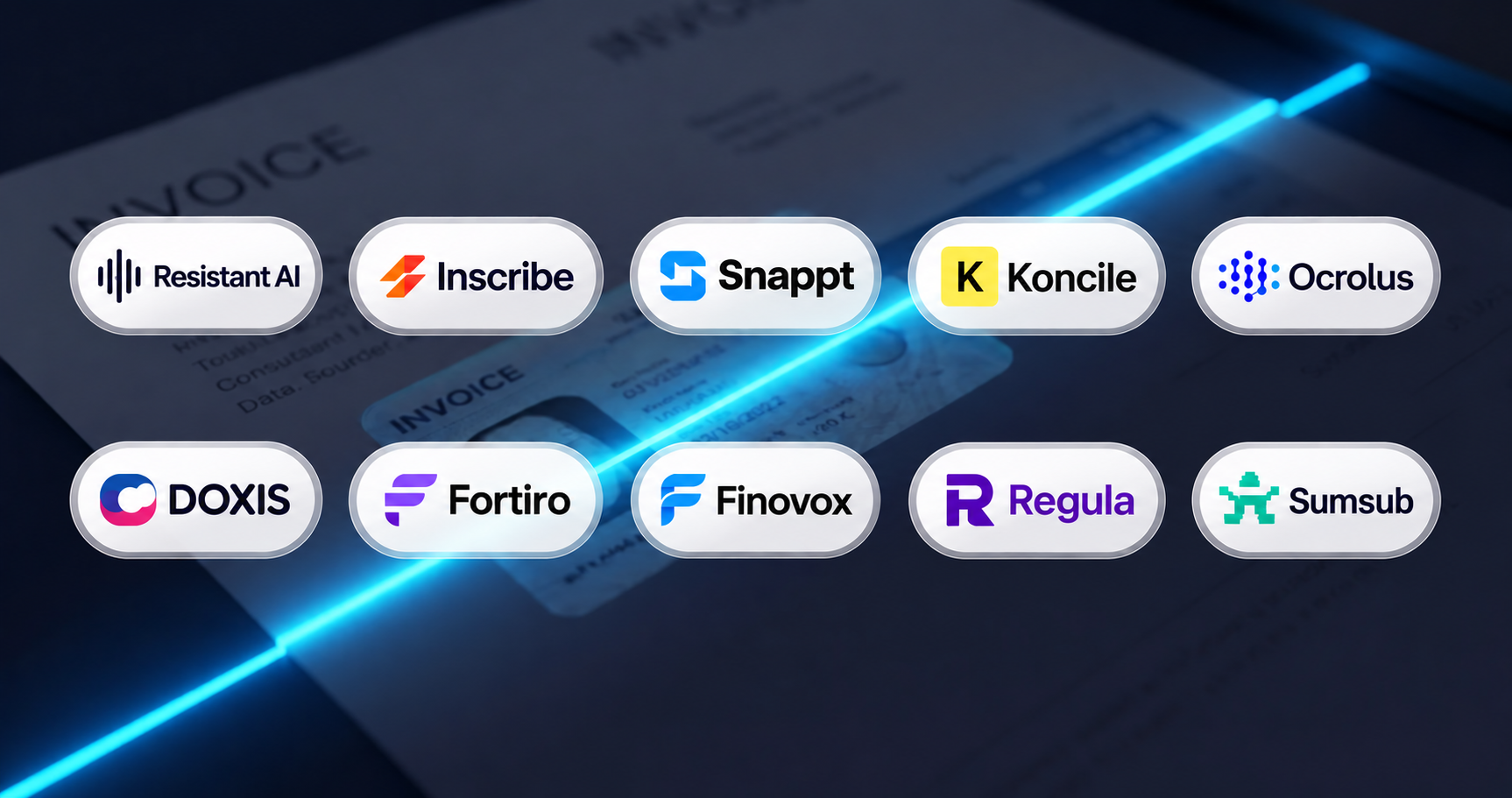
Top 10 Document Fraud Detection Software in 2026
Every accuracy figure in this market is self-reported and none has ever been independently verified. Meanwhile forgery services sell documents built specifically to defeat named detection vendors, openly, on the indexed web. Here is our comparison of the 10 best document fraud detection software platforms and the five weaknesses that separate them.

Developers launch MacDoc, an illegal fake passport generator
In February 2026, US authorities shut down OnlyFake, a widely used fake document generator. Weeks later, an identical service reopened under the name MacDoc. Its forgeries are getting past the KYC checks of major institutions including PayPal, Airbnb and Coinbase.
Your questions about fraud detection
Document fraud detection refers to the automated identification of falsified, altered, or forged documents, invoices, payslips, bank statements, contracts, or ID documents, submitted to an organisation. As document volumes grow, manual review becomes impractical, making automated fraud detection an essential layer of financial and operational control.
A document fraud detection tool analyses incoming documents to flag signs of tampering or inconsistency. Unlike manual checks, it processes high volumes in real time, combining business rules, reference data, and analytical models to surface suspicious documents before they generate financial exposure.
Most fraud detection tools rely on pattern matching alone. Koncile takes a contextual approach: for each document type, the platform develops specific models alongside domain experts (accountants, legal specialists, operations teams), who encode the rules and logic relevant to each context, enabling coherence checks the way a human expert would. Rather than simply flagging PDF alterations or abnormal patterns, it evaluates whether a document's data is reliable as a whole, cross-referencing figures against each other and against sector-specific rules.
The most targeted documents are supplier invoices, payslips, bank statements, contracts, and administrative certificates. Document fraud affects every sector, but is particularly prevalent in finance, HR, and procurement, anywhere high-value decisions rely on document-based evidence.
The payslip is one of the most commonly forged documents, particularly in credit or rental applications. Koncile relies on two levels of control: first, file metadata analysis, where alterations often leave highly visible traces; second, consistency checks on amounts, contributions, gross and net pay, which require precise knowledge of French payroll rules. That's why Koncile was built with domain experts, to make these regulatory checks reliable and immediately operational.
Two integration modes are available. Via the platform, documents are uploaded directly and Koncile returns a reliability score for each one, with automatic alerts triggered on high-risk files. Via API, documents are sent to Koncile's endpoint and the score and alerts are returned in real time, for seamless integration into your existing workflows.
Effective detection relies on two complementary levels: file metadata analysis, which reveals traces of modification, and semantic verification of the document's content, which catches internal inconsistencies even when the document appears intact on the surface. It is also essential to define rules specific to each document type. On a payslip, for instance, the relationships between gross pay, net pay, and contributions follow precise rules that the tool must understand. That is why Koncile builds its models with domain experts, ensuring controls that are reliable and operational from day one. Finally, detection must cover the entire incoming document flow, not just the documents that appear suspicious at first glance.
Implementation starts with choosing the integration mode: direct access via the platform, or an API connection to plug Koncile into the organization's existing systems (ERP, HRIS, credit portal…). This integration is compatible with automation tools such as Zapier, n8n, or Power Automate. The next step is configuring the control rules specific to each document type, which is done in plain language, with no custom development required. At Koncile, this configuration is carried out with the relevant domain experts : finance, HR, and compliance. To ensure the models are reliable and fully operational from the very first day.