.png)
Document fraud detection in insurance: how ADN.Solutions and CMAM secure motor underwriting
Motor insurance's most-forged document now goes through a single check: extraction and authenticity, in one API call. ADN.Solutions has deployed it white-label across its insurers, including CMAM, and now detects 87% of falsified statements, with under 2% false positives.
ADN.Solutions equips French insurers, mutual insurers and wholesale brokers with its platform for creating, distributing and managing insurance products. Several million supporting documents pass through it every year. Since 2026, the software vendor has integrated Koncile white-label to extract the data from these documents and verify their authenticity in a single call, starting with the most critical document of all: the motor insurance claims history statement. CMAM, a mutual insurer based in the Meuse, is one of the first insurers to benefit from it.
We already had a fraud and OCR pipeline that worked, but it worked in the old world: no agility to add a new document type. With Koncile, we script a new document with our insurers within days. Across several million documents a year, extraction and fraud detection deliver on the promises we make to our customers. Michel Brancaléoni, Chairman and Co-founder, ADN.Solutions
ADN.Solutions, the software vendor that equips insurers end to end
ADN.Solutions is a French core-system software vendor for insurance, based in the Paris region. Its platform covers four building blocks: creating insurance products, distributing them, managing contracts, and managing claims. Its customers are insurance companies, mutual insurers and wholesale brokers equipped end to end, who run their entire business on the tool.
The company has doubled its revenue and now tops ten million euros, on a trajectory heading toward fifteen to twenty million. That growth shows up directly in document volume. A motor policy involves eight to ten supporting documents: the claims history statement, the registration certificate, the driving licence, proof of identity, bank details, and photos of the vehicle. Across the several hundred thousand new policies processed on the platform each year, that adds up to several million documents, on top of the claims documents.
Every document received carries liability for both the insurer and the wholesale broker, both of whom are subject to compliance obligations and can be audited. ADN therefore had to solve two problems at once: read these documents much faster, and guarantee their authenticity before the data they carry becomes a pricing decision.
Why the claims history statement is motor insurance's most-forged document
In motor underwriting, price is built on a declaration. The customer states their age, how long they've held their licence, their no-claims bonus/malus coefficient, their claims history, and a rate follows from that. Supporting documents have exactly one function: confirming that the declaration matches reality. If they don't, the contract is mispriced for its entire term.
Among these documents, one alone concentrates most of the risk. The registration certificate and the driving licence are rarely falsified, because the payoff is small. The claims history statement, on the other hand, carries the three pieces of information that determine the premium: the bonus/malus coefficient, the claims history, and the reason the previous contract was cancelled.
When a claims history statement is falsified in France, people remove claims they've had, erase a cancellation by the insurer, or touch up the coefficient. Those are exactly the three things that drive the premium up. And the result is clean: same font, same layout, same logo, same table structure. For years, our claims handlers approved falsified documents with no reason whatsoever to doubt them.Laetitia Barbera, Business Consultant, ADN.Solutions
Spotting these alterations is a much harder problem than it looks. On crude forgeries, an attentive claims handler eventually notices. In most cases, no one notices at all: the fraudster works on a native PDF, swaps one digit for another in the same font, re-saves the file, and the alteration becomes strictly invisible to the eye. All that's left of it lives in the PDF's internal structure, in the technical signature of the editing tool, in micro-breaks in rendering around the modified field, or in the business implausibility of the displayed figure. Detecting this requires highly specialized technology that combines forensic file analysis, computer vision trained on document alterations, and language models capable of reasoning about the insurance logic of a statement. No human review, however expert and however unhurried, reproduces this level of reading, and no general-purpose OCR comes close.
A single process for extraction and fraud control
ADN's need was twofold from the start. A claims history statement has to be read, field by field, to feed the pricing engine. And it has to be authenticated, because the data it holds only has value if the document is genuine. For a long time, these two needs were served by two separate markets, two vendors, two integrations, two invoices, and two results that then had to be stitched back together by hand in the management system.
What interested us was having both in one place, at the same level of quality. A document comes in, and it comes back out classified, extracted, checked, with a fraud score and supporting justifications in the same data flow as the fields. We wire a business rule straight onto that in our underwriting engine. Before, it took two pipelines and someone to bridge them. Samir Berbache, Chief Information Officer, ADN.Solutions
That's what the platform does. A document sent by ADN is identified for what it is, run through the battery of authenticity checks described below, and extracted across the model's forty-four fields. All of it comes back within a few tens of seconds via a single API call, in a structured response where the fraud verdict sits right next to the bonus/malus coefficient and the cancellation date. No synchronization to write, no separate report to reconcile, no business rule to duplicate across two systems.
Multi-layer document fraud detection applied to the claims history statement
No single test declares a document fake. That's the principle behind the insurance document fraud detection tool deployed at ADN: stack up independent checks until a pattern of evidence emerges. Three categories combine.

The first is forensic. About ten tests examine the file itself rather than its content: the software that created it and the one that last modified it, the consistency of the PDF's internal dates, the structure of the cross-reference table, the number of end-of-file markers, the number of font families present on a page. A genuine statement issued by an insurer carries the technical signature of its production pipeline. A statement run back through a consumer-grade editor carries its own, and it looks nothing like what an insurer produces.
The second is visual. It tracks alignment breaks, recomposed areas, overlaps, and local alterations around an amount or a date. This is the layer that catches scanned or photographed documents, where metadata no longer exists.
The third is business logic, and it's the one that adds the most value because it draws on industry knowledge. A bonus/malus coefficient of 0.50 is impossible with a licence held for less than thirteen years. A timeline that places a driver's designation date before their date of birth is inconsistent. A statement issued after 24 July 2025 must include the disclosures made mandatory by EU regulation 2024/1855, and their absence is itself a signal. A vehicle identification number must comply with ISO 3779, and its manufacturer code must match the declared make.
Every anomaly detected feeds into a score from zero to a hundred, weighted by its severity. Above eighty, the document is classified as high risk and flagged to the claims handler; below that, the level is low or medium, which lets each insurer set its own tolerance: auto-validate low-risk cases when the team is at capacity, require a human eye starting at medium risk. Under normal conditions, fewer than one document in a hundred comes back high risk, which makes full coverage compatible with real-world staffing.
PDF archaeology: recovering the document before it was altered
The newest building block goes further than flagging. When a PDF has been altered, the metadata of the modified object often survives in the file, even if the display no longer shows it. Koncile reads all of that metadata, identifies what carries the trace of a modification, strips it out, and rebuilds the PDF as it was before the change. By overlaying the reconstructed document on the one received, the falsification becomes plainly visible.
On real cases from ADN's account, the method recovered a bonus/malus coefficient that the policyholder had brought down from 0.90 to 0.68, and a cancellation date shifted by three months. The fraudster hadn't managed to erase the marks of their own work. The technique only applies to a fraction of files, on the order of one in a hundred and fifty, but when it does apply, it delivers evidence that holds up, rather than a mere suspicion.
A second mechanism reduces noise in the other direction. The platform builds, issuer by issuer, a library of legitimate technical signatures: from around thirty genuine statements from the same insurer, it learns what a normal file looks like for that insurer. An unfamiliar PDF editor then stops being suspect by default, which eliminates a significant share of false positives — honest documents wrongly flagged. It's this calibration work that makes the difference between a system that over-alerts and one that claims handlers actually listen to.
Reading a claims history statement that no one has standardized
Extraction poses its own challenge, because the claims history statement isn't standardized. Every insurer, every wholesale broker, every underwriting agency produces its own. Claims history sometimes appears in a table, sometimes in a list. Secondary drivers are presented in a varying order. The same field changes name from one issuer to the next.
The model built with ADN's teams covers forty-four fields across eight blocks: the statement's issuer, the policyholder, the primary driver, secondary drivers, the vehicle, the contract, the bonus/malus, and the signature. It was restructured in summer 2026 to incorporate the fields made mandatory by EU regulation, which serves two goals at once: more complete extraction, and a compliance check that becomes automatic. These rules were written in plain language by ADN's business teams, with no development, starting from the platform's library of extraction models, then duplicated and adapted insurer by insurer.
This flexibility was the entry condition for the project. ADN already had a working fraud and OCR pipeline with a traditional vendor. What it lacked was the ability to evolve the rules at the pace of its insurers. A new document type, a new regulatory disclosure, a new issuer with an unusual format: what used to take a development cycle is now handled within the day.
CMAM, a mutual insurer that runs checks for its members

The Caisse Meusienne d'Assurances Mutuelles (CMAM) is one of the insurers equipped by ADN.Solutions. A variable-premium mutual insurance company governed by the French Insurance Code and supervised by the ACPR, based in Bar-le-Duc, it distributes notably through brokers. It receives between seven and nine thousand supporting documents a month — ten to twelve thousand pages — a significant share of which are claims history statements and registration certificates tied to motor underwriting.
Its situation illustrates exactly what changes when a software vendor partners with a document-intelligence building block. CMAM had initially evaluated and then directly contracted with Koncile in early 2026, before finding that the solution would deliver its full value integrated into the business tool it uses day to day. The direct contract was terminated by mutual agreement and its scope folded into ADN's. The mutual insurer now benefits from the same extraction models and the same fraud checks as the network's other insurers, without having to maintain them itself, and with no integration project of its own to run.
We're a mutual insurer: every mispriced contract is paid for by all of our members together. A falsified statement that gets through makes honest policyholders bear the risk taken by the one who cheated. Going through the ADN platform gives us a level of document control we could never have built on our own, at a volume we could never have checked by hand. Louis Reignier, Head of Production, CMAM
A building block integrated white-label into the platform
The technical setup is deliberately invisible to the insurer. ADN administers a single overarching account, under which each partner has its own siloed workspace, its own models, and its own volume. Documents arrive through Koncile's OCR API, get classified, checked, and then extracted, and the structured data flows back to the ADN platform, which uses it in its underwriting and management workflows. The end customer never sees Koncile, never logs into it, and has nothing to configure. Fully processing a document takes a few tens of seconds, and a thousand documents sent at once are processed in parallel.
This choice also protects ADN's own value. The business control rules written by its teams, which distill years of industry knowledge, remain their property and don't benefit their competitors. And platform improvements, which ship every week, are included with no renegotiation: the new fraud detection layers delivered in summer 2026 reached ADN with no amendment and no added cost per document.
What automated control replaces
Before, checking a claims history statement by hand meant opening it, reading the claims history line by line, checking the coefficient's plausibility against how long the licence had been held, comparing the dates against one another, spotting a font that looked off, then re-entering the data into the management tool. Count six minutes per statement for an experienced claims handler, with a low detection rate on careful forgeries, and the reality that no one does it across the entire flow.
Today the document is classified, checked against about thirty points, and extracted within about thirty seconds. The claims handler only opens the flagged files — fewer than one percent at high risk. For a single insurer in the network processing six thousand contracts a month, the savings amount to the equivalent of four to five full-time people, and at the scale of the millions of documents passing through the ADN platform each year, several tens of thousands of hours.
The financial stakes go well beyond entry time. A falsified statement that gets through produces an underpriced contract for its entire lifetime, and the gap between a premium calculated on a coefficient of 0.50 and one calculated on the real coefficient of 0.90 runs into hundreds of euros per year, per contract. Across a portfolio of several tens of thousands of new policies, a few points of undetected fraud represent several hundred thousand euros in missing premiums, absorbed by the mutual pool. After calibrating the models on the network's real documents, the pipeline identifies around 87% of falsified statements submitted in testing, with under 2% of genuine documents wrongly flagged, for extraction accuracy above 99% on structured fields.
What's next: the national vehicle registry and claims fraud
Two initiatives extend the system. The first consists of cross-checking the registration certificate against the national vehicle registry. Based on the name, the registration number, and the certificate's formula number, the lookup returns the vehicle's administrative status, its roadworthiness test history with recorded mileages, and its logged claims. It can detect a vehicle declared stolen, a cancelled certificate, a declaration equivalent to a seizure, a rolled-back odometer, and above all a claim present in the registry but missing from the claims history statement supplied by the policyholder. In an initial test of three hundred and twelve documents, seventeen were flagged — around five percent — six of them at high risk. Rolling this out requires the prospect's consent, collected during the insurer's onboarding journey.
The second initiative addresses claims fraud, where the critical document becomes the repair invoice, and where the same principles apply: authenticate the document and extract its amounts in the same process, then check what it states against what the insurer already knows about the file.
Frequently asked questions about document fraud detection in insurance

Real life insights on document automation

Supplier invoice OCR: how Next&Go processes 30,000 rental invoices a year
Half a day freed up daily and two hires avoided, at a fifteen-person broker. The full case study.

PDF Bank Statements: How Meelo Automates Extraction With AI
How Meelo automates the analysis of PDF bank statements with Koncile's AI: reliable extraction, fraud detection, and solvency scoring in seconds.
Document fraud detection in insurance: how ADN.Solutions and CMAM secure motor underwriting
Motor insurance's most-forged document now goes through a single check: extraction and authenticity, in one API call. ADN.Solutions has deployed it white-label across its insurers, including CMAM, and now detects 87% of falsified statements, with under 2% false positives.

At Toyota Assurances, the underwriting file arrives captured and checked
Nine document types in a single PDF. Koncile identifies them, reads them, checks their validity and their consistency with one another, then sends the data and the alerts back via API into the systems of the insurer AND-E.
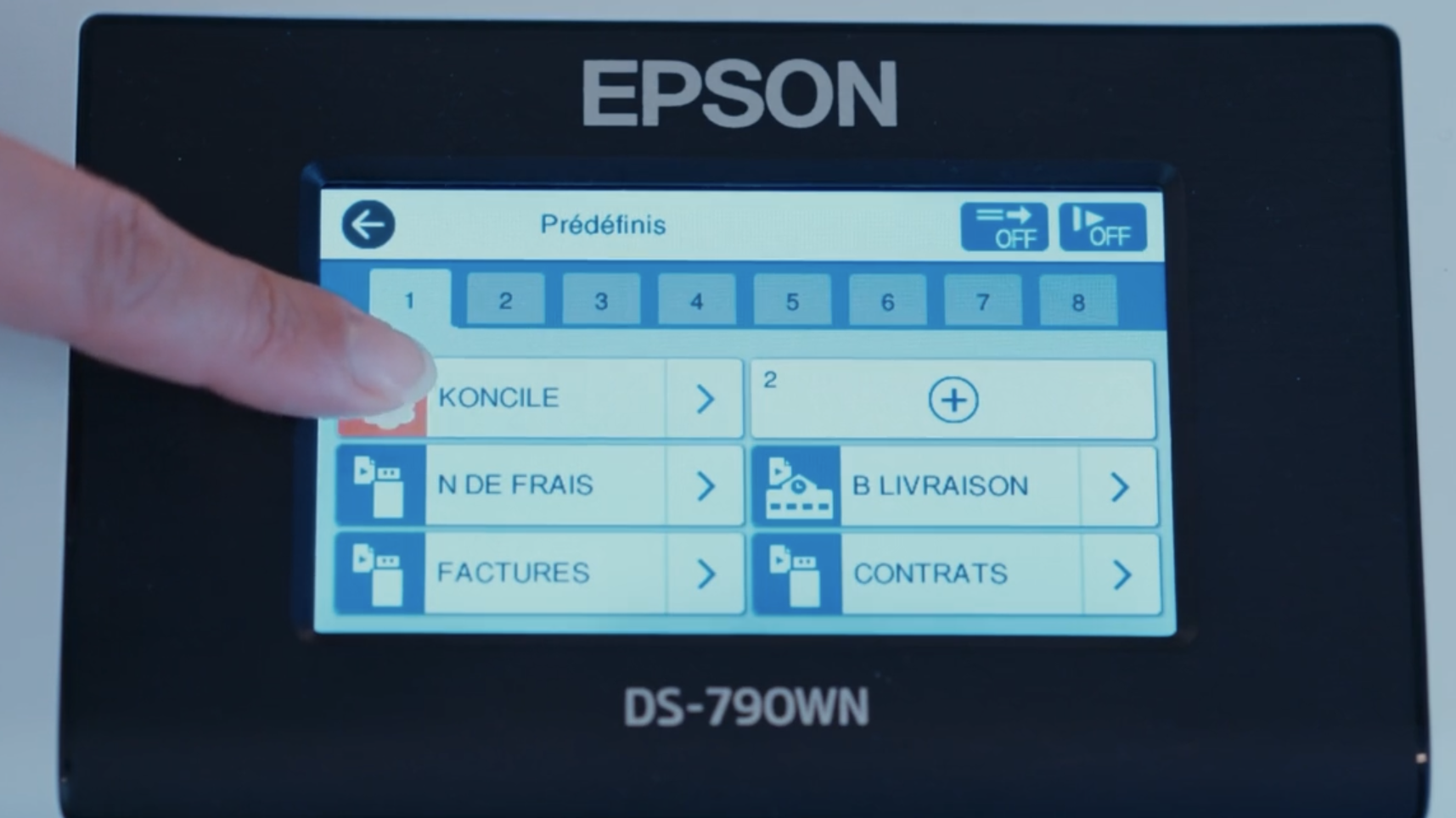
EPSON × Koncile: AI data extraction built into the scanner
How EPSON turned its scanners into true data-entry points with Koncile's AI. Operational in a few minutes, with zero manual re-entry.
.avif)
RewardPulse Automates Proof-of-Purchase Checks
RewardPulse designs loyalty and incentive programs for other companies. Reliably validating each proof of purchase at scale turned out to be far more complex than expected.
.avif)
Place des Énergies: Energy Bills Sorted by Client
Discover how Place des Énergies uses Koncile to automate the processing of 5,000 monthly energy bills. Line-by-line extraction and automated auditing eliminate billing errors while speeding up data analysis.

Nona Automates Supplier Invoice Processing with Koncile's OCR
Nona equips more than 650 collective kitchens to build menus that meet France's EGalim sustainability targets. With Koncile, manual invoice entry has become an automated flow, linked directly to its food database.
.avif)
Mark Young Construction Automates Subcontractor Insurance Certificate Checks
Mark Young Construction has to check every subcontractor's certificate of insurance before the job site opens. With Koncile, reading each certificate and flagging anomalies became immediate."

Grainz is transforming the processing of its invoices and delivery notes thanks to OCR
Extractions that speed up processes, reduce errors, and improve compliance.
Material certificate OCR: how Bilfinger LTM Industrie automated traceability without kitting out the shop floor
Instead of handing out tablets, they digitised what comes out of the workshop. Ten certificates handled in two minutes.

360 Smarter Administration centralizes and structures the processing of its payroll documents
From PDFs to actionable data: Koncile OCR automates payroll processing at 360 Smarter Administration, reducing manual effort and improving data reliability.