.avif)
Document deepfakes: catch the fakes slipping past your checks (2026)
Document deepfakes pass classic checks: how to detect AI-generated fake documents in 2026 with semantic coherence analysis.

In 2026, document fraud has a new face: the document deepfake, a fake generated entirely by AI. According to Shufti's Identity Fraud Index 2026, it's the fastest-growing fraud category, with an annualized increase estimated at nearly 3,900%. What sets these fakes apart: they're clean on the surface. Here's how to detect the ones still slipping past your checks.
In short
In 2026, document deepfakes (AI-generated fakes) are surging and slipping past classic checks: a re-scanned or fully regenerated fake carries clean metadata. The key to catching them is no longer the file but the internal coherence of the content: amounts, dates and identities that don't add up. This layer recovers 20 to 30% more fraud. Reliable detection combines three layers (visual analysis, metadata, semantic coherence), which Koncile brings together in a single platform, with 99.8% extraction reliability and hosting in France.
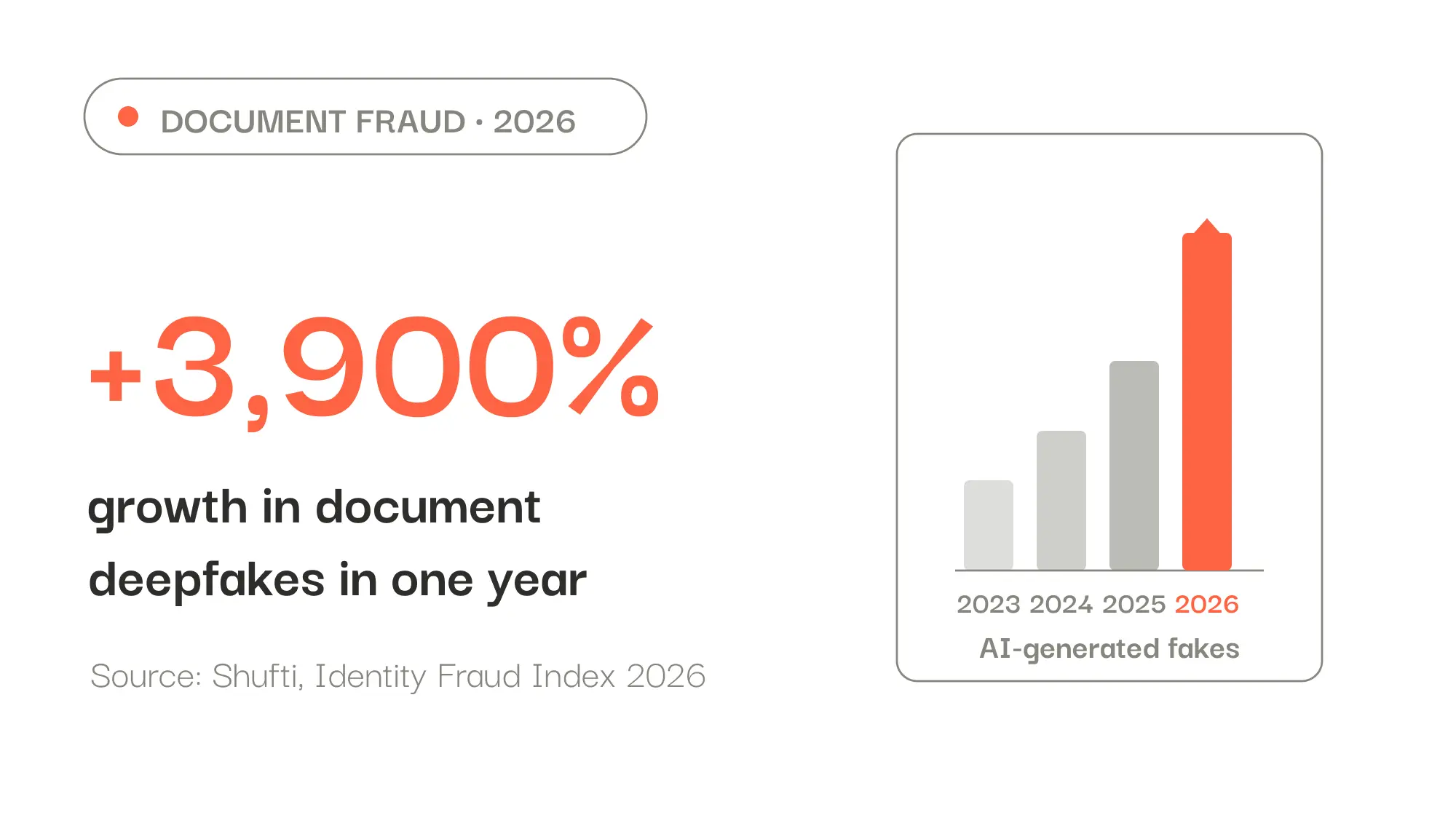
For years, catching a fake document was a forensics problem: spotting cloned pixels, splicing artifacts, altered metadata. In 2026, that model is breaking down with the rise of document deepfakes, fakes generated entirely by AI. According to Shufti's Identity Fraud Index 2026, this is the fastest-growing fraud category, with an annualized increase estimated at nearly 3,900%. ISACA reports the case of an auditor who discovers a document produced by AI, complete with a synthetic signature and perfectly consistent metadata. The takeaway: you can no longer assume the quality of evidence from the file itself.
The problem for your teams is concrete. The controls that long sufficed examine how the file was made: its metadata, its pixel-level edits. But a document deepfake, or a fake printed then re-scanned, leaves nothing to analyze on that side. Here's what actually works to detect them, and how to choose a document fraud detection solution that catches them.
Why a document deepfake slips past your checks
Classic detection looks at how the file was built: the PDF editor, the modification history, font consistency, the traces left by Photoshop, Canva, iLovePDF or a word processor. These detection methods still help when a fraudster tampers with an existing document. The problem is that it has become easy to leave no trace at all.
Three ways to erase every trace
- Print, then re-scan. The falsified document becomes a plain scan again. No history, no usable metadata: just an image.
- Regenerate the document with AI. The metadata is clean from the start, and the signature can be synthetic. Nothing to detect at the file level, as in the case reported by ISACA.
- Use consumer tools. PDF generators, or malicious models like FraudGPT and WormGPT, produce a convincing fake from a single prompt.
In all three cases, the envelope is clean. What's left is to read what's inside. For the file-level clues, see our article on the hidden signals in metadata. On bank documents, our nine methods to detect a fake bank statement go through those checks in detail.
The real signal: the document's internal coherence
A falsified document almost always leaves logical inconsistencies its author couldn't fully fix. Faking a payslip convincingly means recomputing every figure to the cent, redoing the totals and adjusting the contributions. That's rarely carried all the way through. Semantic coherence analysis starts there: it checks that the document's information holds together, and that it holds with the other documents in the file.
In our field experience, this coherence layer recovers 20 to 30% of the fraud that visual analysis, metadata and pixels, lets through. The stakes aren't marginal: a mutual insurer told us that fraud accounts for 1 to 2% of its revenue, several million euros a year.
The signals that give a fake away, by document type
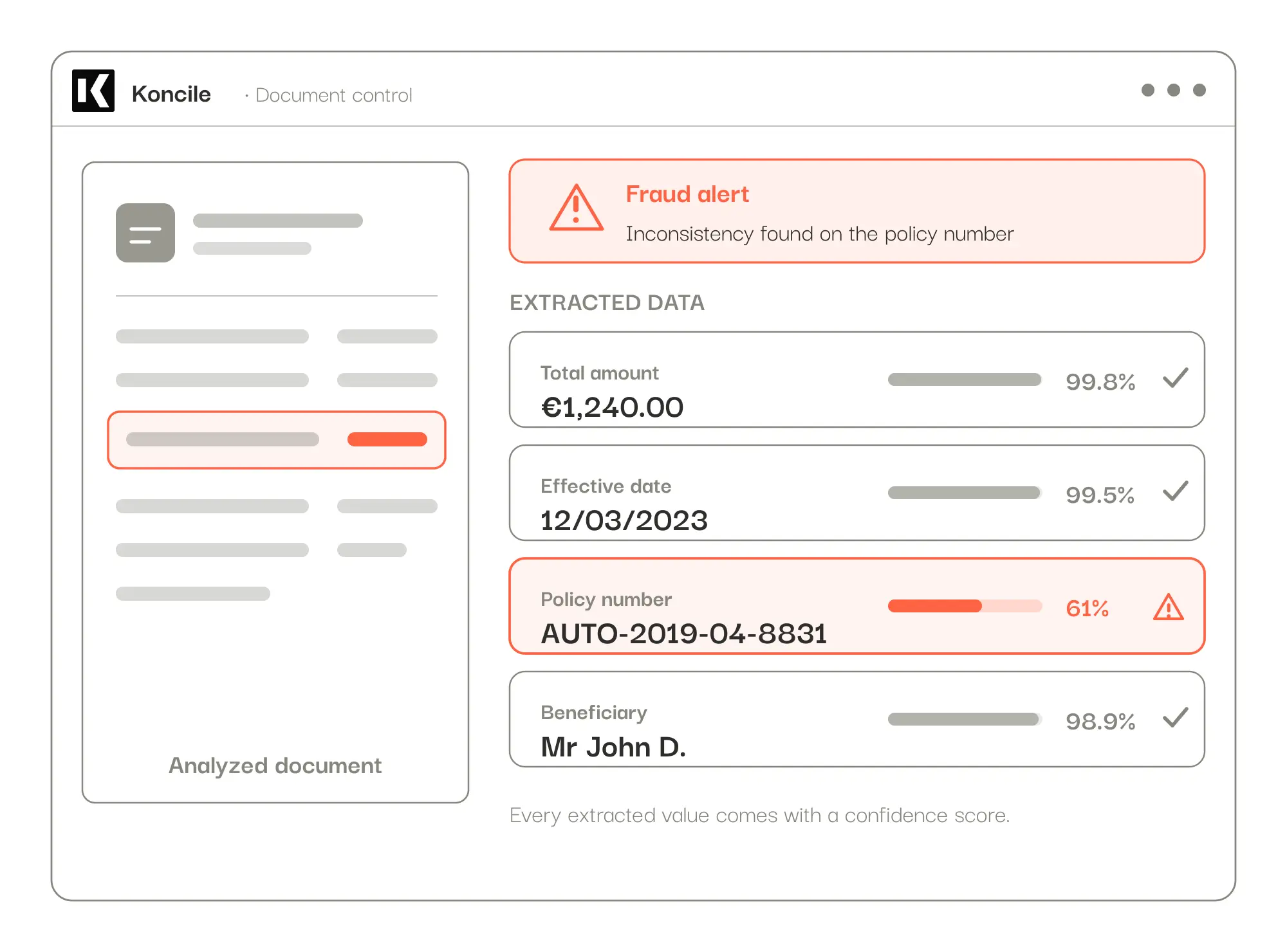
Insurance no-claims certificate. At an insurance player we work with, fake certificates give themselves away through precise inconsistencies: a no-claims bonus that doesn't match the history, a policy number encoding a date different from the stated effective date, an email that doesn't match the policyholder's name and postcode, or a driver different from the policyholder. Some fakes are even regenerated from scratch by the fraudster: no edit to spot, only cross-checks that don't add up.

Payslip. You recompute the totals. When the document has been tampered with, the figures never quite add up.
Bank statement. You compare the statement to a known template from the same bank and check the internal consistency of the transactions; bank statement extraction feeds these checks.
Invoice. You reconcile the line items, totals and vendor: that's often where invoice fraud shows up before payment.
Across several documents. Fraud isn't always in a single document. A health insurer described services billed wrongly: a policyholder hospitalized who, over the same period, submits physiotherapy sessions. The inconsistency reads across documents, not within one.
Why you need all three layers
Coherence doesn't replace metadata: it complements it. Relying on a single layer produces costly false positives. A real example: a perfectly authentic document had been produced with a software library also used to make fakes. Banning it on that criterion alone meant blocking legitimate files. It's the content analysis that settles these ambiguous cases.
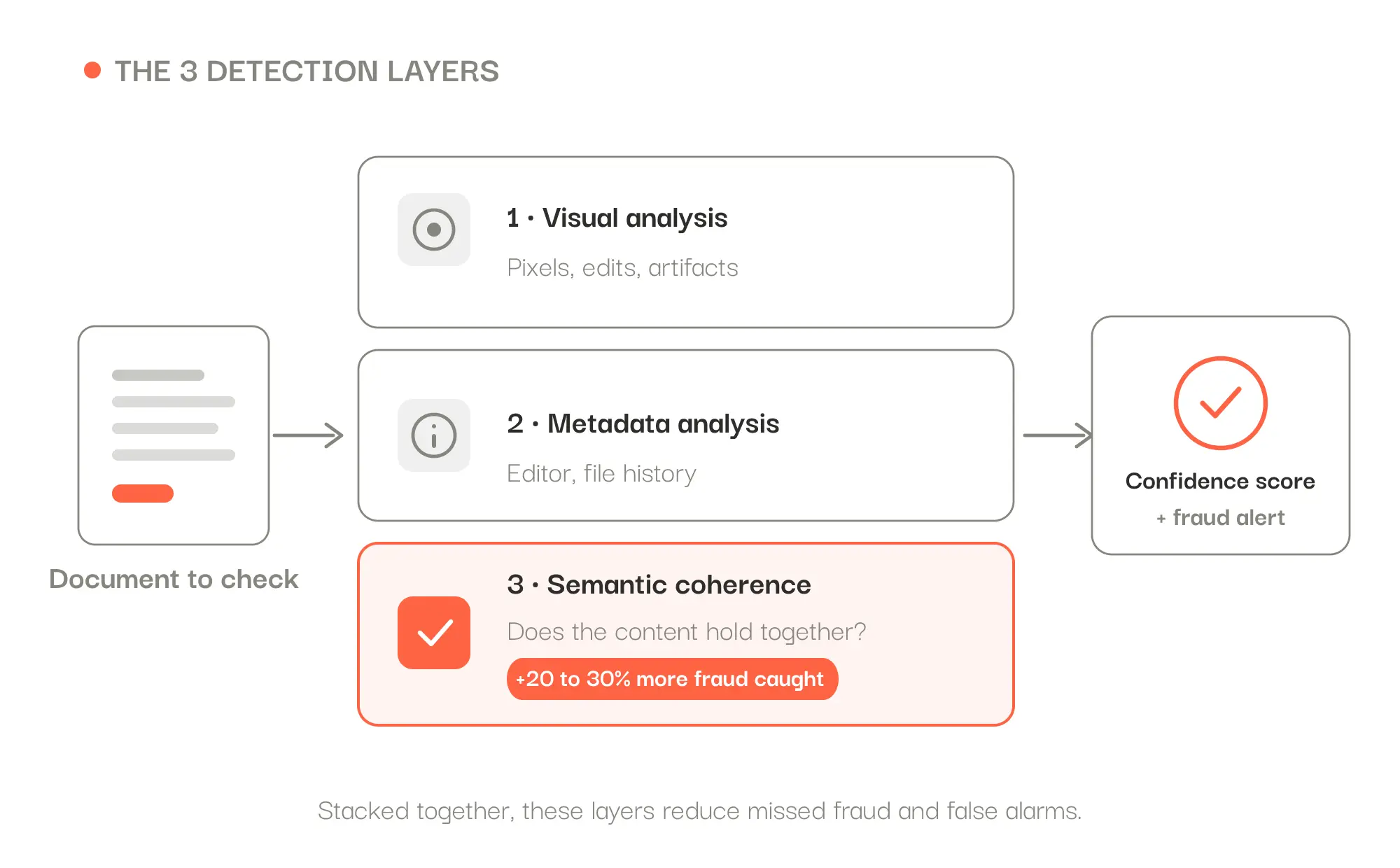
The right approach therefore stacks three layers: visual analysis (pixels, edits), metadata analysis (editor, history) and semantic coherence analysis of the content. Together, they reduce both missed fraud and false alarms.
What it changes for your compliance and anti-fraud teams
For a compliance, anti-fraud or KYC onboarding team, two things matter.
First, freeing up time. By attaching a confidence score to every extracted value, you only review what needs reviewing. At our clients, that means roughly 90% less review time, with people focused on the risky cases.
Second, choosing the right tool. In 2026, a simple metadata score is no longer enough. Three questions to ask before signing:
- Does the tool analyze the coherence of the content, not just how the file was made?
- Are the rules customizable per use case, to fit your document types and your checks?
- Does every result come with a confidence score and an audit trail?
Regulation points the same way. Article 50 of the EU AI Act, in force from August 2026, requires marking AI-generated content. Traceability of the decision becomes a compliance matter, not just an efficiency one.
How Koncile catches the deepfakes others miss
Koncile brings the three layers together in a single platform: computer vision for visual analysis, metadata analysis and semantic coherence analysis of the content. Where many approaches stop at metadata, we also read what the document says and check that everything holds together. It's the core of our document fraud detection approach.
In practice, our AI OCR structures the data and you set up your checks in natural language, no code, so they fit your documents and your business rules. Every extracted value comes with a confidence score. On extracted data, our internal benchmark, re-run at each update, measures 99.8% reliability. That figure covers data extraction, separate from fraud detection, which we keep enriching. Processing runs from a few seconds to about thirty seconds per document, fully parallelized.
Upstream, Koncile separates multi-page bundles with document splitting, so the pieces of a single file don't get mixed up.
On security, Koncile is SOC 2 Type II and ISO 27001 certified, GDPR compliant, with hosting in France. Results plug into your systems through our OCR API.
Want to see how Koncile analyzes the coherence of your documents and catches the fakes still slipping past your checks? Book a demo.
FAQ
Does Koncile detect AI-generated fakes, not just via metadata?
Yes. Beyond metadata and pixel analysis, Koncile checks the internal coherence of the content: amounts, dates, identities and cross-checks between the documents in a file. That's what catches fakes regenerated by AI or printed then re-scanned, whose metadata is clean.
How do you limit false positives?
By combining several analysis layers rather than a single signal, and attaching a confidence score to every result. Checks are tuned per use case to fit your documents, so legitimate files aren't blocked.
Which document types can you check?
The most falsified ones: payslips, tax notices, bank statements, invoices and insurance no-claims certificates. The rules adapt to other documents depending on your business.
Is our data secure and hosted in France?
Yes. Koncile is hosted in France, GDPR compliant and certified SOC 2 Type II and ISO 27001. Your documents are not used to train the models.
Can detection rules be customized to our documents?
Yes. You describe your checks in natural language, no code, and Koncile applies them to your document types and business rules, with an audit trail on every decision.
Sources
- Shufti, Identity Fraud Index 2026
- ISACA, “The Audit Evidence Crisis: How AI Deepfakes Are Rewriting Assurance Standards” (2026)
- ASIS / Security Management, “Deepfake Identity Fraud Poised to Increase Nearly 500 Percent in 2026” (June 2026)
- Forbes, “AI Scams Are Rising in 2026”
- European Commission, AI Act (Article 50), in force August 2026

Real life insights on document automation
Why Do OCR & Machine Translation Fail Without AI?
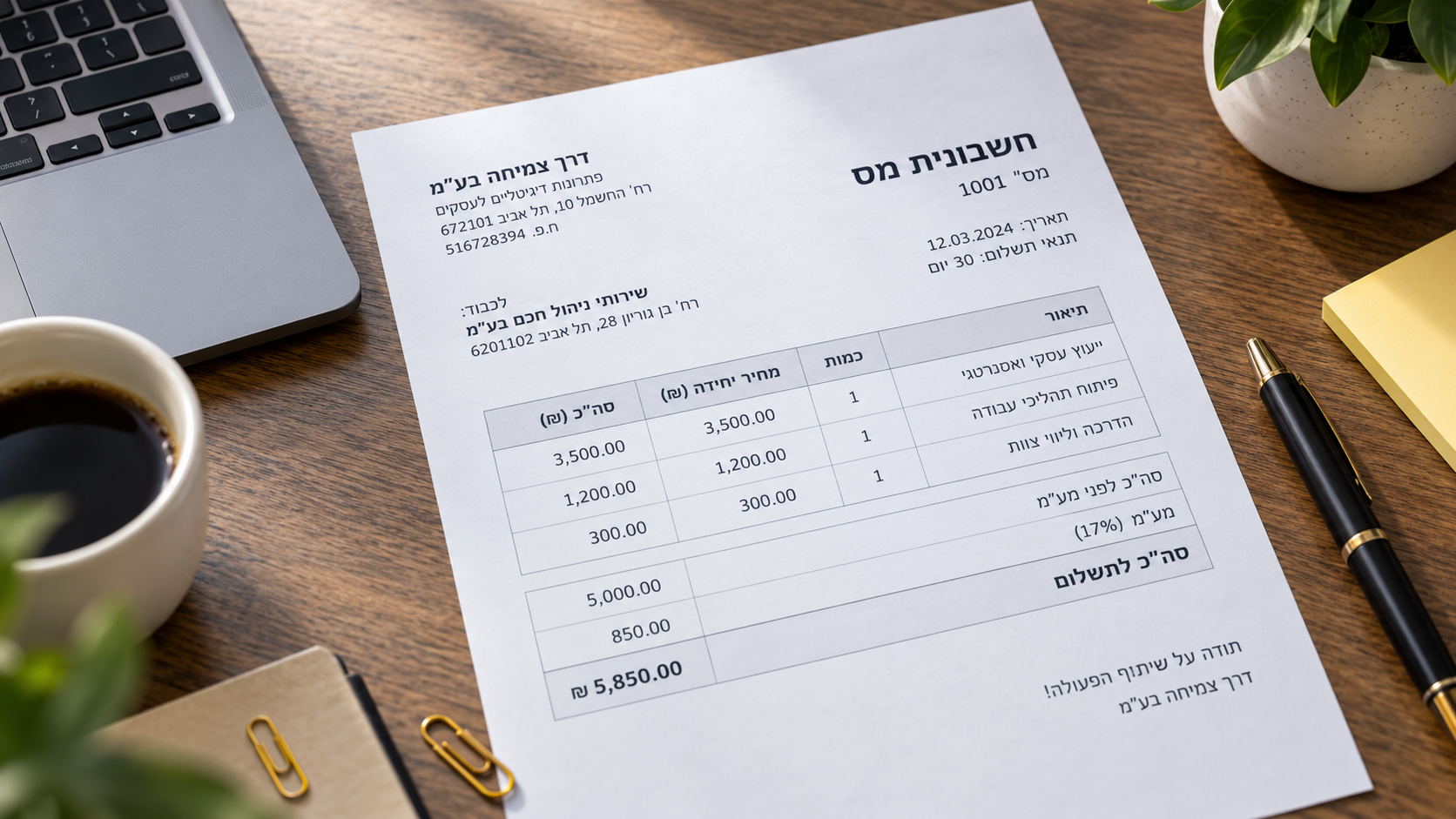
Japanese combines three writing systems on one page and should be a hard case for OCR. Benchmark research found the opposite: Japanese accuracy exceeds Latin script. Arabic and Hebrew are where things genuinely go wrong, for specific, documented reasons. Here is what real research shows about why scripts fail differently, and what actually stops the errors before translation compounds them.
How to Detect a Fake Bank Statement: Our 9 Methods
Bank statements are one of the documents most exposed to fraud. At Koncile, we detect up to 1.4% of edited or tampered statements in a set of 150,000 statements. AI generated deepfakes get a lot of attention, but focusing only on them today would be a mistake.
10 Best Open Source OCR Tools in 2026
The open source OCR ranking inverted in the past eighteen months. A 0.9-billion-parameter model now reads documents more accurately than a 235-billion-parameter one. PaddleOCR-VL scores 96.34% on OmniDocBench v1.6; Qwen3-VL-235B scores 89.78%. Here are the 10 best open source OCR engines in 2026 and how to pick between them.
Top 10 Document Fraud Detection Software in 2026
Every accuracy figure in this market is self-reported and none has ever been independently verified. Meanwhile forgery services sell documents built specifically to defeat named detection vendors, openly, on the indexed web. Here is our comparison of the 10 best document fraud detection software platforms and the five weaknesses that separate them.