The 10 Best AP Automation Software Platforms for 2026
Ten accounts payable automation platforms compared across AI agents, fraud detection, ease of integration, and target profile, from enterprise incumbents to AI-native challengers.

From Tipalti to AppZen, the accounts payable automation market in 2026 has been reshaped by AI agents, autonomous invoice processing, and deepfake-resistant fraud detection. Here is our comparison of the 10 AP automation software platforms every finance team should know, and how to pick the right one.
AP automation is no longer just about replacing manual data entry. In 2026, the conversation has shifted to agentic AI, autonomous invoice processing, and deepfake-resistant fraud detection. From Forrester's latest analysis of agentic AI in AP to AppZen's April 2026 launch of an AI-agent-native AP Inbox, every major vendor is racing to rebuild accounts payable around autonomous workflows.
But a quieter truth lies behind the hype: an AP agent is only as good as the data it receives. Without precise, reliable extraction of invoice fields, line items, totals, and taxes, no automation, no matching, and no reconciliation can hold up. That is why this comparison evaluates the 10 best AP automation software platforms across five practical dimensions: best for, AI approach, standout feature, ease of integration, and where it fits best.
Koncile, the Extraction & Fraud-Detection Foundation for Reliable AP Automation

Koncile is an intelligent document processing platform that turns unstructured documents (invoices, purchase orders, bank statements, contracts) into structured, reconciled, audit-ready data. Where most AP suites start with workflow, Koncile starts with extraction accuracy and lets any workflow or AI agent plug into it. The platform is model-agnostic (Mistral, OpenAI, Claude), and fields are configured in plain English via natural-language prompts, with a confidence score on every extracted value.
Its standout is semantic Fraud detection system: Koncile recomputes tax rates, cross-checks totals and flags inconsistencies, catching deepfake invoices that metadata-only tools miss. Best for finance and procurement teams that want strong fraud detection and hands-on expert onboarding to configure extraction models and connect existing ERPs. Integration: open API, webhooks, email ingestion, MCP server, Zapier, n8n, with SOC 2 Type II, GDPR and HDS certification.
Tipalti, Global Payables for Mid-Market Finance Teams

Tipalti is one of the most recognized AP automation platforms for mid-market finance teams scaling globally. Its 2026 release leans heavily into AI with the Tipalti AI Assistant and a growing set of AP agents that handle capture, coding, approval, and payment end-to-end.
Its real moat remains global payments infrastructure: 190+ countries, 120+ currencies, and built-in tax compliance (W-8/W-9, VAT IDs, FATCA). Pricing starts at $99/month plus transaction-based fees, which can compound with volume. Best for mid-market businesses with international supplier bases and cross-border payment complexity. Integration is strong with NetSuite, Sage Intacct, QuickBooks, and Xero.
Stampli, the Collaborative AP Platform Powered by Billy the Bot
Stampli's differentiator is Billy the Bot, an AI copilot that Stampli describes as trained on 83 million hours of AP and P2P experience. Billy codes invoices line by line, routes approvals based on historical patterns, detects duplicates, and helps with 2- and 3-way PO matching.
The real difference is Stampli's invoice-centric communication hub: every question, comment, and approval lives on the invoice itself, replacing email back-and-forth. Best for mid-market AP teams where cross-departmental coordination, not payment infrastructure, is the bottleneck. Integration covers over 70 ERPs including SAP, Oracle, NetSuite, QuickBooks, and Microsoft Dynamics.
AppZen, the First Agent-Native AP Inbox

On April 21, 2026, AppZen launched its AP Inbox Service Center, positioned as the first truly agent-native AP inbox. Eight prebuilt AI agents handle the most manual vendor-email scenarios end-to-end: payment status requests, bank-change verification, duplicate invoice detection, vendor statement reconciliation, W-9 compliance, and PO policy enforcement.
Finance teams can deploy their first working agent in under 30 minutes through AppZen's AI Agent Studio, describing policies in plain business language. Every decision is fully auditable. Best for enterprises ready to move early on agentic AI. The trade-off: the agentic suite is recent and real-world track record is still building.
BILL (formerly Bill.com), the US SMB Leader

BILL is the dominant AP automation platform for US small and mid-sized businesses. Its AI has been trained on over $1 trillion in payment volume and 1.3 billion documents, powering invoice capture, anomaly and duplicate detection, and auto-categorization.
Pricing starts at $45 per user/month (Essentials) up to $89 per user/month (Corporate), making it among the most accessible platforms on this list. Integration is tight with QuickBooks, Xero, NetSuite, and Sage Intacct, the classic US SMB stack. Best for US small and mid-market businesses that want an all-in-one AP + AR + spend platform. Less suited to complex European compliance or enterprise-scale global operations.
Medius, Enterprise AP with Deepfake-Resistant Fraud Detection
Medius was named both a Leader and an Elite Performer for AI & Innovation in Ardent Partners' 2026 AP Automation and Payments Technology Advisor. Its standout is an agentic, event-driven core backed by ten years of human-in-the-loop training data.
The dedicated Fraud & Risk Detection module flags deepfake and manipulated invoices before they reach approval, with a Fire Station console giving AP leaders full oversight of flagged activity. Best for enterprise AP teams where compliance and fraud exposure are top-of-mind. Integration covers SAP, Oracle, Microsoft Dynamics, Infor, and Workday.
Basware, Invoice Lifecycle Management Going Fully Agentic
Basware has been doubling down on agentic AI throughout 2026, rolling out a Supplier Agent, AP Pro Agent, AP Business Agent, and AP Data Agent across its Invoice Lifecycle Management platform. The Supplier Agent even auto-calls suppliers to resolve invoice disputes and summarizes next steps.
In May 2026, Basware launched an AI Agent training academy for finance professionals, a clear signal of where enterprise AP is heading. Best for global enterprise finance functions with complex multi-entity operations and a long-term AI roadmap. Integration is deep with SAP, Oracle, Microsoft Dynamics, and most enterprise ERPs.
Rossum, Template-Free AI Extraction with Specialist Agents

Rossum's proprietary transactional LLM, Rossum Aurora, delivers 98%+ extraction accuracy across 276 languages including handwriting, with zero templates. In 2026, Rossum expanded its developer ecosystem with new SDKs (rossum-api 3.8.0 and rossum-agent-client 1.1.0) and introduced specialist AI agents for AP workflows with fraud detection and policy-based routing.
Best for organizations with heterogeneous, variable document types and an IDP-first mindset. Integration: REST API and pre-built connectors to NetSuite, SAP, Oracle, Microsoft Dynamics. Full AP coverage often involves composing Rossum with complementary workflow tools.
SAP Concur, Joule AI for the SAP Ecosystem
SAP Concur's 2026 story is Joule, SAP's generative AI layer, now embedded across Travel, Expense, and Invoice workflows. The Expense Automation Agent drafts expense reports automatically; the Pre-Submit Audit Agent flags receipt discrepancies early; and Joule invoice submission (generally available in 2026) lets non-AP employees submit invoices directly from SAP Cloud ERP with minimal input.
Best for organizations deeply invested in the SAP ecosystem. Integration is unmatched inside the SAP stack (S/4HANA, SAP Cloud ERP), but less flexible outside of it.
Vic.ai, Autopilot for True AP Autonomy

Vic.ai's Autopilot is the most aggressively autonomous AP processing on this list: data extraction, GL coding, and approvals happen without human review on invoices the AI is confident about. The model has been trained on more than 1 billion invoices, which is what enables that level of pattern confidence.
The Q1 2026 release expanded Autopilot coverage, improved PO-line dimensionality, and tightened governance controls. Best for enterprise AP teams processing several hundred+ invoices per month and ready to trust autonomous decisions. Integration covers NetSuite, Sage Intacct, Microsoft Dynamics, Oracle, and SAP. Pricing is custom and positioned at the higher end.
How to Choose the Right AP Automation Software in 2026

The right choice depends on where the real bottleneck sits. If your AP team is slowed down by extraction errors, reconciliation mismatches, or rising invoice fraud, Koncile delivers a reliable extraction foundation with semantic fraud detection, plus expert-led onboarding and the integration flexibility to plug into any downstream workflow. If global payments scale is the priority, Tipalti and BILL lead in that space. If you want out-of-the-box AI agents handling vendor email, AppZen and Basware have the most mature offerings. If your enterprise processes tens of thousands of invoices monthly with a strong risk posture, Medius and Vic.ai are purpose-built for that scale.
What is certain is that AP automation in 2026 is no longer defined by speed alone. It is defined by extraction accuracy, fraud resistance, and how autonomously AI can act on your data. Start with the foundation, the rest follows.
Sources
Ardent Partners – The 2026 AP Automation and Payments Technology Advisor. Annual benchmark report evaluating accounts payable and payment automation providers.
Institute of Finance & Management (IOFM) – AP benchmarking studies and research on invoice processing cost, cycle time, and automation rates across mid-market and enterprise finance teams.
Gartner – Research and Market Guides on accounts payable invoice automation solutions and agentic AI adoption in finance.

Real life insights on document automation

5 Best French OCR Solutions to Extract Data from Your Documents
French OCR solutions now make it possible to automatically extract data from your invoices, contracts, and accounting documents using optical character recognition, with hosting based in France. Here is a real comparison of all five OCR solutions, corrected against current 2026 figures where vendor claims had gone stale, covering what actually differentiates them beyond the fact that they are all hosted in France.
Document processing and fraud detection: build or buy?
Extracting and structuring document data, enriching it, detecting fraud: with AI, building your own end-to-end solution has never looked so simple. Buying off the shelf still often turns out to be the better option. Here are the thirty-nine difficulties to expect before you start.

In healthcare, an OCR is judged on what it flags, not on what it reads
Every OCR vendor advertises high accuracy rates, and most of them deliver. On a health document, that is not the right buying criterion. What counts is what the tool does when it is not sure, what it lets you verify, and what it guarantees about the data it handles.

Top Healthcare OCR Tools: HIPAA Compliance and What the Clinical Evidence Shows
Amazon Textract has been formally HIPAA-eligible since October 2019. Most healthcare OCR comparisons never mention that, or check which of the other four tools on their list actually offer a signed BAA. Here is a rebuild that checks compliance status directly, and looks at what the real clinical trials on ambient AI scribes actually found, not just what the marketing claims.
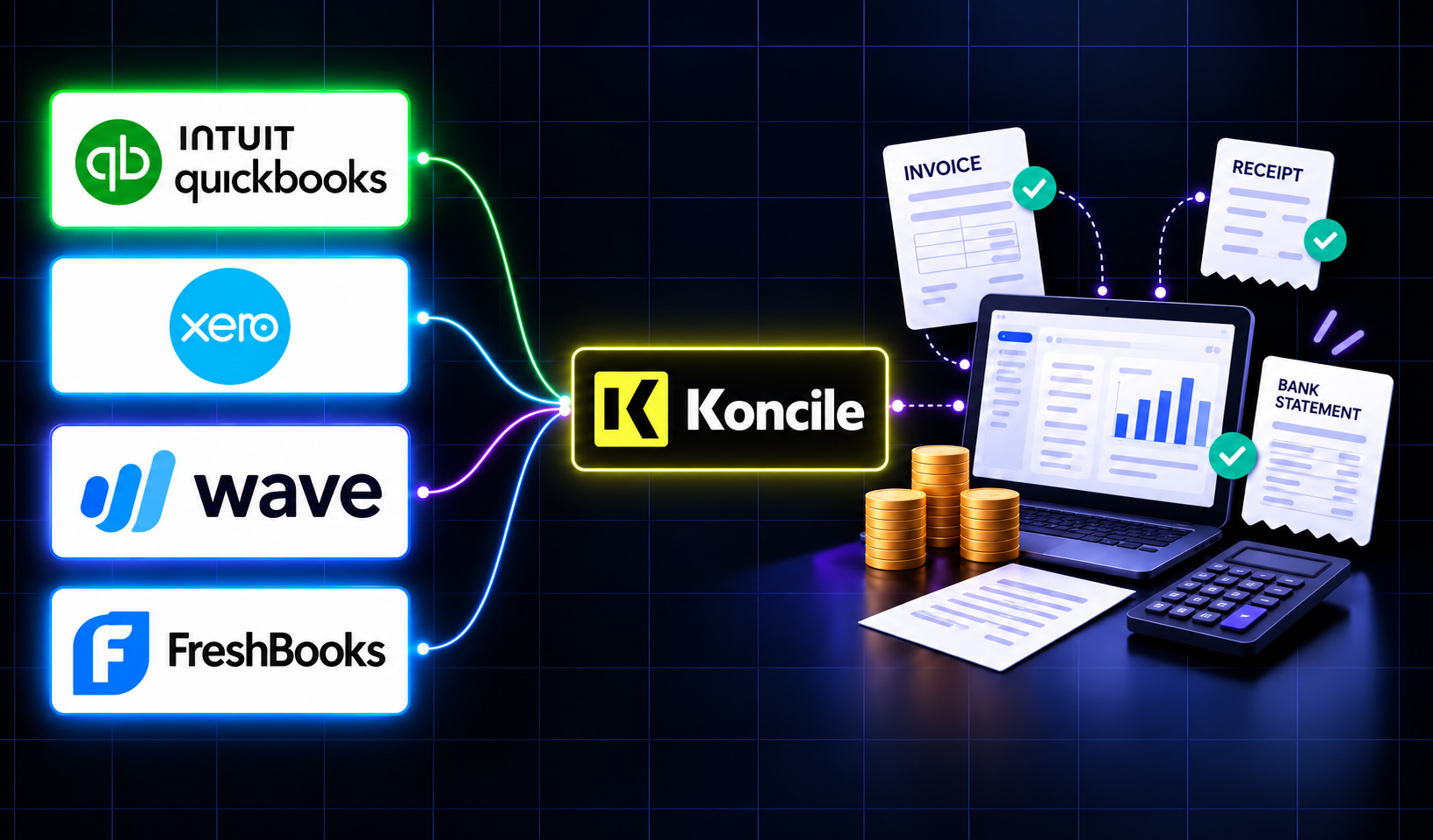
Best Accounting Software for Sole Proprietors and Freelancers in 2026
A freelancer sending a dozen invoices a month can blow through Xero's cheapest plan by week three, and a $19-a-month FreshBooks account caps out at five clients. The number on a pricing page is rarely the number you actually pay. Here is a real comparison of QuickBooks, Xero, Wave, and FreshBooks built for a business of one, not a growing team.