Reliable and customizable AI-powered OCR software for all your bills of lading
Koncile's AI OCR, a solution for extracting data from Bill of lading, powered by AI, finally reliable, customizable and available as an API.

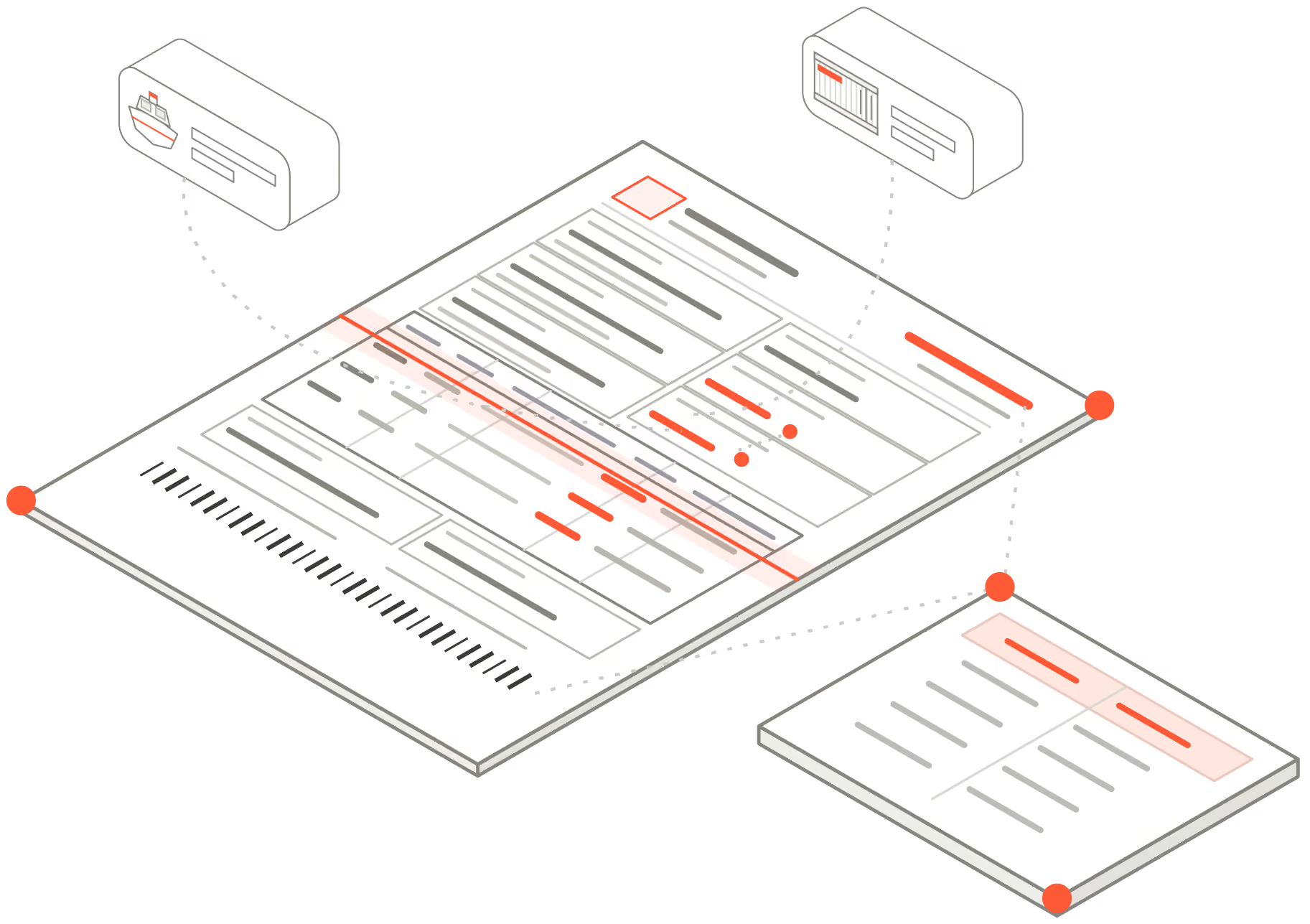
The OCR that detects key data from maritime bills of lading
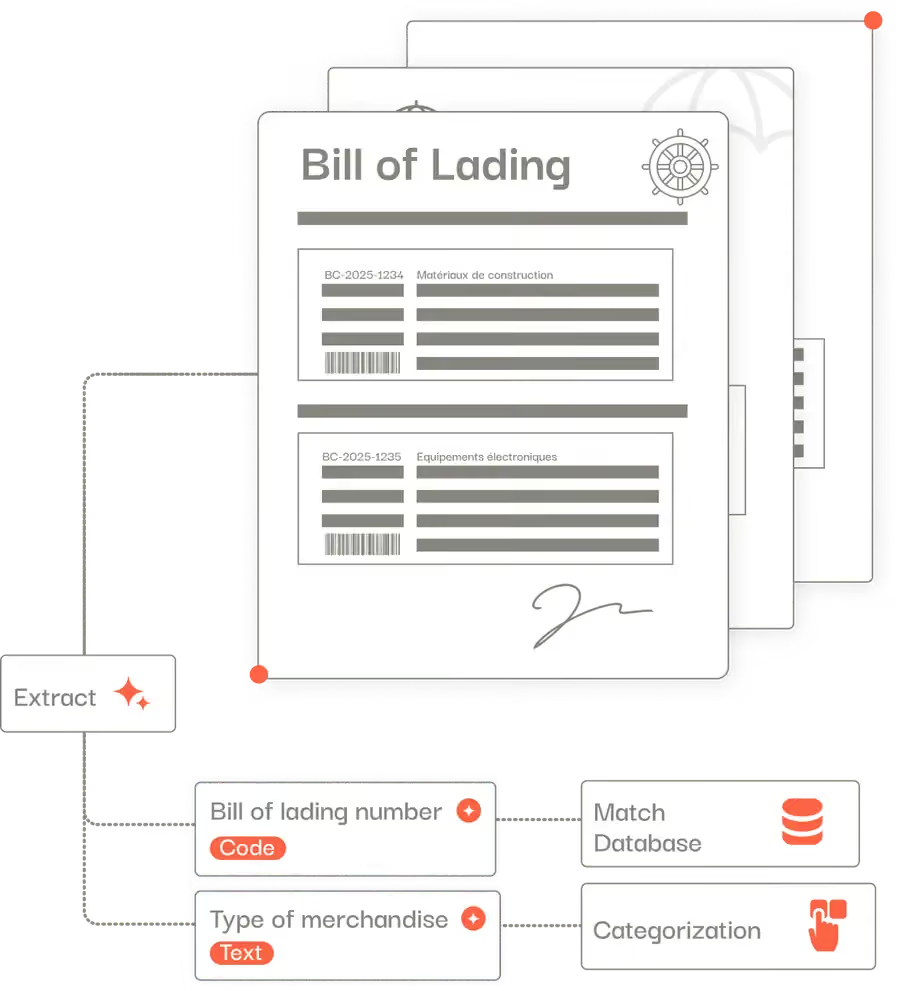
OCR for bill of lading by Koncile is ideal for quickly organizing and processing information from loading orders, extracting key data Like the Loading order number, the transporter, the wares, the quantity, and the delivery date. It also makes it possible to detect inconsistencies or errors in a large volume of documents.
Charge them loading vouchers in a format picture or PDF in the Koncile OCR software and get structured data In format spreadsheet, JSON or database, easily exploitable by a machine.



Koncile automates the intelligent extraction of contractual data. Despite the complexity of our clients’ contracts, the tool ensures quality and speed, saving us valuable time.
Accurate data extraction with OCR built for maritime bills of lading
Koncile’s logistics document OCR solution captures essential information from bills of lading, streamlining the work of logistics managers, carriers, and warehouse supervisors.
It digitizes and structures data from image or PDF files. Thanks to optical character recognition, you can automatically extract key details, then analyze and verify them against databases or predefined criteria.
Nom | Type | Exemple | Instruction | |
|---|---|---|---|---|
Validité | Text | Oui | Vérifie que le RIB est bien constitué des éléments suivants : | |




Why choose Koncile OCR for maritime bills of lading ?
.webp)
Unmatched accuracy in logistics document management
With a success rate above 99%, our OCR engine delivers exceptional accuracy on key fields in invoices and transport documents.
Every piece of information amounts, dates, or logistics references is captured reliably. Thanks to our built-in anomaly detection system, errors or inconsistencies are flagged early, enabling automated quality control and faster decision-making.
Multilingual OCR for transport and logistics
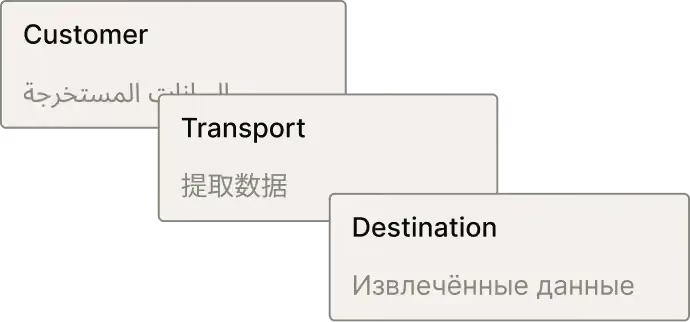
Our OCR engine, enhanced with advanced language models (LLMs), accurately recognizes alphabets and languages from around the world.
Chinese, Arabic, Cyrillic, Japanese… whatever the format or language of the document, Koncile identifies key fields and enables automatic translation.
Scan, extract, and centralize your data with ease—even in complex multilingual environments.
Integrated with your tools
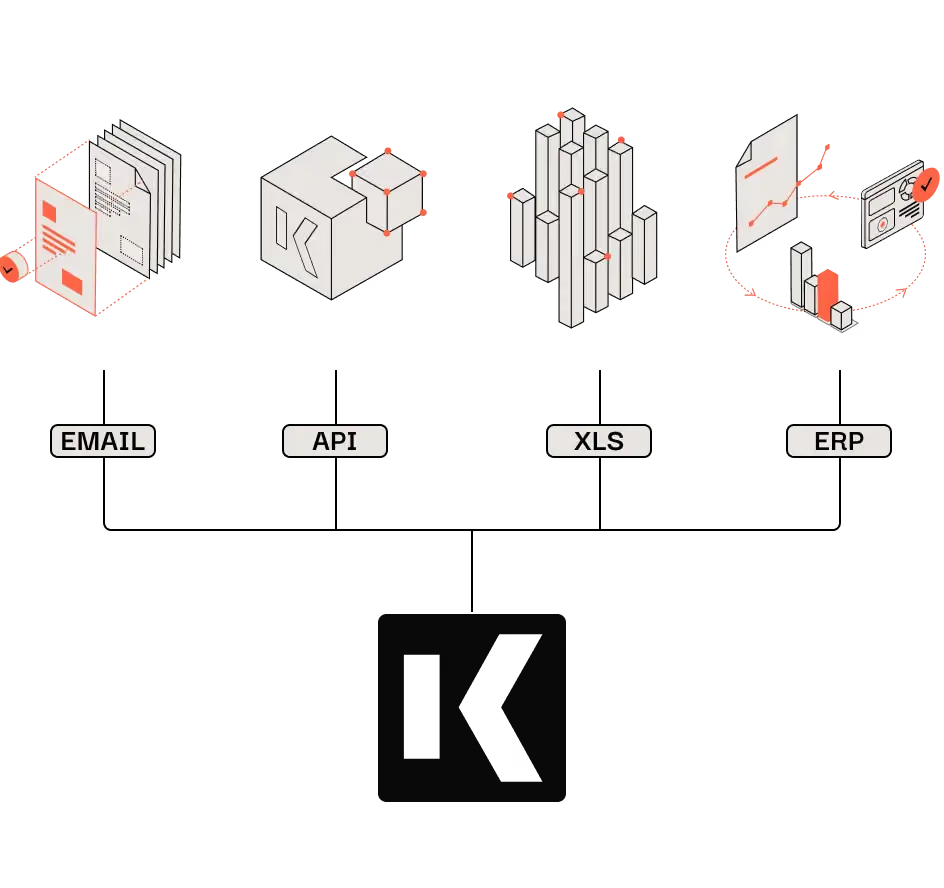
Koncile integrates perfectly into your digital ecosystem: connection via API, automatic import from your emails or direct synchronization with your ERP.
Easily import documents, trigger automated extractions, and retrieve structured data where you need it.
Whether you use Excel, Outlook, SAP or another business tool, Koncile adapts to your workflow to simplify document management and maximize your productivity gains.
Try next-generation data extraction
Partez d'un modèle de connaissement maritime prêt à l'emploi, testez sur un document et passez à l'échelle
An OCR solution designed to extract your maritime bills of lading

Automatic extraction of information from maritime bills of lading
Bill of lading number, carrier, goods, quantity, delivery date, etc. Automatically extracts key data from paper or digital packing slips.

From Bill of lading to a database
Facilitate the management of Bill of lading by transforming your documents into structured and usable data, ready to be integrated into your management systems.

Multi-format processing
Easily manage and standardize loading slip information in various formats (image, PDF, etc.). Whether it's a scan of a paper loading slip or a PDF version, Koncile OCR allows you to easily extract information.

OCR extraction of maritime bills of lading via API
Create a complete database of loading orders, integrated into an application and accessible via API. This automation allows you to track delivery history and improve shipment tracking.
Beyond OCR: Validation and verification of extracted fields
Is the information on the packing slip correct? Is the quantity of goods correctly described? Are the carrier details valid? Are there inconsistencies or errors in the data on the loading order? Optimize the management of loading orders with intelligent OCR, allowing you to automate the verification and validation of data.
The API to streamline your document management
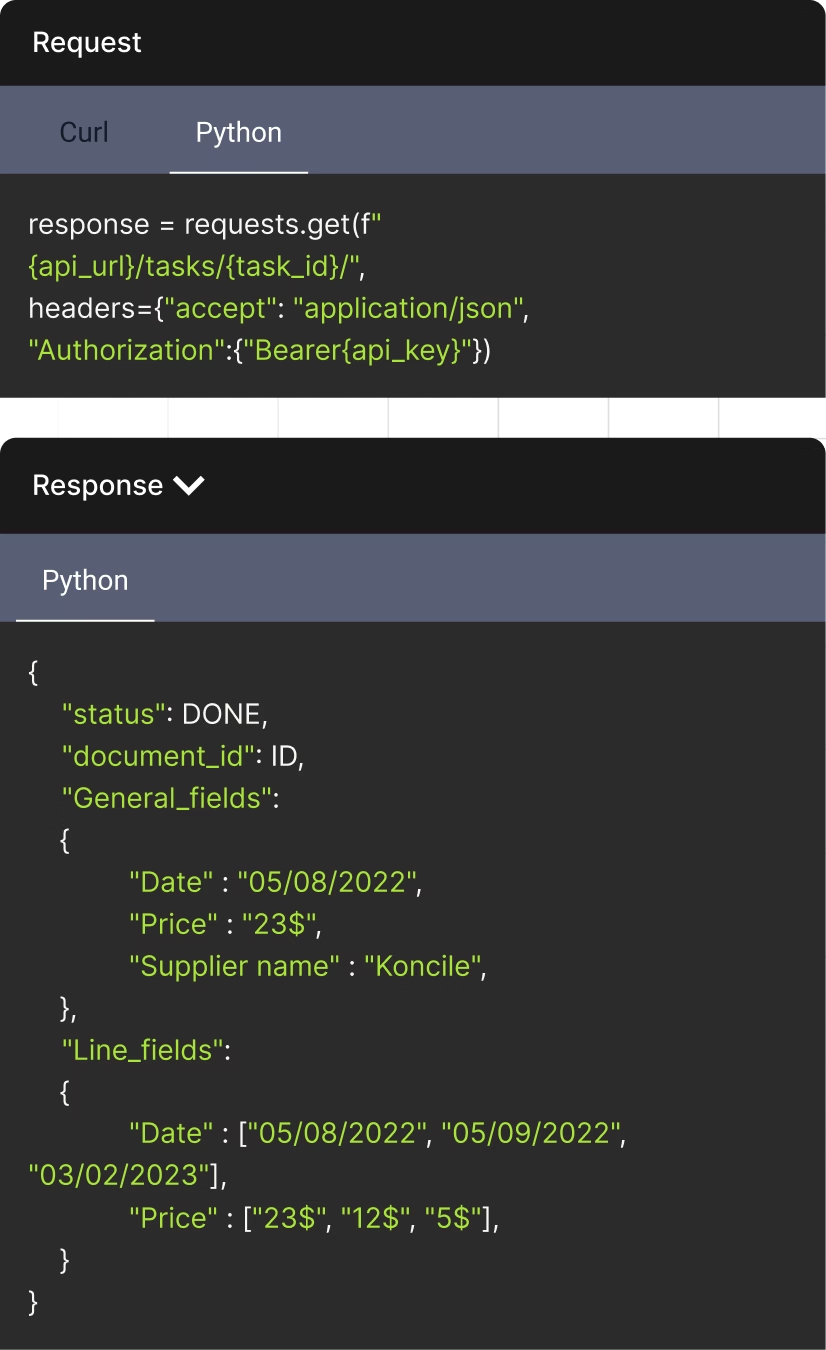
Document status can be DONE, DUPLICATE, or IN PROGRESS
Unique identifier assigned to each document
Fields that appear once per document. Returns in the format: {field_name: extracted_value}
An AI OCR tool built for regulated environments
Founded by a former lawyer, Koncile was designed with compliance and data protection at its core. We are independently audited under SOC 2 and compliant with GDPR and HIPAA requirements.






Talk to an expert who knows your industry.
- Get an external expert opinion on your specific use case
- Benchmarks and results from hundreds of clients in your industry
- Help activating the right Koncile features for your workflow
Real life insights on document automation

All your questions on Koncile
OCR analyzes the bill of lading using computer vision algorithms to detect and read characters. With natural language understanding (NLP), OCR can identify critical information. This process ensures accurate extraction of structured and unstructured data from the document.
Yes, you can extract specific information from a bill of lading, such as product references, quantities, loading dates, or destinations. OCR can be set up to extract this data based on the sections or formats you are dealing with.
You can upload your bill of lading in PDF, PNG, or JPEG format. These formats are compatible with our OCR technology, allowing accurate extraction of the information contained in the document. Consult the documenting for more details on accepted formats and the upload process.
Yes, OCR is capable of processing printed or handwritten bill of lading. If the document is handwritten, OCR uses advanced techniques to recognize handwritten characters and convert them into digital text, while ensuring the accuracy of the extracted data.
The software is accessible via a powerful OCR API, with comprehensive documentation available. Plus, you can upload documents directly into the app and export the extracted data to XLSX, XLS, CSV, or JSON for seamless integration into your workflows.
Check our API documentation, contact us at contact@koncile.ai. You can also create a demo account or book a demonstration with our team.
Koncile offers 3 plans, including enterprise options for handling large volumes of data. You can check our pricing on our pricing page.
In each extraction template, you will find:
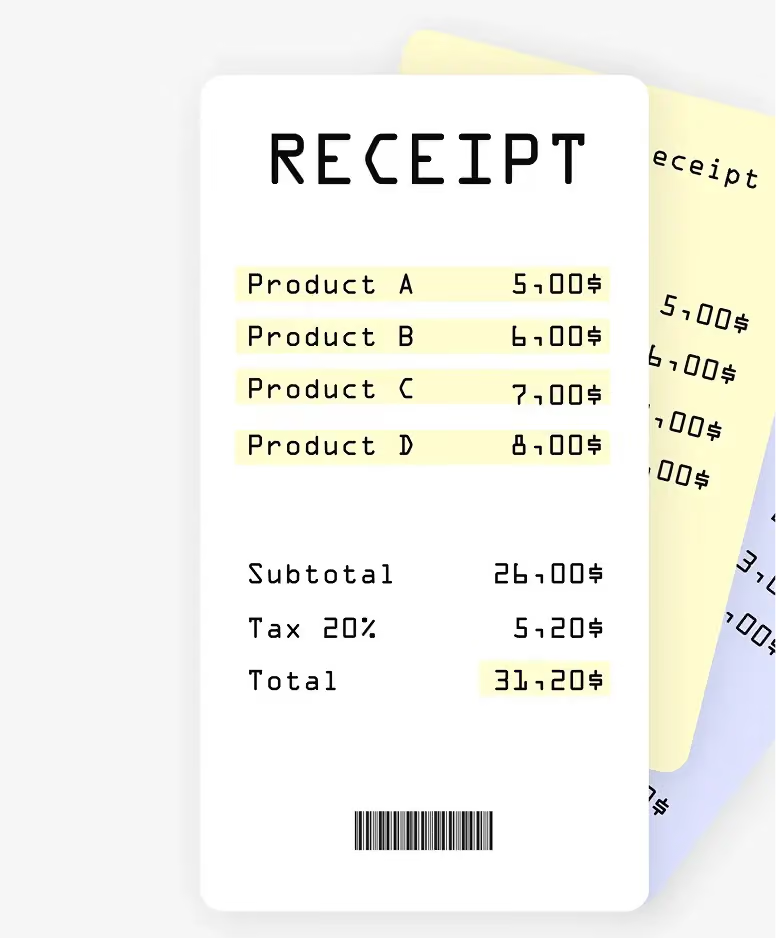
- General fields: These are pieces of information that appear only once in each document (e.g., the invoice number or the invoice date).
- Repeated fields: These are pieces of information that appear multiple times in a document, such as item descriptions or prices in each line of a quote. Use repeated fields for extracting tables and charts from your documents.