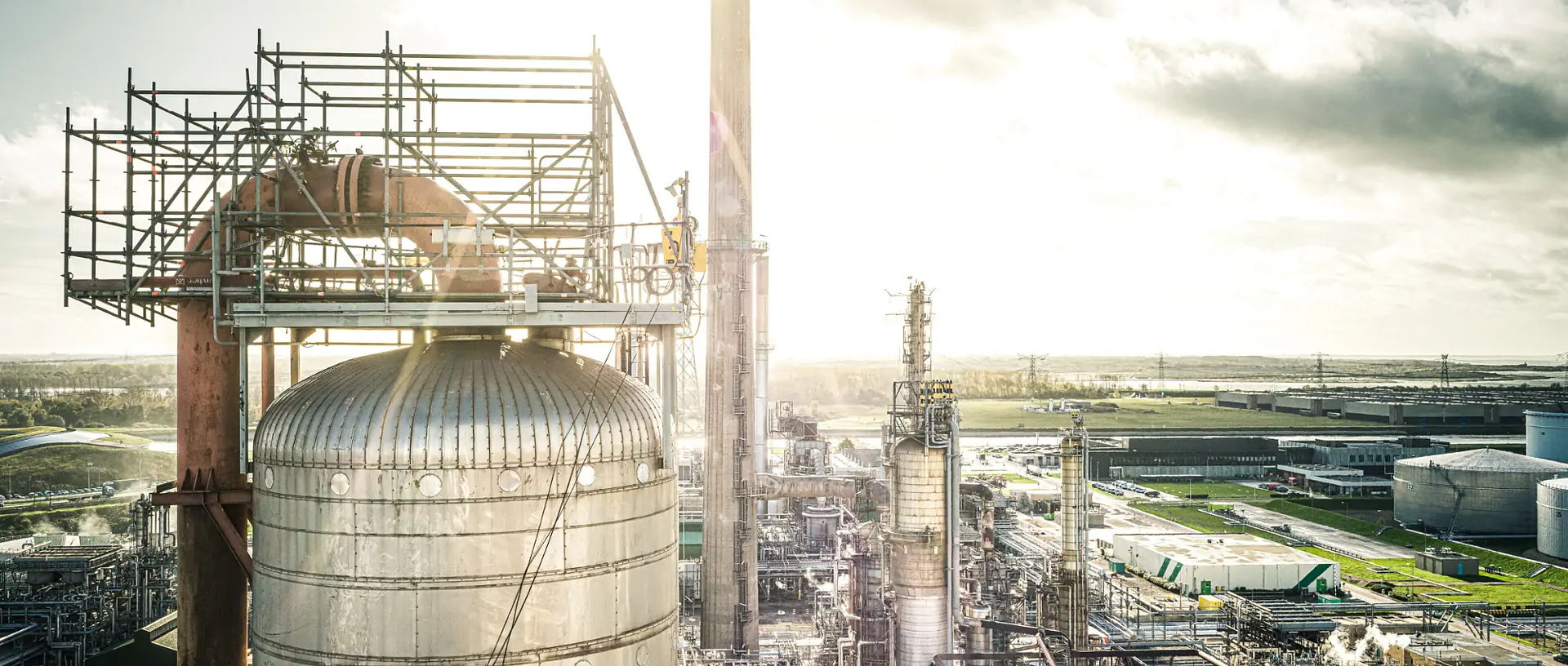
Material certificate OCR: how Bilfinger LTM Industrie automated traceability without kitting out the shop floor
Instead of handing out tablets, they digitised what comes out of the workshop. Ten certificates handled in two minutes.
Bilfinger LTM Industrie builds pressure vessels and piping systems for the pharmaceutical industry and for new energies. Every part it manufactures has to be tied back to the certificate of the material it came from, which means reading certificates arriving from all over the world and shop floor records filled in by hand. Rather than handing its fitters tablets, the company chose to digitise what comes out of the workshop.
People talk a lot about digitising the shop floor, giving everyone on it a computer or a tablet. We decided to do the opposite, because digitising a workshop is extremely expensive and you are never sure it will land. What we do instead is digitise what the workshop sends back.
Hugo Depond, Transition and Digital Manager, Bilfinger LTM Industrie
A systems integrator for pharma and hydrogen
Based in Toussieu, near Lyon, Bilfinger LTM Industrie is the French subsidiary of the German industrial group Bilfinger. Its original trade is boilermaking and piping; today it works as a systems integrator for the pharmaceutical industry and for new energies, hydrogen in particular.
In those sectors the manufacturing file is worth as much as the equipment delivered. A vessel, a skid or a piping network is only acceptable to the client if every part can be tied back to the material it came from and to the certificate attesting to its properties. That traceability is built document by document, and it governs whether the client signs the file off.
Material certificates arriving from all over the world
The central document in that chain is the material certificate issued by the steel producer or the supplier. It rarely arrives in good condition.
These are certificates that come from all over the world, that have often been through several customs points and end up in very poor condition, with formats that depend on each country of origin. On them you find the certificate type, the supplier, the category and what we call the heat number. That heat number matters enormously, because it is the one later marked on the parts we use and reported back by the workshop.
Hugo Depond, Transition and Digital Manager, Bilfinger LTM Industrie
Every steelmaker lays its certificate out its own way, in its own language, with its own headings. The document gets scanned, sometimes photocopied several times, often stamped and annotated. No fixed template covers that variety, and that is exactly what drove the choice of tool: the ability to describe in plain language what to look for, then adjust it document by document with no development work.
Around ten extraction models are in service today, organised by family of jobs and by part type, each with its own fields: certificate number, supplier, grade, description, diameters, wall thickness and heat number. A confidence score accompanies every extracted value and flags the ones worth a second look.
Reading handwritten shop floor records
The other half of the problem happens in the workshop. When a fitter takes a part, they copy the heat number stamped on the material onto a paper record, by hand. That handwritten document, once scanned, is what closes the traceability loop, and it is also the hardest thing for a machine to read.
Handwriting OCR processes those records alongside the printed certificates. Scans land in a document library, an automation routine forwards them to the platform's ingestion address, and classification routes each document to the right model with no intervention.
As soon as the documents arrive, a routine sends them automatically to the Koncile address. It works very well, the platform reads them and routes them to the right model. We are finally at the point where we have enough for genuinely industrial use.
Johann Jallat, Quality Technician, Bilfinger LTM Industrie
Matching the shop floor record to the material certificate
Extraction alone is not enough. For every line on a shop floor record, the matching certificate has to be found. That runs into a difficulty familiar to anyone working on material traceability: the heat number is not a unique identifier and follows no international standard. Two suppliers can use the same sequence for different materials.
Matching therefore runs on a composite key combining the heat number with the description, the dimensions and the grade. Three matching agents run on the account today: one ties record lines to certificates on that key, another normalises supplier names against a reference list of roughly ten thousand entries, returning the closest match or an explicit fallback when nothing corresponds.
On descriptions, one supplier writes "bride", another writes "flange" because they are English, a third writes something else again. Semantic matching gets us back to the right reference without having to normalise by hand everything our suppliers write.
Johann Jallat, Quality Technician, Bilfinger LTM Industrie
Human checking stays fully in place and is deliberately kept. Every document passes under an operator's eyes, with a signature recording the check. Automation removes the rekeying, not the responsibility.
Ten certificates in two minutes
Previously, building the traceability file rested on one person, full time, whose job was to open each certificate and copy the information into a spreadsheet.
Handling a certificate by hand took roughly six to seven minutes. Handling it through Koncile takes a minute and a half per certificate, connection time included, and handling ten certificates takes two minutes. That person obviously does other things today, with far more added value on building the files and getting them signed off by clients.
Hugo Depond, Transition and Digital Manager, Bilfinger LTM Industrie
The most telling gap shows up in batch processing. One at a time, the gain is roughly fourfold. Across ten documents sent together, an hour of data entry becomes two minutes, because processing time stops growing with the number of parts. That property is what makes exhaustive traceability compatible with project deadlines.
On reliability the feedback is clear: no errors observed on printed documents, even damaged ones, with residual discrepancies limited to some poorly formed handwritten characters, which the confidence score flags.
A year to deploy, and what unlocked it
The timeline deserves telling as it happened, because it carries the most useful lesson in this story.
It took a year. That was not down to Koncile, the models were set up fairly quickly, it was more about the connections to our data systems, where we struggled to get the necessary authorisations. In the end we have a robust system, and that is what it bought us.
Hugo Depond, Transition and Digital Manager, Bilfinger LTM Industrie
Through the first period the platform stayed available as self-service, and usage stayed low. The turn came in the summer of 2026, when the teams put the OCR API into production to push results automatically into their document system. Activity more than doubled in the following month.
The explanation fits in one sentence, and it holds for any deployment of this kind: as long as it means opening one more application, nobody does. Once processing becomes invisible and the data lands where teams already work, usage follows. Configuration work is quick; it is the connection to the information system that governs adoption, and that is where the effort belongs first.
What comes next: checking that material certificates are genuine
One workstream extends the setup naturally. Material certificates are among the documents most exposed to forgery in industry, and the method is well known: a genuine certificate is retouched to substitute a grade, a wall thickness or a test result, or the same certificate is reused for a heat it does not cover. The consequences go well beyond a commercial dispute when the equipment is a pressure vessel destined for pharmaceutical or hydrogen service.
Documents arriving from all over the world, passing through several intermediaries, in formats nobody controls, are exactly the population where that risk materialises. Koncile's document fraud detection answers that need by analysing the file as much as its content: forensic examination of the PDF metadata and the last modifying software, visual integrity analysis around a value or a stamp, business consistency checks on whether the declared properties are plausible. Each anomaly feeds a score with its justifications, returned alongside the extracted fields. On a chain where every document is already checked in full, the value lies in pointing the inspector's eye at the documents that warrant it.
Frequently asked questions
Can data be extracted automatically from a material certificate?
Yes, including from non-standardised certificates issued by producers in different countries. The fields to extract are described in plain language, which lets one model cover widely varying layouts and be adjusted with no development when a new supplier appears. Scanned or degraded documents go through the same chain, with a confidence score on every value.
How do you automate the reading of handwritten shop floor records?
The records are scanned and sent to an ingestion address, for example from a document library through an automation routine. Handwriting recognition extracts the values written by hand, and automatic classification routes each document to the matching model. This approach avoids kitting out the workshop with terminals and training fitters on yet another application.
How do you match a heat number to a certificate when it is not unique?
By building a composite key. The heat number alone is not enough, since it follows no international standard; combined with the description, the dimensions and the grade it becomes discriminating. Matching can then run on exact, fuzzy or semantic correspondence, the last of which links wordings written differently by two suppliers.
How long does it take to deploy this kind of solution in an industrial setting?
Configuring the extraction models takes a few days. The real duration of a project depends on connecting it to the company's information system, which is the longest part in a group subject to internal authorisation procedures. Experience shows adoption genuinely starts once results come back automatically into the tools teams already use.
I would recommend it first of all to any company dealing with document management full of special cases, with a lot of adapting to formats they do not control. And in the end you could widen that to anyone who needs an OCR, because it is a practical and effective solution.
Hugo Depond, Transition and Digital Manager, Bilfinger LTM Industrie
Automate the reading of your technical documents
Material certificates, shop floor records, welding logs, inspection reports, annotated drawings: if your teams rekey by hand what goes into your manufacturing files, send us your real documents. We configure your fields and your matching rules on the extraction platform, and you judge on your own paperwork.

Real life insights on document automation

Supplier invoice OCR: how Next&Go processes 30,000 rental invoices a year
Half a day freed up daily and two hires avoided, at a fifteen-person broker. The full case study.
PDF Bank Statements: How Meelo Automates Extraction With AI
How Meelo automates the analysis of PDF bank statements with Koncile's AI: reliable extraction, fraud detection, and solvency scoring in seconds.
.png)
Document fraud detection in insurance: how ADN.Solutions and CMAM secure motor underwriting
Motor insurance's most-forged document now goes through a single check: extraction and authenticity, in one API call. ADN.Solutions has deployed it white-label across its insurers, including CMAM, and now detects 87% of falsified statements, with under 2% false positives.
At Toyota Assurances, the underwriting file arrives captured and checked
Nine document types in a single PDF. Koncile identifies them, reads them, checks their validity and their consistency with one another, then sends the data and the alerts back via API into the systems of the insurer AND-E.
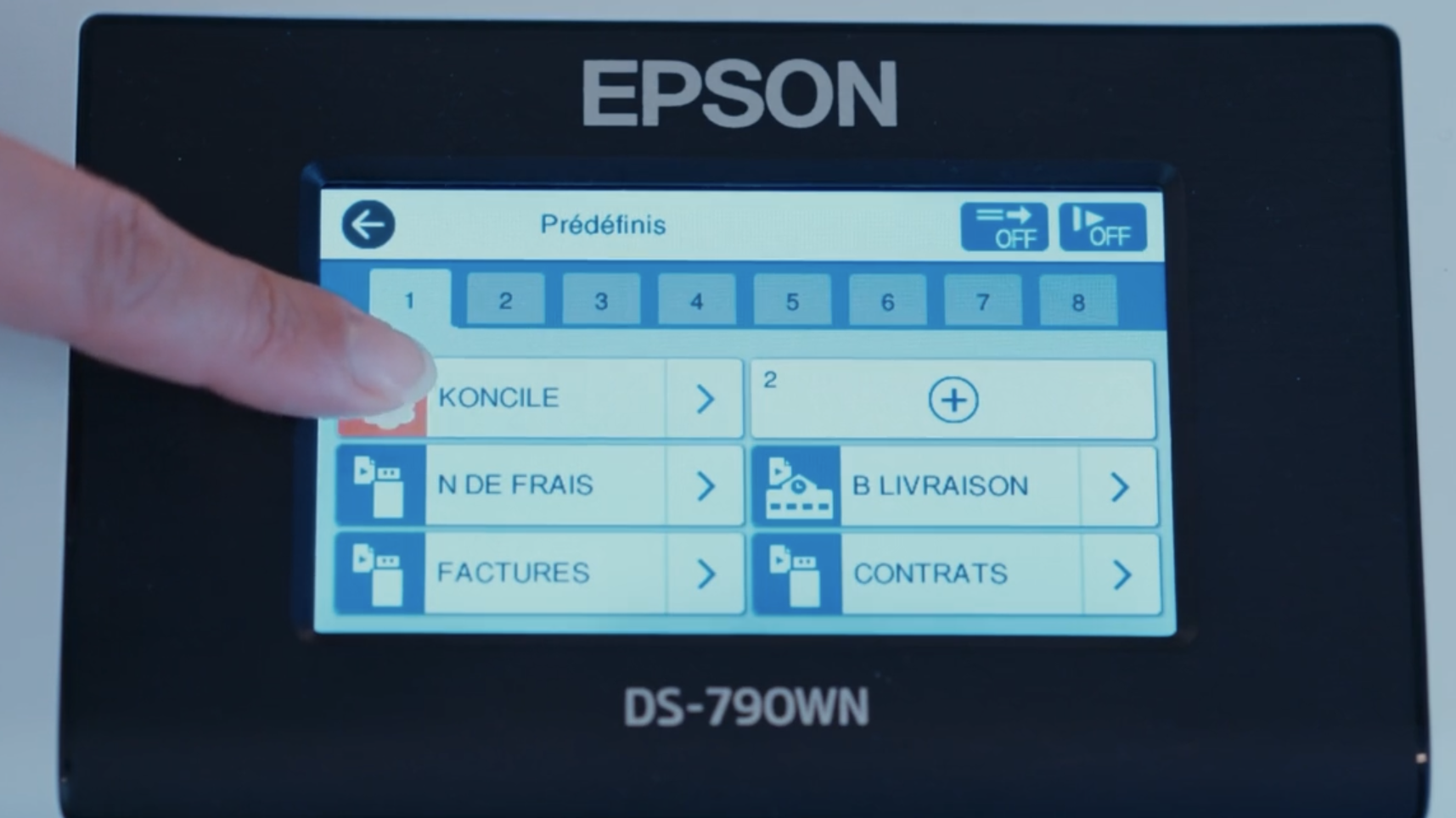
EPSON × Koncile: AI data extraction built into the scanner
How EPSON turned its scanners into true data-entry points with Koncile's AI. Operational in a few minutes, with zero manual re-entry.
.avif)
RewardPulse Automates Proof-of-Purchase Checks
RewardPulse designs loyalty and incentive programs for other companies. Reliably validating each proof of purchase at scale turned out to be far more complex than expected.
.avif)
Place des Énergies: Energy Bills Sorted by Client
Discover how Place des Énergies uses Koncile to automate the processing of 5,000 monthly energy bills. Line-by-line extraction and automated auditing eliminate billing errors while speeding up data analysis.
Nona Automates Supplier Invoice Processing with Koncile's OCR
Nona equips more than 650 collective kitchens to build menus that meet France's EGalim sustainability targets. With Koncile, manual invoice entry has become an automated flow, linked directly to its food database.
.avif)
Mark Young Construction Automates Subcontractor Insurance Certificate Checks
Mark Young Construction has to check every subcontractor's certificate of insurance before the job site opens. With Koncile, reading each certificate and flagging anomalies became immediate."

Grainz is transforming the processing of its invoices and delivery notes thanks to OCR
Extractions that speed up processes, reduce errors, and improve compliance.
Material certificate OCR: how Bilfinger LTM Industrie automated traceability without kitting out the shop floor
Instead of handing out tablets, they digitised what comes out of the workshop. Ten certificates handled in two minutes.
360 Smarter Administration centralizes and structures the processing of its payroll documents
From PDFs to actionable data: Koncile OCR automates payroll processing at 360 Smarter Administration, reducing manual effort and improving data reliability.