
Supplier invoice OCR: how Next&Go processes 30,000 rental invoices a year
Half a day freed up daily and two hires avoided, at a fifteen-person broker. The full case study.
Next&Go brokers vehicle rentals for film productions and sporting events. Around fifteen staff, revenue that has just crossed ten million euros, and between twenty and thirty thousand rental invoices to receive, sort and use every year. Since November 2025 that flow has landed in Koncile, come back classified, extracted and renamed, and routed automatically to the project managers and into the ERP.
There are about fifteen of us, so we are not a large company. What we do have is an extremely high invoice volume: we process between twenty and thirty thousand invoices a year. There is no question of a human handling that by hand. Koncile has revolutionised the subject here, literally.
Pierre-Henri Vernay, Deputy Managing Director, Next&Go
A broker whose raw material is the supplier invoice
Founded in 2015 and based at the Cité du Cinéma in Saint-Denis, Next&Go sits between vehicle rental companies and audiovisual and event productions. It buys the rental from the rental company and resells it to the production, with a dedicated project manager per job, in France and abroad.
That buy-and-resell model gives the supplier invoice an unusual status. It is not an accounting document arriving at the end of the process, it is the document that triggers rebilling to the client and carries the margin. Between fifteen and twenty rental companies feed the flow, Hertz, Europcar, Sixt, Rent A Car, ADA and others, each with its own layout, its own naming and its own line item wording. A single large supplier can account for three to four thousand invoices a year.
What we rest on is receiving the invoices from the rental side. If we cannot take in that flow properly, we do bad work: things get forgotten, things get missed, and clients chase us because we are behind on their jobs.
Pierre-Henri Vernay, Deputy Managing Director, Next&Go
With rapid growth, manual handling stopped holding. One person spent half of every day receiving, sorting and dispatching invoices, work with no added value that did not scale. The tools tested before Koncile required lengthy configuration and did not cover every document type received.
It all starts from a single email address
The setup rests on one simple idea. Next&Go created a single address, shared with every rental partner, to which they send their invoices. That mailbox forwards to the account's Koncile ingestion address, and email attachment extraction takes over with no human handling. The internal rule became a team instruction: for an invoice to be processed automatically, it has to arrive at that address.
From there, every document is classified by type. The account separates rental invoices, traffic and parking fine invoices, damage invoices, contracts, tolls and damage reports, each with its own model. Classification rules are written in plain language, exclusions included: discard documents that are not invoices, discard invoices issued by Next&Go itself, discard any document without an invoice number. Invoice OCR then runs against the matching model, across some forty fields.
Renaming every invoice so it finds its own place
The feature that changed daily work the most was not available at the time of the first demo. Next&Go asked for it at the end of October 2025: the ability to rename a file from its content. It shipped the following week and it now sits at the centre of the setup.
Automatic document renaming rebuilds a normalised filename from the extracted fields, in a fixed order: document type, client reference, number plate, date and time of the event, the supplier's original booking reference, amount. A fine invoice comes out as FPS_GT-339-BD_18-10-2025_12h43_PO7895_35,00€, a contract as CONTRAT_GV-132-BK_08-05-2026_110000885. When a piece of information is absent from the document, the model writes NC rather than picking up an approximate value elsewhere on the page.
That filename then becomes a routing key. A webhook triggers an automation scenario that reads the booking reference and drops the document into the relevant project manager's folder, while invoices with no usable reference land in a review folder. In parallel, the OCR API feeds the company's ERP with the structured data and a link back to the original PDF.
When I prepare payments, I need to find the exact invoice behind each line, and to know straight away what is missing. With filenames built on the number plate and the booking reference, I search by plate and it comes up. Whatever could not be matched lands in a separate folder, and I know that is the only place I need to look.
Léandra Saporta, Supplier Payments and Collections Manager, Next&Go
Breaking amounts down line by line for accounting
The hard part is not the totals. The overall net amount on a rental invoice comes out effortlessly. The value sits one level down, in how that amount breaks apart.
We buy rentals from Hertz, Sixt, Europcar, whoever, and resell them to our clients, and margin rates differ by product. Pure rental days, extra mileage, fuel, one-way drop-off surcharges: all of it has to be allocated correctly in the accounts, with the right VAT rate on each item. That pre-entry work used to be done by hand.
Matthieu Constans, Chief Administrative and Financial Officer, Next&Go
Every rental company names those items its own way, and the wording sometimes varies between branches of the same supplier. So Next&Go's teams write the reading rules themselves, in plain language, field by field, with inclusion and exclusion instructions drawn from the actual wording found on the invoices. They version their models, test changes on their own documents and adjust them without a development cycle or an outside vendor. Onboarding a new rental partner, which happens once or twice a year, is configured the same way.
Half a day freed up daily, and two hires avoided
Roughly a fortnight passed between signature and the first automated flow in production, with no integration project and no heavy technical onboarding. The operational result shows up first as time returned.
The half-day spent every day on receiving, sorting and dispatching has gone, the equivalent of several hundred hours a year redeployed onto work that matters. The thirty to fifty invoices received daily arrive classified and named, and project managers find them in their folder without anyone having opened them. The most significant effect, though, is structural: Next&Go outsources its year-end accounts to an external firm and employs no in-house accountant. Automating data entry and allocation makes that hire less necessary.
With Koncile we can handle the bookkeeping entry and the allocation of our purchases and sales without hiring anyone on the accounting side. Potentially that is two roles saved. It is plug and play: you take a subscription, some credits, and the tool does not even need adapting to the company. You build your own models and off you go.
Pierre-Henri Vernay, Deputy Managing Director, Next&Go
What comes next: accounting integration, matching and checking incoming invoices
Three workstreams are identified for 2027. The first is completing the accounting integration, so the extracted allocation feeds the ledger directly. The second is product code matching, which means loading an item reference table into the platform so every invoice line is mapped to the right account, even when the rental company's wording differs from the reference. That is the block turning faithful extraction into billing control, and it is what makes it possible to measure the gap between what was booked and what is invoiced.
The third is checking the authenticity of incoming documents. A company receiving and paying tens of thousands of invoices a year from around twenty issuers is exposed to familiar risks: the same invoice paid twice, a document from an unreferenced supplier, an amount or a set of bank details altered on an otherwise genuine file. Koncile's document fraud detection answers that risk by analysing the file itself as much as its content, through forensic examination of the PDF metadata and the last modifying software, through visual integrity analysis around an amount or an IBAN, and through business consistency checks. Each anomaly feeds a score with its justifications, returned alongside the extracted fields, so only genuinely suspect documents get opened. At this kind of volume, checking everything by eye is not an option, and a fraudulent invoice once paid is almost never recovered.
Frequently asked questions
How do you automate receiving supplier invoices from many issuers?
The simplest method is to create a single address shared with every supplier and forward it to an automatic ingestion address. Each attachment is then classified by type, extracted against the matching model and renamed from its content. No connector has to be built on the supplier side, so a new issuer can be onboarded with no technical project.
Can the line-by-line detail of a rental invoice be extracted?
Yes. Beyond the net total, invoice items can be extracted separately and mapped to categories defined by the company, for example rental days, extra mileage, fuel, surcharges or fine handling fees, each with its applicable VAT rate. The mapping rules are written in plain language from the wording each supplier actually uses.
How long does it take to put a flow like this into production?
At Next&Go, roughly a fortnight separated signature from the automated flow going live, with no heavy integration. The work goes into defining the extraction models and the classification rules, which the business teams write themselves.
What happens with mandatory electronic invoicing?
The standardised electronic format carries invoicing data, but rarely the line-by-line detail a company needs to allocate purchases and control margin. Supporting documents, fines, damages, contracts and reports, will also keep circulating as PDFs. An extraction engine therefore stays useful for reaching the information the standardised flow does not carry.
You do not need to be an expert, in artificial intelligence or in OCR configuration. Any company that wants to bring in a capable OCR, go for it with your eyes closed.
Pierre-Henri Vernay, Deputy Managing Director, Next&Go
Automate your supplier invoices
If your invoices arrive from dozens of issuers in as many formats and your teams sort, rename and rekey them by hand, send us your real documents. We configure your fields and your reading rules, and you judge on your own invoices.

Real life insights on document automation

Supplier invoice OCR: how Next&Go processes 30,000 rental invoices a year
Half a day freed up daily and two hires avoided, at a fifteen-person broker. The full case study.

PDF Bank Statements: How Meelo Automates Extraction With AI
How Meelo automates the analysis of PDF bank statements with Koncile's AI: reliable extraction, fraud detection, and solvency scoring in seconds.
.png)
Document fraud detection in insurance: how ADN.Solutions and CMAM secure motor underwriting
Motor insurance's most-forged document now goes through a single check: extraction and authenticity, in one API call. ADN.Solutions has deployed it white-label across its insurers, including CMAM, and now detects 87% of falsified statements, with under 2% false positives.
.png)
At HealthNet Homecare, the prescription is reviewed by AI before entering the system
The UK homecare provider processes more than a million pages a year with Koncile. On a hospital prescription, several treatments are printed but only one is actually prescribed, marked with a checked box. Koncile picks out only that one, matches it against the medication database, and checks the result against the team's own data entry.

At Toyota Assurances, the underwriting file arrives captured and checked
Nine document types in a single PDF. Koncile identifies them, reads them, checks their validity and their consistency with one another, then sends the data and the alerts back via API into the systems of the insurer AND-E.
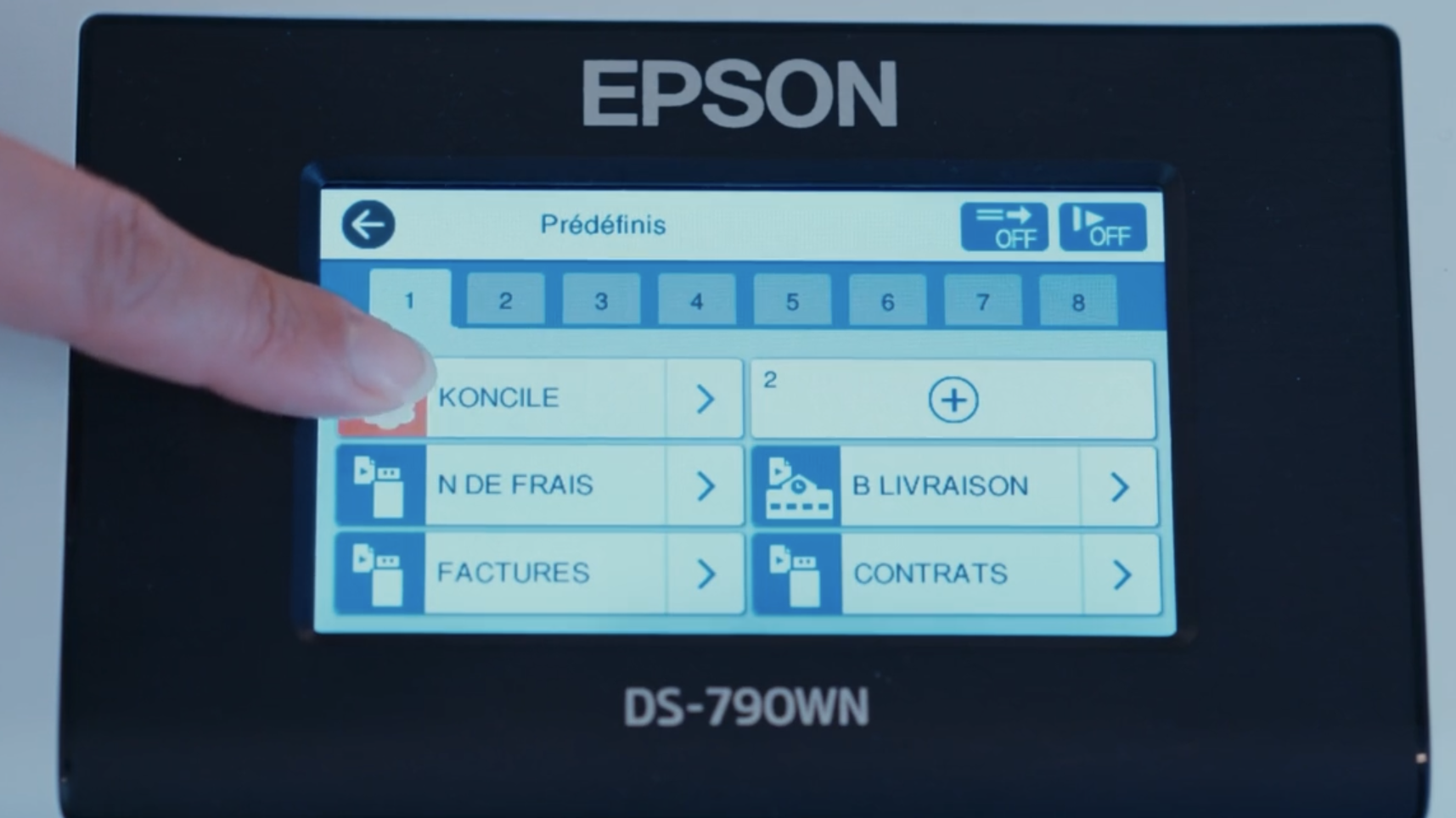
EPSON × Koncile: AI data extraction built into the scanner
How EPSON turned its scanners into true data-entry points with Koncile's AI. Operational in a few minutes, with zero manual re-entry.
.avif)
RewardPulse Automates Proof-of-Purchase Checks
RewardPulse designs loyalty and incentive programs for other companies. Reliably validating each proof of purchase at scale turned out to be far more complex than expected.
.avif)
Place des Énergies: Energy Bills Sorted by Client
Discover how Place des Énergies uses Koncile to automate the processing of 5,000 monthly energy bills. Line-by-line extraction and automated auditing eliminate billing errors while speeding up data analysis.

Nona Automates Supplier Invoice Processing with Koncile's OCR
Nona equips more than 650 collective kitchens to build menus that meet France's EGalim sustainability targets. With Koncile, manual invoice entry has become an automated flow, linked directly to its food database.
.avif)
Mark Young Construction Automates Subcontractor Insurance Certificate Checks
Mark Young Construction has to check every subcontractor's certificate of insurance before the job site opens. With Koncile, reading each certificate and flagging anomalies became immediate."

Grainz is transforming the processing of its invoices and delivery notes thanks to OCR
Extractions that speed up processes, reduce errors, and improve compliance.
Bilfinger renforce la traçabilité de ses dossiers de fabrication
Dans un contexte industriel exigeant, Bilfinger modernise la gestion de ses dossiers de soudage et matière. L’intégration de l’OCR Koncile automatise l’extraction et le rapprochement des soudures, des pièces et des certificats matière, tout en sécurisant la conformité.
360 Smarter Administration centralizes and structures the processing of its payroll documents
From PDFs to actionable data: Koncile OCR automates payroll processing at 360 Smarter Administration, reducing manual effort and improving data reliability.