

Our articles on document automation
Why Do OCR & Machine Translation Fail Without AI?
Japanese combines three writing systems on one page and should be a hard case for OCR. Benchmark research found the opposite: Japanese accuracy exceeds Latin script. Arabic and Hebrew are where things genuinely go wrong, for specific, documented reasons. Here is what real research shows about why scripts fail differently, and what actually stops the errors before translation compounds them.
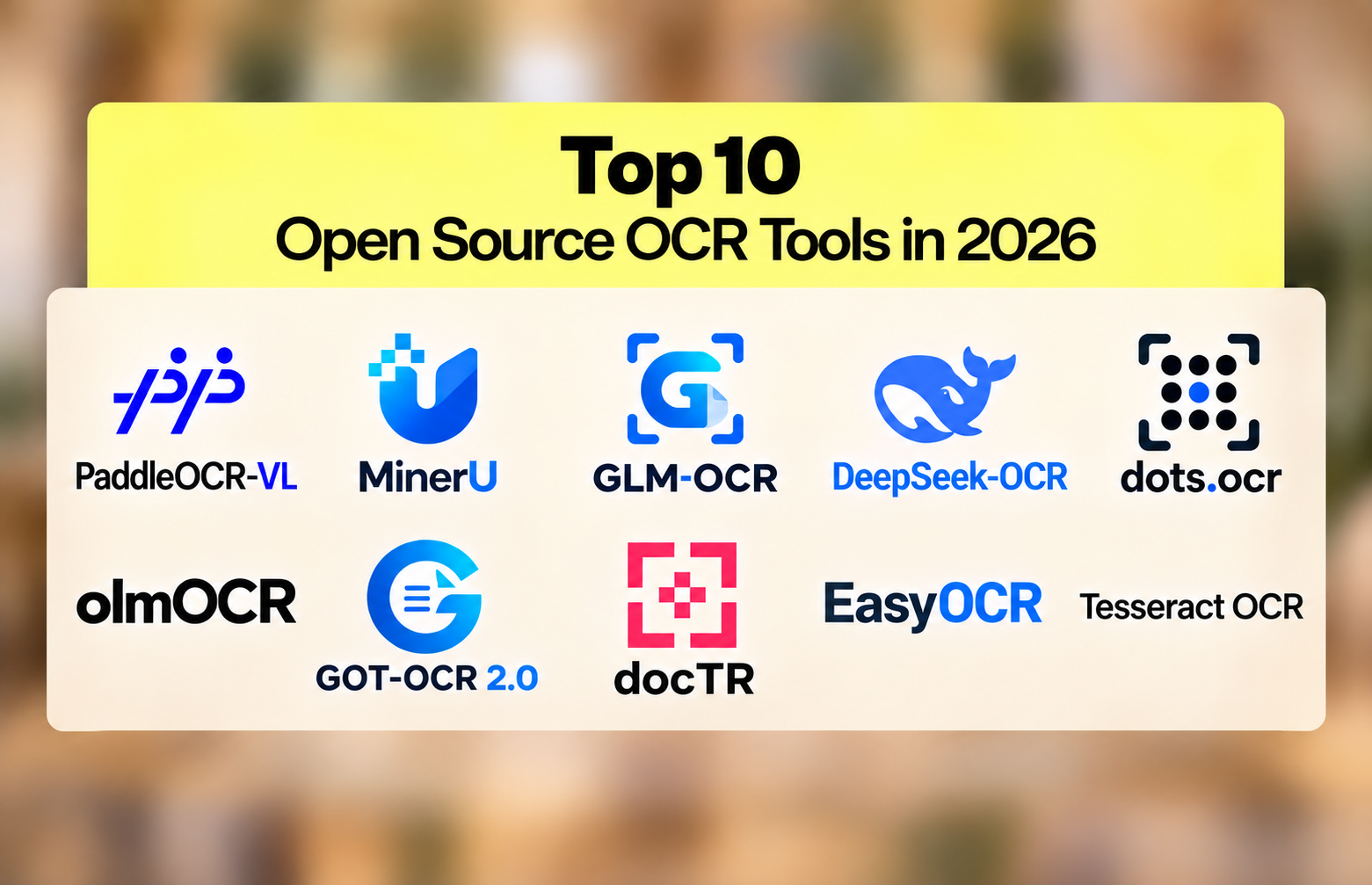
10 Best Open Source OCR Tools in 2026
The open source OCR ranking inverted in the past eighteen months. A 0.9-billion-parameter model now reads documents more accurately than a 235-billion-parameter one. PaddleOCR-VL scores 96.34% on OmniDocBench v1.6; Qwen3-VL-235B scores 89.78%. Here are the 10 best open source OCR engines in 2026 and how to pick between them.
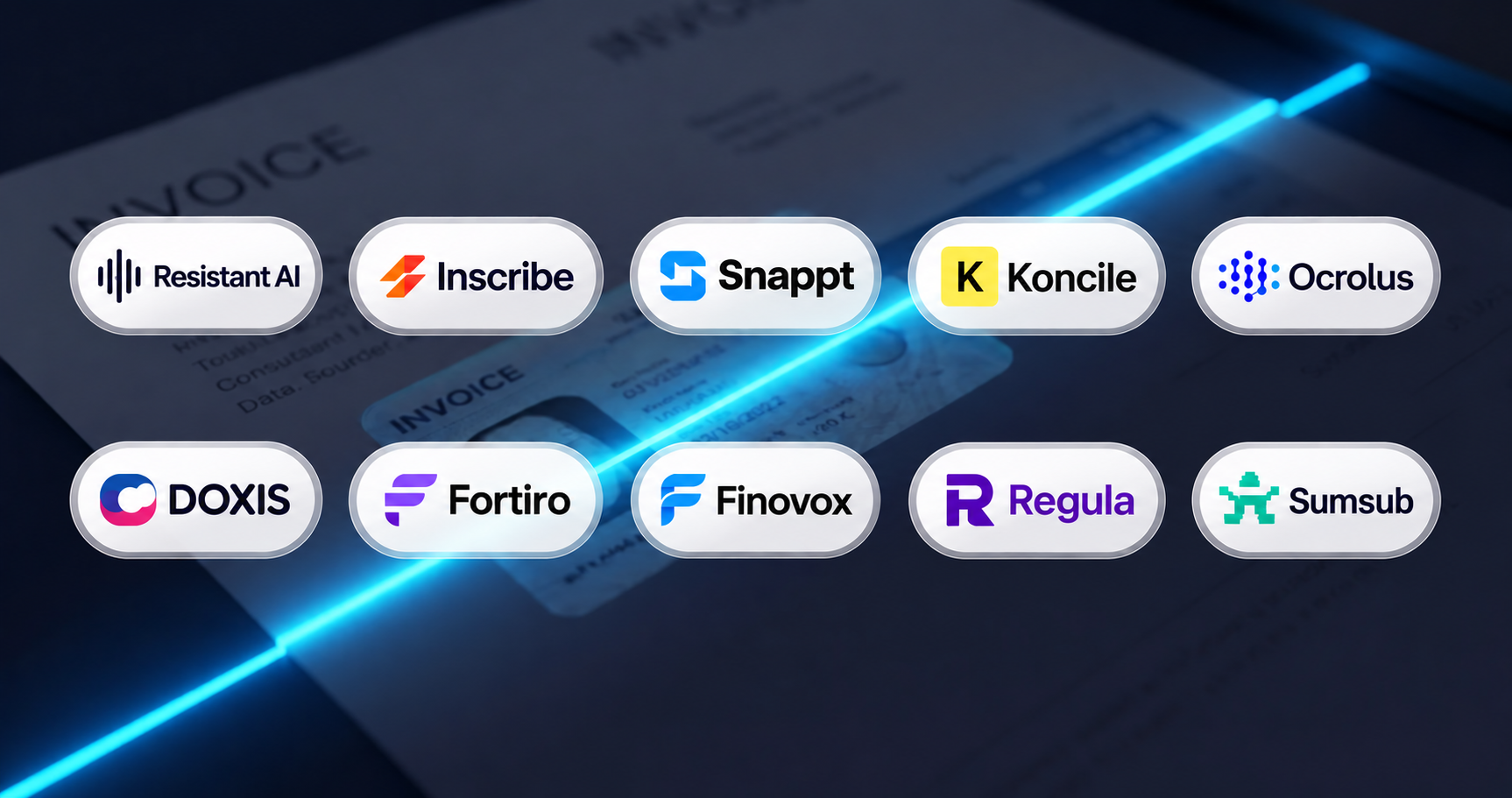
Top 10 Document Fraud Detection Software in 2026
Every accuracy figure in this market is self-reported and none has ever been independently verified. Meanwhile forgery services sell documents built specifically to defeat named detection vendors, openly, on the indexed web. Here is our comparison of the 10 best document fraud detection software platforms and the five weaknesses that separate them.
.avif)
Tesseract OCR: is it still the best open-source OCR in 2026?
Among the many solutions available on the market, Tesseract is often cited as one of the best open-source OCR tools. But is it still the best solution in 2026? We analyse its performance, strengths, limitations, and open-source OCR alternatives.
.avif)
Top Handwriting OCR Tools for Precise Text Extraction
Recognizing handwriting remains one of the biggest challenges for OCR technologies. Between style variations, scanned documents of varying quality and demanding business contexts (health, HR, logistics...), not all solutions are the same. In this article, we compared the best OCRs capable of automatically reading and structuring handwritten documents in 2025, with a clear objective: reliability, time savings and integration into your business tools.
.avif)
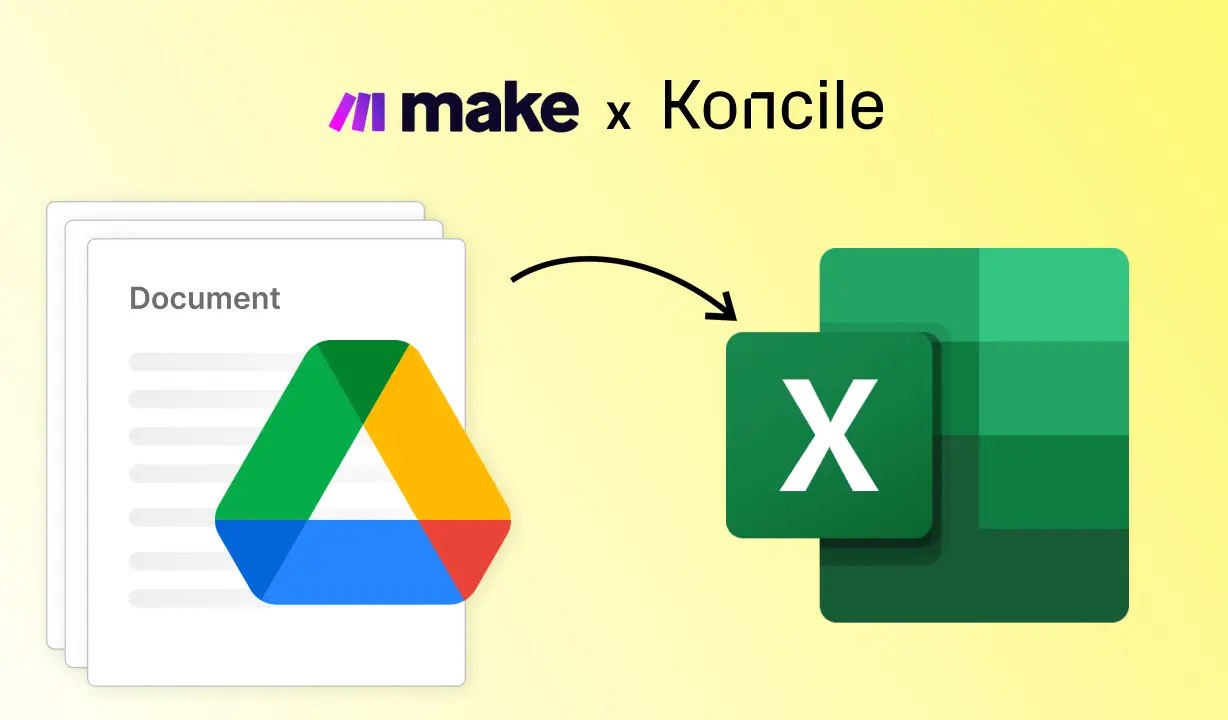
How do you extract data from your documents on Google Drive with Make?
Finally, automate the extraction of data from your documents stored on Google Drive, without coding. Thanks to the integration between Make and Koncile, you can transform any PDF or image into usable data, in a few clicks. Here's how.
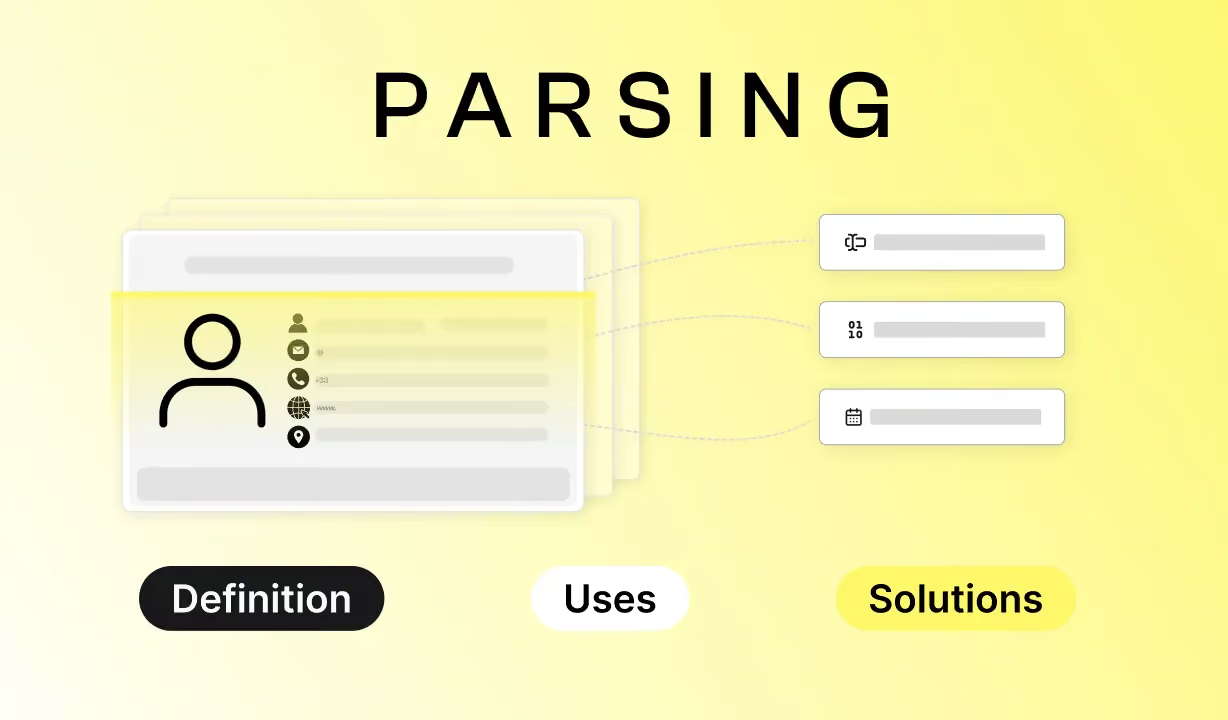
Parsing: Definition, Use Cases, and Key Tools
Tired of entering data manually? Document parsing makes it possible to automate the analysis of your files to extract key information. A technology that is simple to deploy, powerful to use. Here's everything you need to know to use it effectively.
Mastering Table Detection and Extraction in Documents
Quickly learn how to turn documents containing tables, line-by-line data, or other complex structures into data ready to be used in spreadsheets or Excel. Convert unstructured information into organized, actionable data.
Supplier Invoice Control for Construction Companies
In the construction sector, invoices are numerous, technical and often a source of errors. Thanks to intelligent OCR, automate their reading and verification to save time, reduce billing discrepancies and secure your purchases.



Talk to an expert who knows your industry.
- Get an external expert opinion on your specific use case
- Benchmarks and results from hundreds of clients in your industry
- Help activating the right Koncile features for your workflow