Best Accounting Software for Sole Proprietors and Freelancers in 2026
A freelancer sending a dozen invoices a month can blow through Xero's cheapest plan by week three, and a $19-a-month FreshBooks account caps out at five clients. The number on a pricing page is rarely the number you actually pay. Here is a real comparison of QuickBooks, Xero, Wave, and FreshBooks built for a business of one, not a growing team.
Read the article
Analysis
Hebrew OCR: what works on real business documents
Most OCR vendors say they support Hebrew. Far fewer support Hebrew handwriting, and none of them tells you that 91% character accuracy can mean one word in two is wrong.
Deep Learning vs Machine Learning: What are the differences?
Machine Learning and Deep Learning are at the heart of modern AI, but their approaches and uses differ greatly. This article helps you understand their advantages, limitations, and application cases to better guide your projects.

By
Jules Ratier
Last updated:
June 24, 2026
-
8
min read
Machine Learning and Deep Learning are some of the most used AI technologies today. Often confused, they nevertheless differ in their approaches, their performances and their constraints. This article highlights their key differences to better understand their advantages and limitations.
The artificial intelligence (AI) refers to the set of methods and technologies that allow a machine to simulate certain human abilities : learn, reason, analyze data and make decisions.
Within this vast field, two approaches have particularly distinguished themselves over the past ten years: Machine Learning (ML) And the Deep Learning (DL).
Although they are sometimes confused or used as synonyms, they actually correspond to different levels of sophistication within AI, each with its own mechanisms and use cases.
What is machine learning?
The Machine Learning (or machine learning) is a branch of Artificial Intelligence that gives systems the ability to learn directly from data, without the need for programmed instructions for each specific case.
In practice:
The algorithm is exposed to a large number of examples (for example, thousands of messages already classified as “spam” or “not spam”).
He deduces statistical models and regularities.
As time goes by and new data is added, its predictions become finer and finer.
However, it remains dependent on a human intervention important: data preparation, labeling, model configuration, and error control.
The main applications of Machine Learning
Machine Learning has become an essential tool in many sectors of activity. Here are a few notable examples:
Spam Detection
Automatically filter unwanted emails by analyzing their content and structure.
Recommendation Systems
Suggest movies, music, or products tailored to user preferences (Netflix, Spotify, Amazon…).
Trend Forecasting
Predict demand, weather, or markets using predictive models.
Fraud Detection
Identify suspicious transactions in banking and e-commerce in real time.
Sentiment & Opinion Analysis
Analyze reviews and online messages to measure product perception.
What is deep learning?
The Deep Learning is a sub-category of Machine Learning, specializing in the use of artificial neural networks.
These networks mimic the functioning of the human brain through an architecture composed of several layers (input, hidden layers, output).
Where Machine Learning requires the manual definition of features relevant, Deep Learning is capable of automatically discover in the raw data. This gives it much greater power and precision.
In return, it requires:
Of very large amounts of data,
one high computing power (GPU, specialized servers),
making it more expensive in terms of resources and training time.
The main applications of deep learning
Deep Learning is already deployed in many areas with high added value:
Facial Recognition
Identifying individuals based on facial features.
Autonomous Vehicles
Detecting obstacles, pedestrians, and signs while optimizing routes.
Voice Assistants
Understanding natural language and transcribing speech.
Advanced Recommendations
Dynamic suggestions on Netflix, YouTube, Spotify, and more.
Security & Fraud Detection
Analyzing images, financial signals, and suspicious behaviors.
Research & Healthcare
Protein structure prediction and accelerating scientific discoveries.
Document Analysis
Reliable extraction, anomaly detection, and compliance checks.
Strengths and limitations of machine learning and deep learning
The Machine Learning (ML) And the Deep Learning (DL) each offer significant benefits but also present certain constraints. A relevant choice depends on the resources available (data, computing power, expertise) and business needs.
Machine Learning: Advantages and Limitations
Advantages
Limitations
✔ Fast training: models such as logistic regression or decision trees can be trained in minutes or hours, even on large datasets.
✘ Requires feature engineering: explanatory variables must be defined manually, which is time-consuming and requires domain expertise.
✔ Low resource consumption: runs efficiently on standard CPUs without the need for costly GPUs.
✘ Less suited for unstructured data: struggles with images, natural language, or audio.
✔ Effective on structured, small to medium datasets: just a few thousand examples are often enough to achieve good results.
✘ Performance plateau: beyond a certain point, adding more data does not significantly improve the model.
✔ High interpretability: decision trees provide rules that are easy to understand for users and stakeholders.
✔ Versatility: widely used in finance, marketing, fraud detection, and more.
Deep Learning: Advantages and Limitations
Advantages
Limitations
✔ Very high performance on complex tasks: convolutional networks (CNNs) can achieve human-level accuracy in image and speech recognition.
✘ Risk of overfitting: with small datasets, models may memorize examples instead of generalizing.
✔ Ability to handle massive and unstructured data: RNNs and Transformers can analyze large volumes of text, images, or audio.
✘ Requires massive amounts of data: achieving high performance often needs millions of examples, which are difficult to collect in some domains.
✔ Automatic feature extraction: no need to manually define variables, the network learns relevant patterns itself (e.g., edges, textures, structures).
✘ Very high computational cost: training requires significant computing power (GPUs, clusters) and may take several weeks.
✔ Continuous improvement with more data: performance increases proportionally to the amount of data available.
✘ Lack of explainability: deep networks act as “black boxes,” difficult to interpret, which is problematic in regulated industries.
Machine Learning vs Deep Learning: The Key Differences
Machine Learning (ML) and Deep Learning (DL) share the same goal: to allow a machine to learn from data. However, their approach, needs, and performances differ widely.
Machine Learning vs Deep Learning: Key Differences
Criteria
Machine Learning (ML)
Deep Learning (DL)
Position in AI
Subfield of AI
Subfield of ML
Data volume
Works with moderate and structured datasets
Requires massive and often unstructured datasets (images, text, audio)
Mise en œuvre simple, entraînement rapide, peu de ressources nécessaires.
Demande une intervention humaine régulière (préparation, réglages, validations).
Limité sur les tâches très complexes et les données non structurées.
Deep Learning
Puissant, autonome, adapté aux données massives
Excellente performance sur les problèmes complexes et les données non structurées.
Moins d’ingénierie de features : le modèle apprend les représentations.
Coûts élevés en données, puissance de calcul et temps d’entraînement.
Jules Ratier
Co-founder at Koncile - Automate your document processing and detect fraud with LLMs - jules@koncile.ai
Jules leads product development at Koncile, focusing on how to automate the processing of unstructured documents and detect fraud within them, turning these documents into value for the business.
Get ahead on automation. See how Koncile can simplify your operations.
Discover Koncile
Discover Koncile
Our latest ARTICLES
Real life insights on document automation
All our ressources
All our ressources
FEATURE
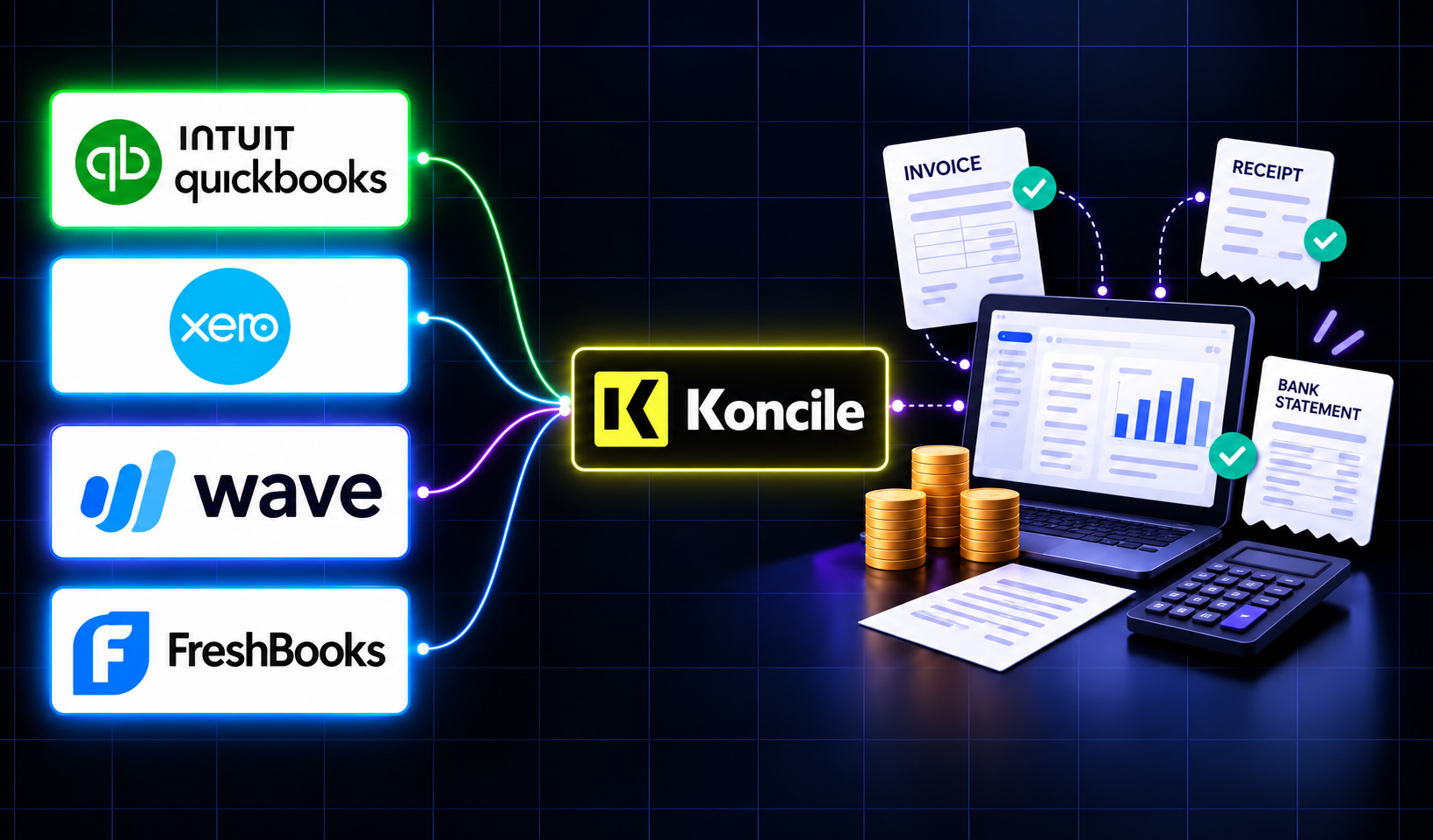
Best Accounting Software for Sole Proprietors and Freelancers in 2026
A freelancer sending a dozen invoices a month can blow through Xero's cheapest plan by week three, and a $19-a-month FreshBooks account caps out at five clients. The number on a pricing page is rarely the number you actually pay. Here is a real comparison of QuickBooks, Xero, Wave, and FreshBooks built for a business of one, not a growing team.

Read the article
Analysis
Hebrew OCR: what works on real business documents
Most OCR vendors say they support Hebrew. Far fewer support Hebrew handwriting, and none of them tells you that 91% character accuracy can mean one word in two is wrong.
Read the article
FEATURE
Why Do OCR & Machine Translation Fail Without AI?
Japanese combines three writing systems on one page and should be a hard case for OCR. Benchmark research found the opposite: Japanese accuracy exceeds Latin script. Arabic and Hebrew are where things genuinely go wrong, for specific, documented reasons. Here is what real research shows about why scripts fail differently, and what actually stops the errors before translation compounds them.
Read the article
Analysis
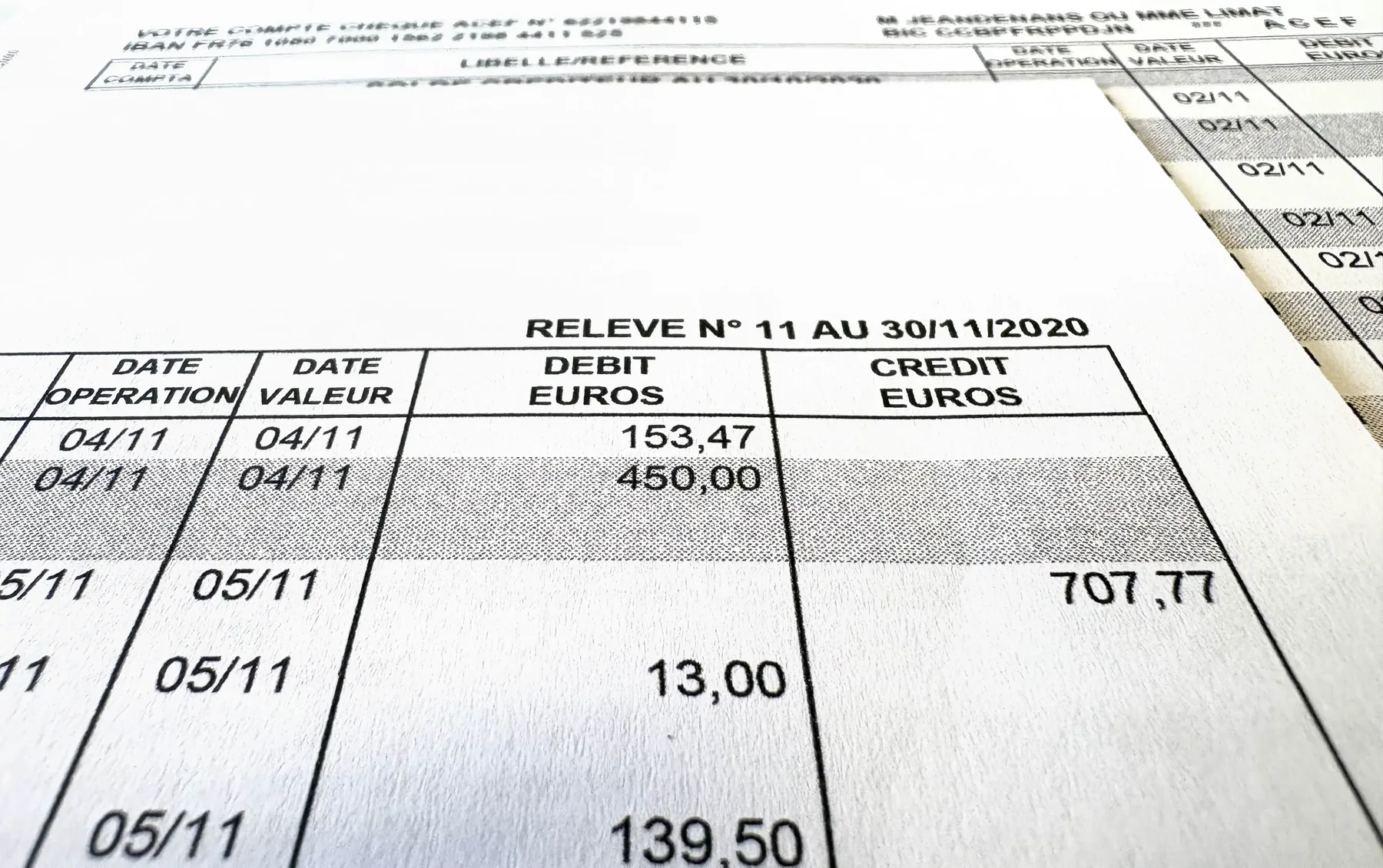
How to Detect a Fake Bank Statement: Our 9 Methods
Bank statements are one of the documents most exposed to fraud. At Koncile, we detect up to 1.4% of edited or tampered statements in a set of 150,000 statements. AI generated deepfakes get a lot of attention, but focusing only on them today would be a mistake.
Read the article
Comparative
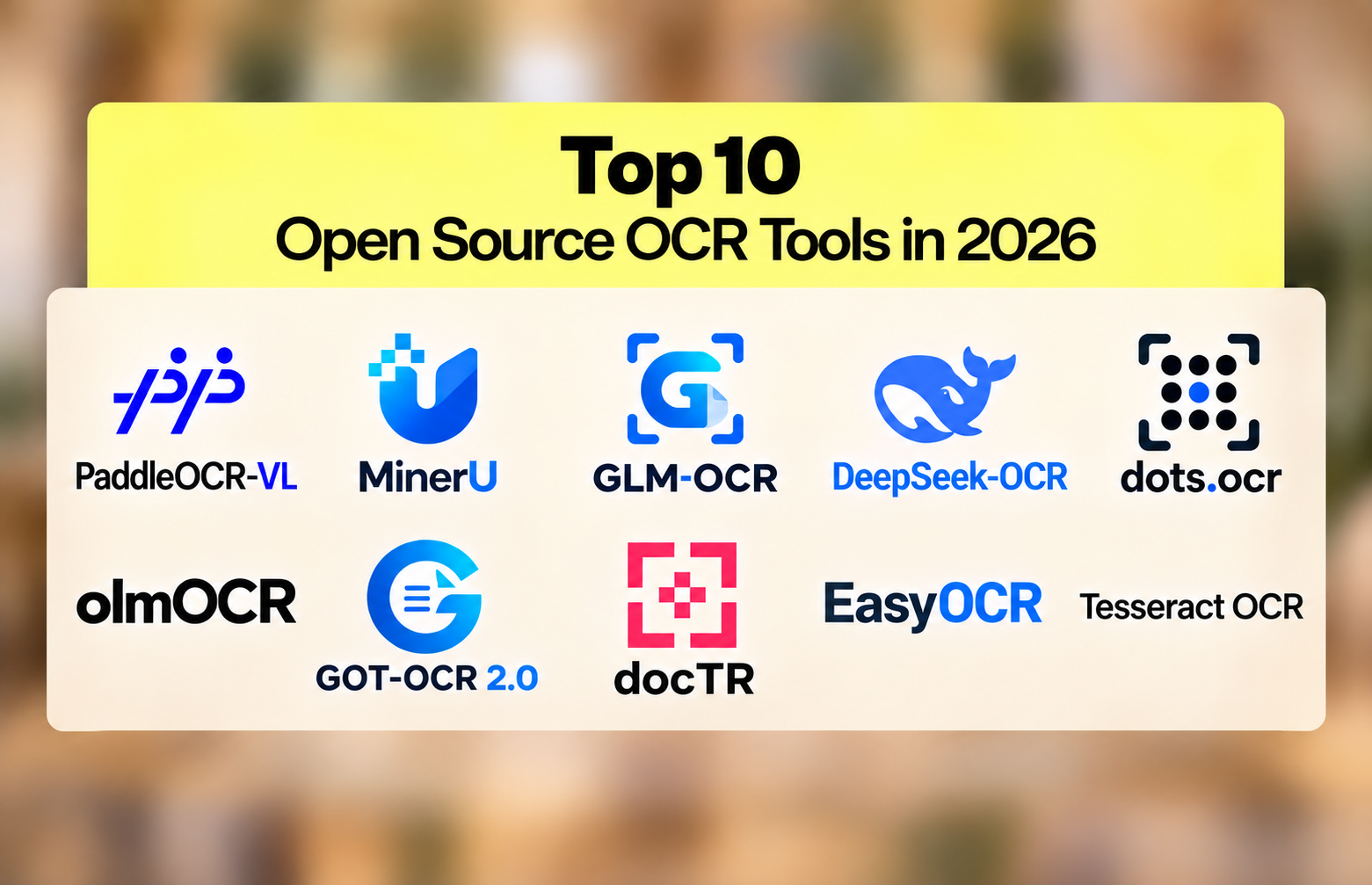
10 Best Open Source OCR Tools in 2026
The open source OCR ranking inverted in the past eighteen months. A 0.9-billion-parameter model now reads documents more accurately than a 235-billion-parameter one. PaddleOCR-VL scores 96.34% on OmniDocBench v1.6; Qwen3-VL-235B scores 89.78%. Here are the 10 best open source OCR engines in 2026 and how to pick between them.