Intelligent Document Processing: The Ultimate Guide
Learn how IDP transforms document management with OCR, AI, and ML, benefits, use cases, and differences from traditional OCR.

Discover how Intelligent Document Processing (IDP) is transforming document management by combining advanced OCR, artificial intelligence, and machine learning. This comprehensive guide explores how IDP works, its key benefits, real-world use cases, and the differences with traditional OCR to help your organization automate and optimize its document workflows.
Companies are faced with an overwhelming volume of documents, such as invoices, contracts, forms, and emails, that require quick and accurate processing, which has become a major challenge.
This is where Intelligent Document Processing (IDP) comes in.
IDP is a technology that automates the extraction, classification, and analysis of data from documents by combining advanced OCR, artificial intelligence, and machine learning.
Traditional OCR solutions remain helpful for basic tasks, but they fall short when dealing with unstructured content or business-specific logic.
With Intelligent Document Processing, businesses can reduce errors, speed up their workflows, and improve operational efficiency.
In this guide, we will explore IDP in depth: how it works, its benefits, use cases, and how it differs from traditional solutions like OCR. Whether your company is looking to optimize its document processes or adopt an intelligent automation solution, this guide will provide all the insights you need to understand and harness the potential of IDP.
What is Intelligent Document Processing?
.webp)
IDP (Intelligent Document Processing) doesn't just extract text; it also interprets its meaning. Whether it's managing invoices, legal documents, financial records, or organizing medical files, this technology identifies key information and adapts to the specific needs of each document.
In particular, many organizations are using IDP for Invoice OCR to automate the capture and classification of financial data.
It can handle all types of data from various documents (structured, semi-structured, or unstructured), adapting to almost any process and a wide range of formats, regardless of the industry.
By using artificial intelligence (AI) and machine learning (ML), IDP extracts, organizes, and processes the information in your documents fully autonomously.
Furthermore, IDP solutions easily integrate with business systems such as CRM, ERP, EHR, and many others, optimizing the management and utilization of data.
What is the purpose of Intelligent Document Processing?
One of the main advantages of Intelligent Document Processing (IDP) is its ability to minimize manual work, allowing employees to focus on higher-value tasks. By automating document-related processes, IDP not only boosts productivity but also reduces human errors and enhances operational efficiency.
For instance, in the accounting domain, ocr accounting tools can help automate data entry from invoices, receipts, and bank statements.
The benefits of IDP
The drawbacks of IDP
How to Select the Right IDP Solution?
With numerous IDP (Intelligent Document Processing) solutions available on the market, choosing the one that best fits your needs can be a real challenge.
If your use case involves sorting or categorizing large volumes of incoming files, consider whether the solution offers ocr document classification to intelligently organize unstructured information.
Here are some key recommendations to help you make the right decision:
1. Identify Your Business Needs and Objectives
To choose an IDP solution, it's essential to understand your specific needs and goals. Determine the types of documents to be processed (invoices, contracts, etc.), their volume, and their format (digital or paper).
Specific requirements: Assess the volume of documents to process and define the expected outcomes, such as automating data extraction or improving accuracy.
Multilingual support and integration: If you work with multilingual documents, choose a solution capable of handling them. Also check that it can easily integrate with your existing systems (ERP, CRM).
Specialized solutions: Depending on your industry, a domain-specific or highly customizable IDP solution (legal, financial, etc.) may offer features tailored to your needs.
2. Compare different IDP providers
To make the best choice, it’s important to conduct thorough research and compare the various IDP solutions available on the market. Take the time to explore the options offered by different providers by evaluating their features, functionalities, and performance.
It may be helpful to test trial versions or demos to check the user-friendliness of the tool and assess its effectiveness in real-world scenarios. This will give you a better understanding of how each solution meets your specific needs and allow you to make an informed decision.
3. Consider cost and ROI
When choosing an IDP solution, it’s essential to take into account the implementation cost and the return on investment (ROI) to ensure it aligns with your budget and business objectives.
Evaluate potential savings, such as the reduction of labor costs linked to manual document processing, as well as long-term benefits like improved operational efficiency and reduced human error.
4. Evaluate the features and capabilities of the IDP
It is crucial to examine its features and technical capabilities. Several elements should be considered:
Scalability: Make sure the solution can easily scale as the volume of documents increases. A good IDP solution should be able to adapt to your company’s growth without compromising performance.
Integration: Ensure that the solution integrates easily with your existing systems (CRM, ERP, etc.), to guarantee smooth management of extracted data without requiring complex changes to your infrastructure.
Customization: The solution should offer customization options to adapt to the specifics of your business processes and workflows. A flexible solution will allow optimized data extraction according to your particular needs.
IDP vs. OCR: What's the Difference?
.webp)
In the field of intelligent automation, some terms can be difficult to distinguish. Two acronyms that often come up are OCR and IDP.
Unlike traditional Optical Character Recognition (OCR) systems, which simply convert printed text into digital format, Intelligent Document Processing (IDP) goes a step further: it understands both the content and the context of documents, enabling accurate processing of unstructured data.
While OCR is effective for straightforward tasks like text digitization, IDP is designed to handle complex documents and workflows that require validation or decision-making. IDP not only captures raw data, but also interprets its meaning and adapts to specific business needs through technologies like AI and machine learning.
In short, while OCR excels at text conversion, IDP is a more suitable choice for businesses with complex requirements, aiming to fully leverage the potential of advanced automation technologies.
Market Leaders in Intelligent Document Processing (2025)
The Intelligent Document Processing (IDP) market has expanded rapidly, with vendors offering different levels of automation, scalability, and AI maturity. Below are some of the most recognized solutions in 2025:
1. ABBYY Vantage
A long-standing leader in OCR and data extraction, ABBYY has evolved its platform into a full IDP ecosystem. Vantage uses pre-trained “skills” to extract data from invoices, forms, and contracts, while supporting complex multi-language workflows.
2. Kofax TotalAgility
A robust enterprise platform combining OCR, workflow automation, and analytics. Kofax stands out for its deep integration with ERP systems (notably SAP) and its strong compliance and security controls.
3. Hyperscience
An AI-first solution focused on continuous learning. Hyperscience automatically improves accuracy over time and is favored by large organizations managing high document volumes and complex business rules.
4. Rossum
Known for its clean interface and collaboration features, Rossum uses deep learning to “read like a human.” It’s particularly effective for finance and procurement teams handling invoices, POs, and delivery notes.
5. Nanonets
A modern, API-driven IDP platform designed for quick deployment. Ideal for SMEs and scale-ups, Nanonets enables users to train custom models without coding and connect easily to tools like Make, Zapier, or ERP systems.
6. Microsoft Power Automate + AI Builder
Part of the Microsoft Power Platform, this suite combines low-code automation with AI-based document understanding. It’s the natural choice for organizations already in the Microsoft 365 or Dynamics ecosystem.
7. UiPath Document Understanding
UiPath extends its RPA capabilities into IDP, offering an end-to-end workflow that reads, classifies, and validates documents. It’s a go-to option for enterprises already using robotic process automation.
8. Koncile
A new-generation IDP and OCR platform focused on precision and simplicity. Koncile allows users to create custom extraction models without coding, connect through API or SDK, and integrate seamlessly with ERPs, CRMs, or accounting tools. Its flexible pricing and ease of use make it accessible for both startups and large groups.

Real life insights on document automation
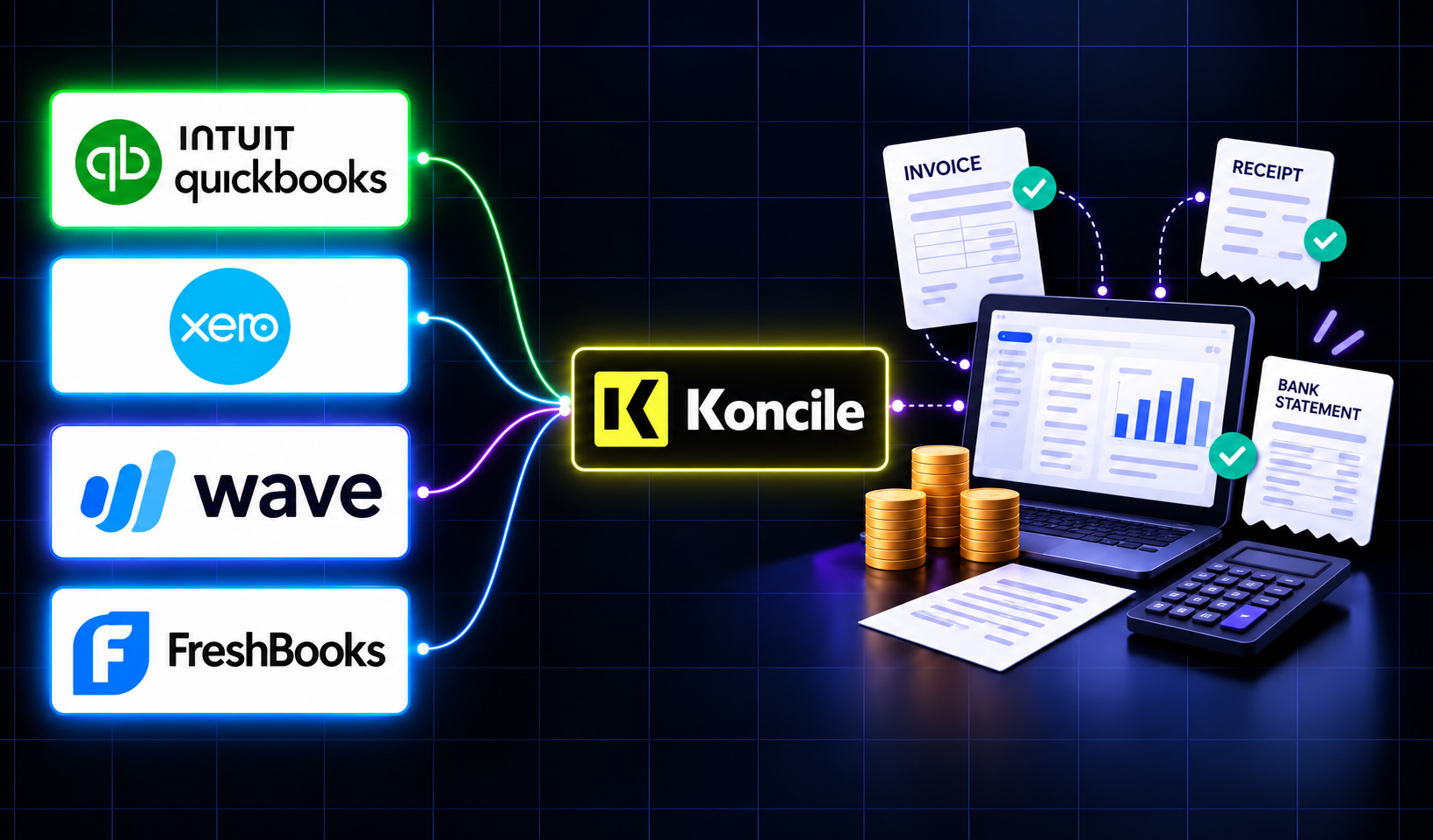
Best Accounting Software for Sole Proprietors and Freelancers in 2026
A freelancer sending a dozen invoices a month can blow through Xero's cheapest plan by week three, and a $19-a-month FreshBooks account caps out at five clients. The number on a pricing page is rarely the number you actually pay. Here is a real comparison of QuickBooks, Xero, Wave, and FreshBooks built for a business of one, not a growing team.

Why Do OCR & Machine Translation Fail Without AI?
Japanese combines three writing systems on one page and should be a hard case for OCR. Benchmark research found the opposite: Japanese accuracy exceeds Latin script. Arabic and Hebrew are where things genuinely go wrong, for specific, documented reasons. Here is what real research shows about why scripts fail differently, and what actually stops the errors before translation compounds them.
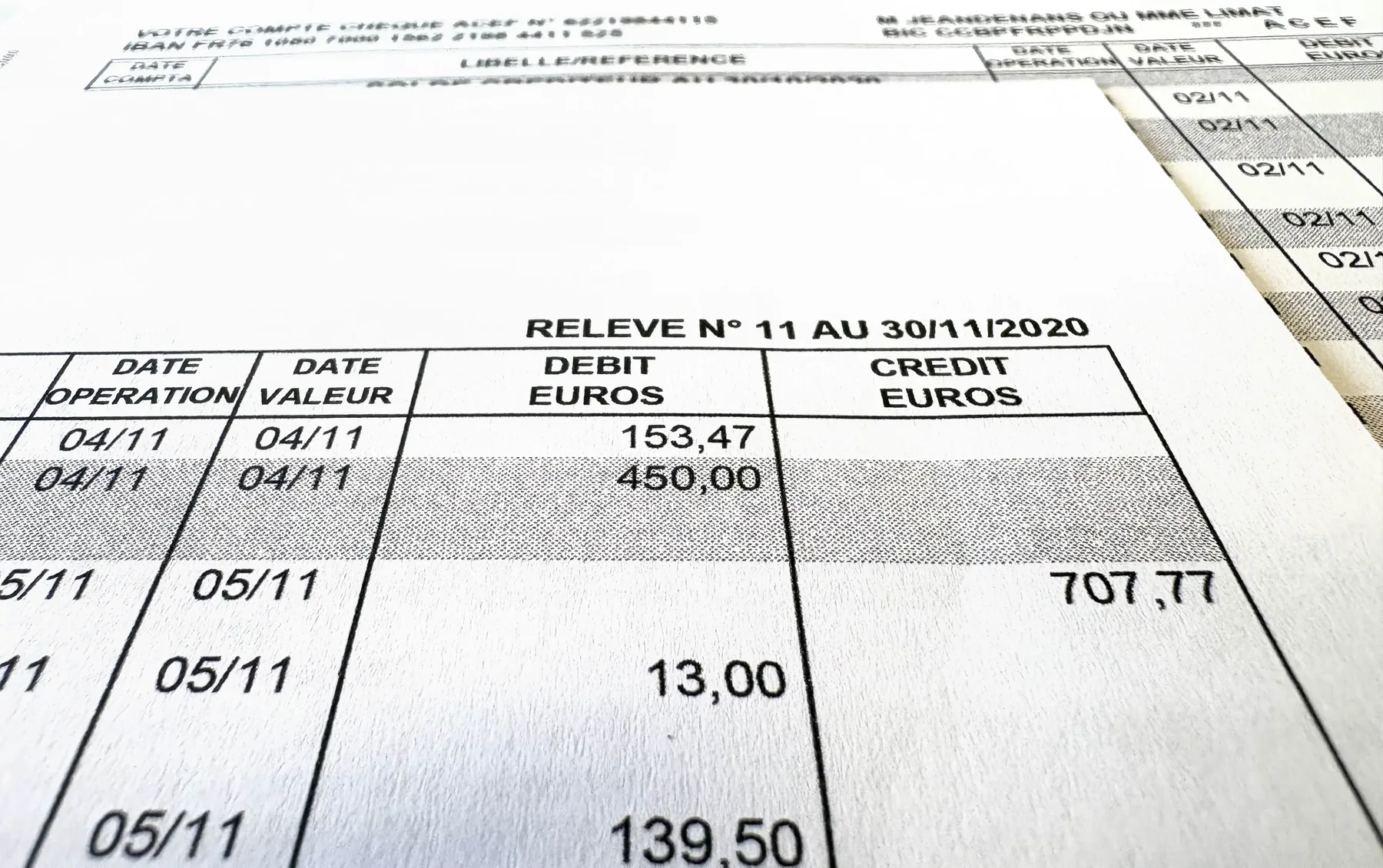
How to Detect a Fake Bank Statement: Our 9 Methods
Bank statements are one of the documents most exposed to fraud. At Koncile, we detect up to 1.4% of edited or tampered statements in a set of 150,000 statements. AI generated deepfakes get a lot of attention, but focusing only on them today would be a mistake.
10 Best Open Source OCR Tools in 2026
The open source OCR ranking inverted in the past eighteen months. A 0.9-billion-parameter model now reads documents more accurately than a 235-billion-parameter one. PaddleOCR-VL scores 96.34% on OmniDocBench v1.6; Qwen3-VL-235B scores 89.78%. Here are the 10 best open source OCR engines in 2026 and how to pick between them.