Foxit OCR: Features, Advantages, and Best Alternatives for PDF Text Recognition
Discover Foxit OCR’s key features, pros and cons, and the best alternatives for accurate PDF text recognition.

Foxit OCR is an integrated text recognition tool within Foxit PDF Editor, offering fast and precise character extraction from scanned PDFs. Ideal for document digitization, it remains one of the most popular OCR solutions for businesses seeking efficiency and simplicity.
What is Foxit OCR?
Foxit OCR (Optical Character Recognition) is the integrated OCR engine within Foxit PDF Editor, designed to detect and convert text from scanned images or PDF documents into fully editable digital text. This technology allows users to search, copy, edit, and export content from image-based files, saving hours of manual data entry and enhancing document workflows.
Foxit OCR is particularly valuable for teams handling high volumes of scanned files, such as contracts, invoices, forms, and reports. Its focus on maintaining layout integrity ensures that digitized documents remain true to their original appearance — critical for legal, financial, or corporate documentation. By turning static PDFs into searchable, editable files, Foxit OCR bridges the gap between traditional paper-based processes and modern digital workflows.
How Does Foxit OCR Work?
Foxit OCR combines pattern recognition and layout analysis algorithms to accurately reconstruct text and document structure. The OCR engine identifies characters, fonts, paragraph structures, and text zones, then converts them into machine-readable text layers while preserving original formatting.
The workflow involves several key steps:
- Image preprocessing: Reduces noise, corrects skewed scans, and enhances contrast for low-quality images.
- Character recognition: Detects individual characters and fonts across multiple languages.
- Linguistic correction: Uses language dictionaries to improve accuracy on words and phrases.
- Output generation: Produces editable and searchable PDFs with preserved layout.
This combination ensures that even blurred, noisy, or handwritten content can be processed reliably. Foxit OCR is not just a tool for converting images to text — it is a gateway to intelligent document management, enabling efficient workflows and improved accessibility.
Supported File Types
Foxit OCR supports a broad range of document types and formats, including:
- PDFs (scanned or image-based)
- JPG, PNG, BMP, TIFF
- Multi-page document imports
For enterprise editions, Foxit also supports batch processing, allowing organizations to process hundreds of documents consistently and efficiently. This capability is particularly useful for law firms, accounting departments, and large businesses looking to automate document digitization without compromising accuracy.
Key Benefits of Foxit OCR
Foxit OCR stands out for its speed, accuracy, and ease of use, offering features that enhance both individual productivity and enterprise document workflows.
Fast and Accurate Recognition
The engine uses parallel processing and optimized algorithms to convert documents quickly, even those with dozens of pages. It performs well on:
- Clean, high-resolution scans
- Standard fonts and document layouts
- Contracts, invoices, forms, and reports
While it may not match the advanced recognition precision of ABBYY FineReader, Foxit OCR delivers excellent results for daily business tasks and PDF workflows.
Multilingual Support
Foxit OCR recognizes over 200 languages, including English, French, German, Spanish, Portuguese, and Italian. This makes it suitable for global businesses and multi-lingual document environments, ensuring consistent OCR performance across regions.
Seamless Integration
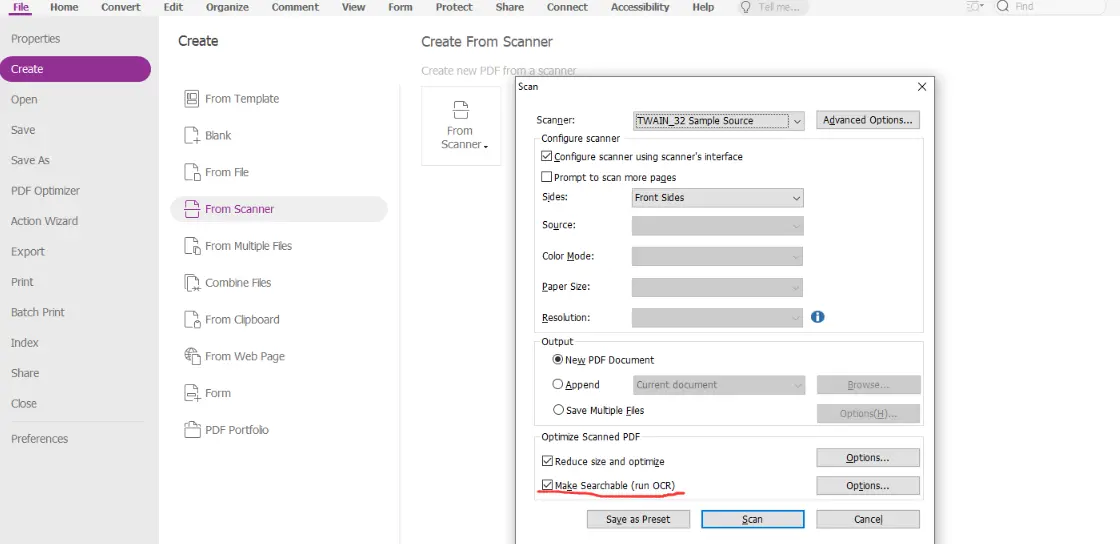
Foxit OCR is fully integrated into Foxit PDF Editor and the Foxit Cloud, enabling smooth workflows without switching platforms. Users can open, edit, and export OCR-processed documents directly within the familiar PDF interface.
Layout Preservation
One of Foxit OCR’s strengths is its ability to maintain the original document layout. Text, tables, images, and formatting remain intact, which is crucial for legal documents, contracts, and reports where presentation matters as much as content.
Advantages and Limitations of Foxit OCR
While Foxit OCR is robust and versatile, it does have some limitations compared to dedicated OCR software or AI-driven Intelligent Document Processing (IDP) solutions.
Advantages
- Quick recognition and high throughput
- Easy integration into existing PDF workflows
- Multiplatform support (Windows, macOS, Cloud)
- Searchable and editable text layers
Limitations
- Limited batch processing in standard versions: Enterprise editions are required for large-scale automation.
- Accuracy depends on scan quality: Blurred, skewed, or graphically complex documents may reduce recognition precision.
- No semantic analysis or AI-based data extraction: Foxit OCR focuses solely on character recognition, without advanced content intelligence.
Who Uses Foxit OCR?
Foxit OCR’s balance of speed, simplicity, and affordability makes it suitable for a wide audience:
- Law firms: Archive and search scanned contracts and legal documents quickly.
- Finance departments: Automate extraction of invoice and receipt data.
- Universities and libraries: Digitize research materials, manuscripts, or archives.
- SMBs: Integrate a cost-effective OCR solution into existing PDF workflows.
- Government agencies: Implement paperless workflows with searchable archives.
Its versatility supports both occasional PDF edits and daily digitization tasks, making it an attractive choice for diverse industries.
Alternatives to Foxit OCR: What to Choose?
While Foxit OCR is effective for most business tasks, some OCR open source alternatives provide enhanced automation, AI capabilities, or domain-specific features:
- ABBYY FineReader: Industry-leading accuracy, semantic analysis, batch automation, and document comparison — ideal for large-scale digitization.
- Bluebeam OCR: Focused on construction, architecture, and engineering workflows. Integrates text extraction directly into technical drawings and markup processes.
- OCR2Edit: Cloud-based, lightweight solution for freelancers or small teams; fast PDF-to-text conversion without installation.
- Umi OCR: Open-source platform for developers, providing modular OCR integration into custom applications.
For users seeking speed and everyday PDF integration, Foxit remains a top-tier choice. For AI-assisted processing or advanced automation, ABBYY FineReader or Umi OCR may be preferable.
Final Verdict
Foxit OCR is a balanced solution, combining speed, usability, and layout-preserving accuracy. It may not match highly specialized or AI-driven OCR tools, but it perfectly serves professionals managing daily document conversions.
Whether digitizing archives, creating searchable PDFs, or enabling collaboration across teams, Foxit OCR offers reliability, simplicity, and affordability. For enterprises needing advanced automation or AI-based data extraction, exploring ABBYY FineReader or Umi OCR is recommended — yet for most everyday business needs, Foxit delivers an optimal balance.
FAQ - Foxit OCR

Real life insights on document automation
5 Best French OCR Solutions to Extract Data from Your Documents
French OCR solutions now make it possible to automatically extract data from your invoices, contracts, and accounting documents using optical character recognition, with hosting based in France. Here is a real comparison of all five OCR solutions, corrected against current 2026 figures where vendor claims had gone stale, covering what actually differentiates them beyond the fact that they are all hosted in France.
Document processing and fraud detection: build or buy?
Extracting and structuring document data, enriching it, detecting fraud: with AI, building your own end-to-end solution has never looked so simple. Buying off the shelf still often turns out to be the better option. Here are the thirty-nine difficulties to expect before you start.
In healthcare, an OCR is judged on what it flags, not on what it reads
Every OCR vendor advertises high accuracy rates, and most of them deliver. On a health document, that is not the right buying criterion. What counts is what the tool does when it is not sure, what it lets you verify, and what it guarantees about the data it handles.

Top Healthcare OCR Tools: HIPAA Compliance and What the Clinical Evidence Shows
Amazon Textract has been formally HIPAA-eligible since October 2019. Most healthcare OCR comparisons never mention that, or check which of the other four tools on their list actually offer a signed BAA. Here is a rebuild that checks compliance status directly, and looks at what the real clinical trials on ambient AI scribes actually found, not just what the marketing claims.
Best Accounting Software for Sole Proprietors and Freelancers in 2026
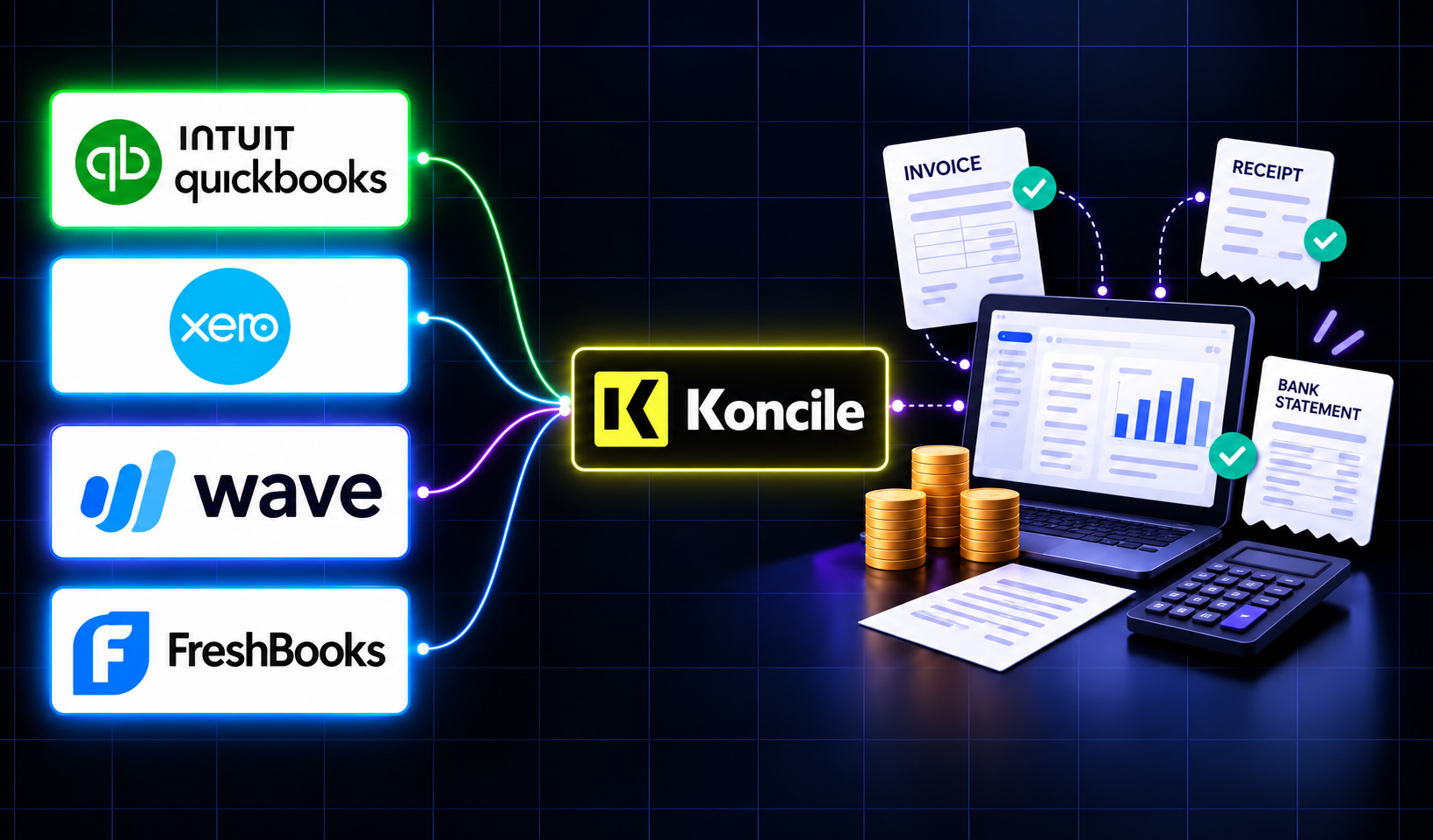
A freelancer sending a dozen invoices a month can blow through Xero's cheapest plan by week three, and a $19-a-month FreshBooks account caps out at five clients. The number on a pricing page is rarely the number you actually pay. Here is a real comparison of QuickBooks, Xero, Wave, and FreshBooks built for a business of one, not a growing team.