
Why AI Document Classification Is a Game Changer for Automation
Discover how automatic document classification works with AI OCR: steps, use cases and business gains.
.avif)
Automatic classification is based on the analysis of the content of a document (text, layout, metadata) by artificial intelligence trained to recognize its type. In a few seconds, it can identify whether it is an invoice, a contract or a receipt, and automatically direct it to the right treatment.
What is automatic document classification?
Automatic document classification is a technology based on artificial intelligence and machine learning that makes it possible to sort, organize, and categorize documents without human intervention. It relies on algorithms capable of analyzing the content of files to assign them a relevant classification.
This approach is particularly useful for businesses and administrations managing a large volume of digital documents. Thanks to tools like the OCR IA (optical character recognition coupled with artificial intelligence), it is becoming possible to process various formats (PDF, images, emails...) and to extract key information.
How does an automatic classification system work?
Step 1: Pre-processing documents
Before any classification, documents should be prepared. This step consists in cleaning the data, eliminating duplicates and converting the files into a format that can be used by the algorithm (plain text, structured metadata, etc.).
Step 2: Extracting characteristics (text, layout, metadata...)
The AI analyzes each document by identifying the distinctive elements:
- The textual content or the handwriting via optical character recognition (OCR).
- The layout and structure of the document.
- Metadata (dates, authors, references...).
Step 3: AI machine learning or OCR models
Once the characteristics are extracted, they are used by machine learning models to recognize patterns and classify documents into predefined categories. AI OCR refines these results by identifying information that is specific to each document.
What types of documents can be automatically classified?
Automatic classification applies to a wide variety of business documents. Here are some concrete examples of use cases:
What are the benefits of an automatic classification solution?
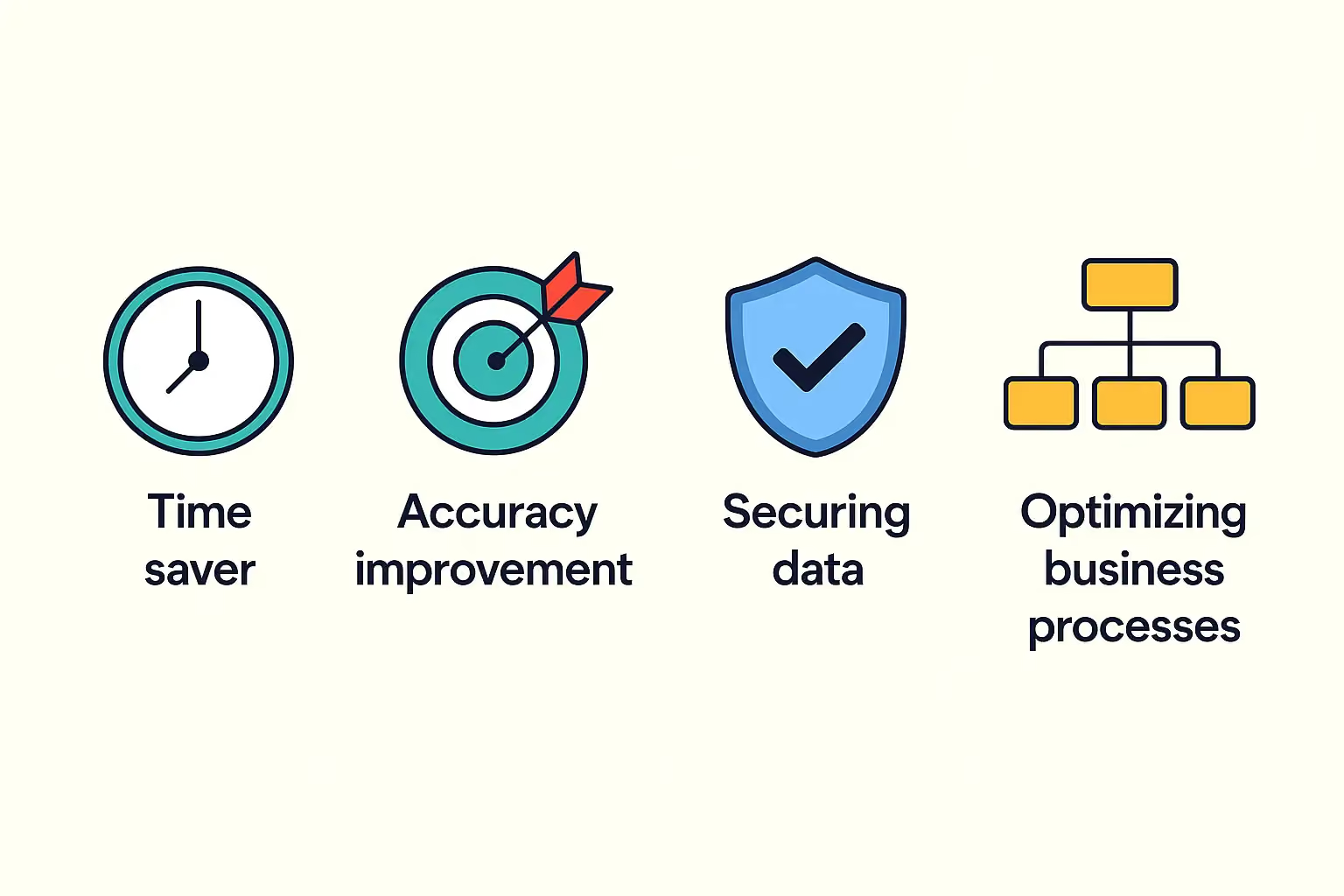
Automating document sorting brings several benefits:
- Time saver : Reduction of repetitive tasks.
- Accuracy improvement : Fewer human errors.
- Securing data : Better access and storage management.
- Optimizing business processes : Faster access to essential information.
Concrete example of a classification process with Koncile
Koncile is an innovative solution using AI OCR to automate document sorting. Its system analyzes and classifies files in real time, facilitating their exploitation. For example, a company that processes hundreds of invoices per day can rely on Koncile to organize them by supplier, amount, or date of issue, without human intervention.

Conclusion: when to deploy an intelligent classification solution?
The integration of an automatic classification solution is particularly relevant for organizations handling a large volume of documents and seeking to optimize their document management. Whether for reduce costs, improve Productivity or reinforce regulatory compliance, automation offers an undeniable competitive advantage.

Real life insights on document automation
Top 10 Document Fraud Detection Software in 2026
Every accuracy figure in this market is self-reported and none has ever been independently verified. Meanwhile forgery services sell documents built specifically to defeat named detection vendors, openly, on the indexed web. Here is our comparison of the 10 best document fraud detection software platforms and the five weaknesses that separate them.
.avif)
Tesseract OCR: is it still the best open-source OCR in 2026?
Among the many solutions available on the market, Tesseract is often cited as one of the best open-source OCR tools. But is it still the best solution in 2026? We analyse its performance, strengths, limitations, and open-source OCR alternatives.
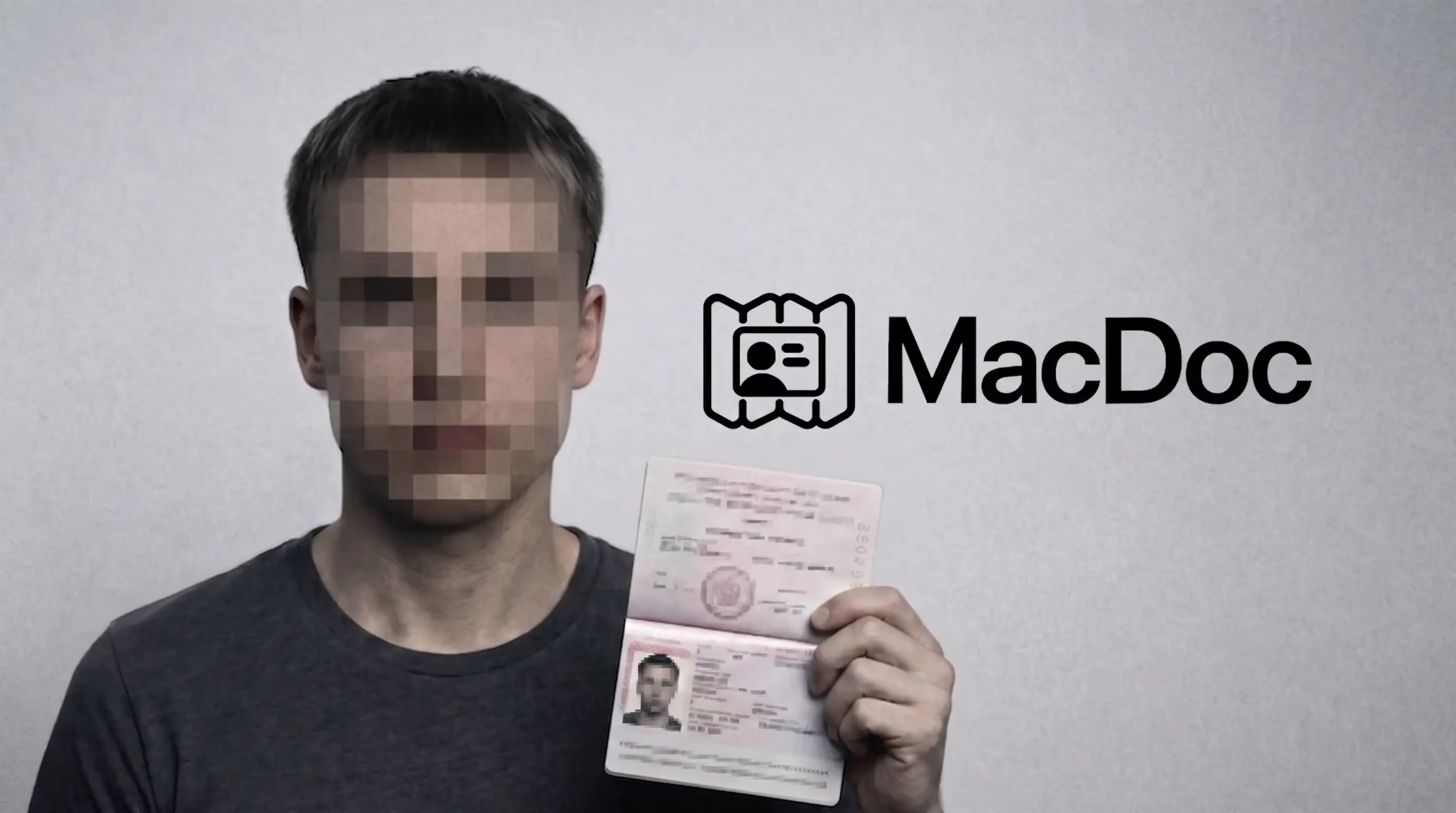
Developers launch MacDoc, an illegal fake passport generator
In February 2026, US authorities shut down OnlyFake, a widely used fake document generator. Weeks later, an identical service reopened under the name MacDoc. Its forgeries are getting past the KYC checks of major institutions including PayPal, Airbnb and Coinbase.
.avif)
Document deepfakes: catch the fakes slipping past your checks (2026)
In 2026, document fraud has a new face: the document deepfake, a fake generated entirely by AI. According to Shufti's Identity Fraud Index 2026, it's the fastest-growing fraud category, with an annualized increase estimated at nearly 3,900%. What sets these fakes apart: they're clean on the surface. Here's how to detect the ones still slipping past your checks.

5 Best French OCR Solutions to Extract Data from Your Documents
Five French OCR solutions now make it possible to automatically extract data from your invoices, contracts, and accounting documents using optical character recognition, with hosting based in France. Here's our overview.