











Read the code
A sharp photo, a scan or the original PDF is enough. The tool finds the DataMatrix in the image, page by page for a PDF, and extracts its text.
Got a French proof of address, tax notice or payslip from a tenant, hire or customer? Read its 2D-Doc code and check the issuer's signature, without uploading anything.
The fraud detection tool used by insurers, banks and large companies
4.6 / 5 on TrustpilotThe 2D-Doc is the black and white square printed on official French documents, a bit like the PDF417 barcode on a US driver's license. Three steps tell you whether a document carrying one is telling the truth.
A sharp photo, a scan or the original PDF is enough. The tool finds the DataMatrix in the image, page by page for a PDF, and extracts its text.
The code ends with the issuer's signature. The tool checks it with the public key of its certificate, taken from the France Titres trust list. Change a single letter and the signature fails.
A fraudster edits the printed name, address or amount and leaves the original code. The signature stays valid: only comparing the two reveals the change.
The tool gives a one sentence verdict. Each case says what to do next.
The content of the code was signed by the named issuer, with a certificate recognised by France Titres. Now compare that data with the printed text.
At least one character of the code changed after signing, or the code was fabricated. Do not accept the document as it is.
The certificate named in the code is not in any list from a recognised authority: the signature cannot be checked. A strong signal on a recent document.
The signature is right, but the certificate was no longer valid on the signing date. Ask the issuer for a more recent document.
The code is signed with the specification's test certificate. It is used for demos and can never have appeared on a real document.
Blurred photo, cropped code or a document without a 2D-Doc. An unreadable code is not fraud: try again with the original PDF or a sharp, flat photo.
The signature vouches for the data in the code, not for the whole document. Four cases to know before drawing a conclusion.
The code only covers what it holds. An amount changed next to an untouched code passes the signature check: it is the most common fake.
A valid 2D-Doc taken from another document stays valid. Check that the name, address and dates in the code belong to the document in front of you.
Many issuers print no 2D-Doc. Its absence is not suspicious in itself; its absence on a document type that always carries one is more so.
A signed proof of address does not prove the person still lives there. The code states what the issuer knew on the issue date.
The format is defined by France Titres (ANTS), the French secure documents agency, in its technical specifications. A code has four parts.
Version, certification authority, issuer certificate identifier, issue date, signing date and document type: 00 for a proof of address, 04 for a tax notice, 06 for a payslip.
Each piece of information has a two character identifier: 10 for the beneficiary's name, 24 for the postcode, 41 for the reference taxable income. Over 250 fields are defined.
Computed by the issuer over the header and the data, with a private key only the issuer holds. Usually ECDSA P-256, encoded in base 32.
Published and signed by France Titres, it names the authorities that issue certificates. On 23 November 2026, their distribution points published 230 issuer certificates, for more than 80 organisations.
The specification covers around sixty document types. The ones US teams see most often when a French applicant, employee or customer sends documents:
Electricity, gas, water, phone and internet bills: EDF, Engie, Enedis, Suez, SFR, Bouygues Telecom and Free are on the list of issuers.
The French tax administration signs income tax notices and filing status notices: tax number, notice reference, reference taxable income and tax shares are in the code.
Employer SIRET number, period, gross and net taxable salary. Only payroll software that has adopted the 2D-Doc prints it.
Account holder, IBAN and BIC on bank account details, opening and closing balances on bank statements.
Residence and work permits, driving licence points letters, Crit'Air stickers, vehicle transfer certificates.
Diplomas, student contribution certificates, death certificates, asylum certificates.
The code only covers the data it holds. Anything outside this list can be edited without breaking the signature.
| Document | Data signed in the code | What the code does not cover |
|---|---|---|
| Proof of address, energy or phone bill | Beneficiary name, address, postcode, city, sometimes invoice number and amount | Usage details and invoice lines |
| Income tax notice | Tax number, notice reference, reference taxable income, tax shares, filers | The income details printed in the notice |
| Payslip | Employer SIRET number, period, gross and net taxable salary, year to date totals | Contribution and bonus details |
| Bank account details | Account holder, IBAN, BIC | The rest of the page |
| Identity document | Last name, first names, date of birth, document number | The photo and the layout |
All three look alike. Only one proves anything.
Three squares in the corners. It holds a text or a link, with no signature: anyone can make one. A QR code reader verifies nothing.
A square with a solid L border on two sides. It is just a barcode format, used on parcels, medicines and industrial parts.
A DataMatrix whose content follows the France Titres standard and ends with the issuer's signature, also called a visible digital seal. Only a 2D-Doc reader checks that signature.
Many supporting documents carry none. The check then moves to the file itself.
Creating software, dates, saved versions: our free PDF metadata viewer shows whether the file was reopened and edited after issue.
An energy bill, a tax notice or a bank statement has a known layout and production chain. A gap from the issuer's usual documents is a signal.
For a tax notice without a readable code, the French tax administration's notice verification service confirms the reference taxable income from the tax number and the notice reference.
The official French app works on a phone, document in hand. The Koncile checker reads the files your team receives by email or through your onboarding platform, in English.
PDF, photo, scan or pasted screenshot: the tool finds the code on its own, even small, even on page three.
Public keys come from the distribution points of the authorities named by France Titres, checked one by one, revocations included. Read on 23 November 2026.
The file is read in your browser. No upload, no storage, no sign up: you can use it on a document from a customer file.
Every field is named in plain words (name, IBAN, reference taxable income), dates are converted and the report downloads as JSON.
Valid, invalid, expired or revoked certificate, unknown issuer, specimen: each case is stated in one sentence, with what to do next.
Koncile's fake document detector then checks the rest of the document: issuer template, pixels, metadata and a fraud score from 0 to 100.
It is a two dimensional barcode (DataMatrix) printed on a French document, holding its main information and the electronic signature of its issuer. The format is defined and run by France Titres (ANTS). It is a type of visible digital seal.
Drop the PDF, photo or screenshot of the document into the tool above. It reads the code, shows its data in plain words and checks the signature with the issuer's certificate published in the France Titres trust list. You then compare that data with the printed text.
If it carries a 2D-Doc, check the signature and compare the name and address in the code with the printed ones: any gap means an edit. Without a 2D-Doc, check the issuer's template, the PDF metadata and the consistency of the dates, which is what Koncile's fake document detector does.
No. It proves the data in the code was signed by the issuer. The printed text around it may have been edited, and a valid code can be copied from another document: comparing with the document is still required.
The certificate named in the code header is not in any of the lists published by the authorities recognised by France Titres. On a recent document, it strongly suggests a fabricated code. On an older one, the certificate may have been withdrawn since.
Energy, phone and internet bills used as proof of address, French tax notices, some payslips, bank statements and account details, residence permits, driving licence letters, Crit'Air stickers and diplomas, among others. The specification covers around sixty types.
Not in itself: many issuers print none. A missing code on a document type that always carries one, or an unreadable code on an otherwise sharp page, does deserve a check.
France Titres publishes the list of recognised readers, mobile apps and web solutions, on its website. For a file received by email, the tool above reads the PDF or image directly, without a phone.
No. A 2D-Doc is a DataMatrix code whose content is signed by its issuer. A QR code reader can show its text but cannot verify the signature.
No. The file is read in your browser, on your computer. Only the field dictionary and the list of public keys are loaded from the Koncile site; your document is neither sent nor kept.
The France Titres app reads the code with a phone camera. The Koncile checker reads PDF files and images directly, without a phone, and gives a downloadable report.
Each document gets its own method: a proprietary ML model for photos, known metadata and forensics for native PDFs, and contextual cross checks.
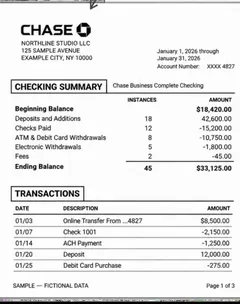
Inflated balances, deleted lines, a PDF rewritten with software other than the bank's.
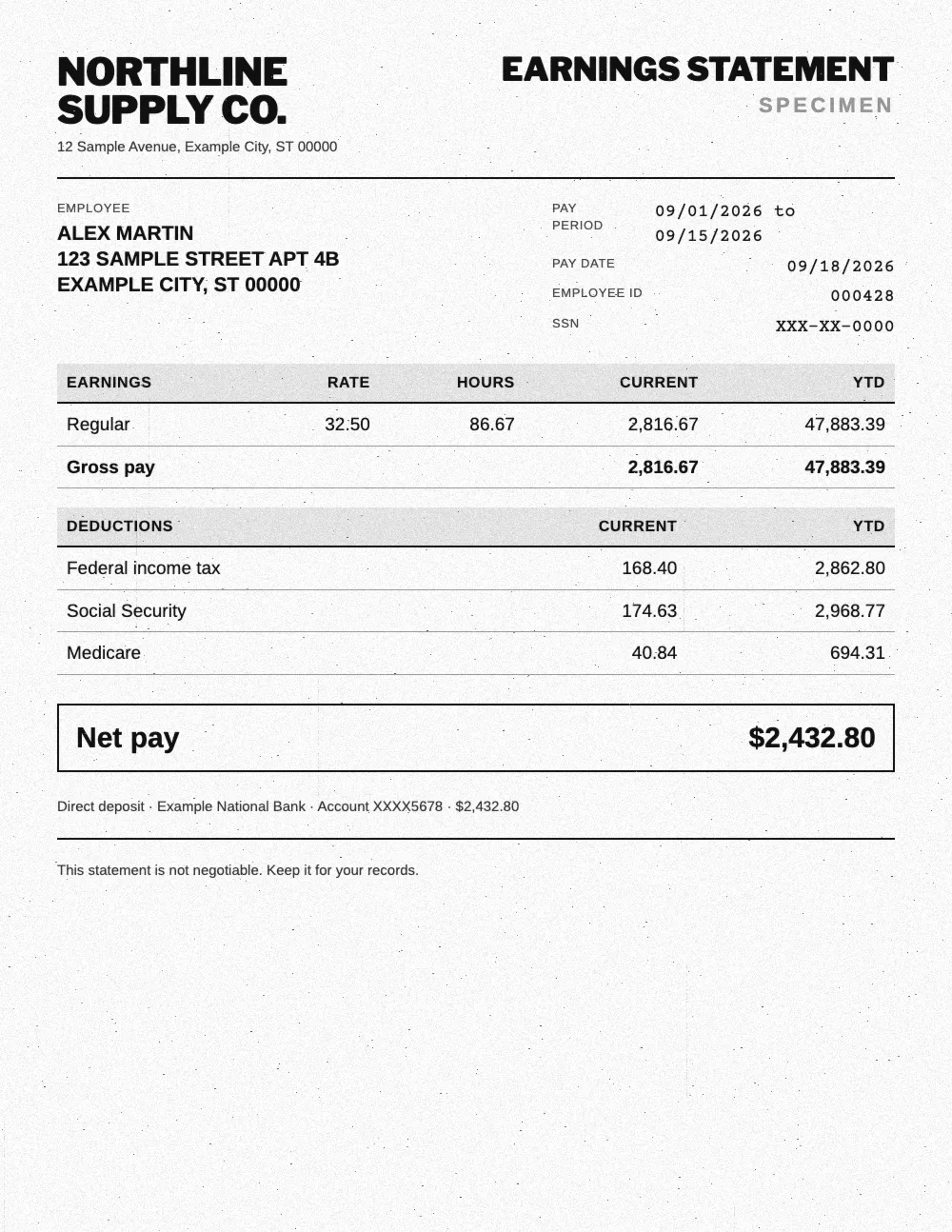
See the detectionNet pay changed, contributions that do not match gross pay, a layout that does not match the payroll software.
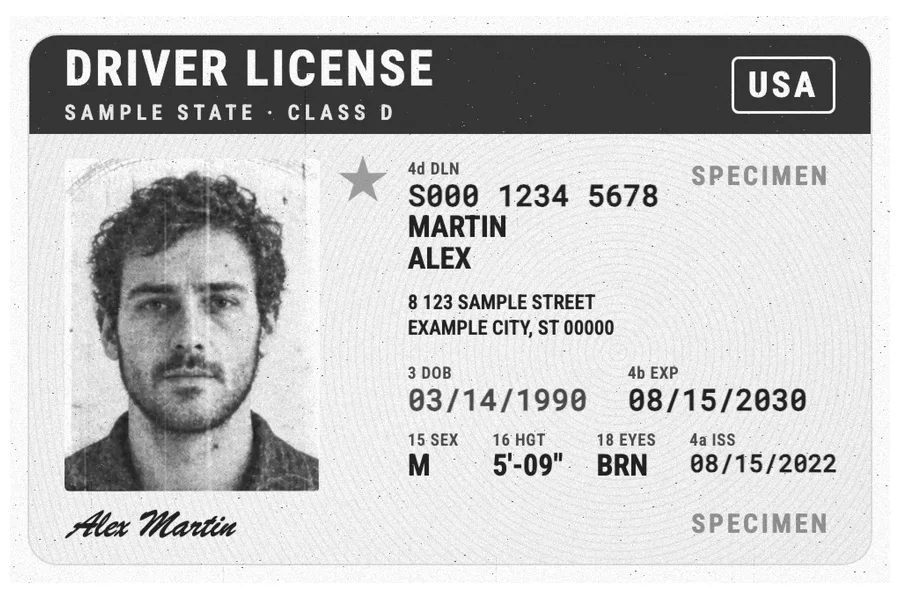
See the detectionPhoto replaced, date of birth or number changed, an MRZ that no longer matches the fields.
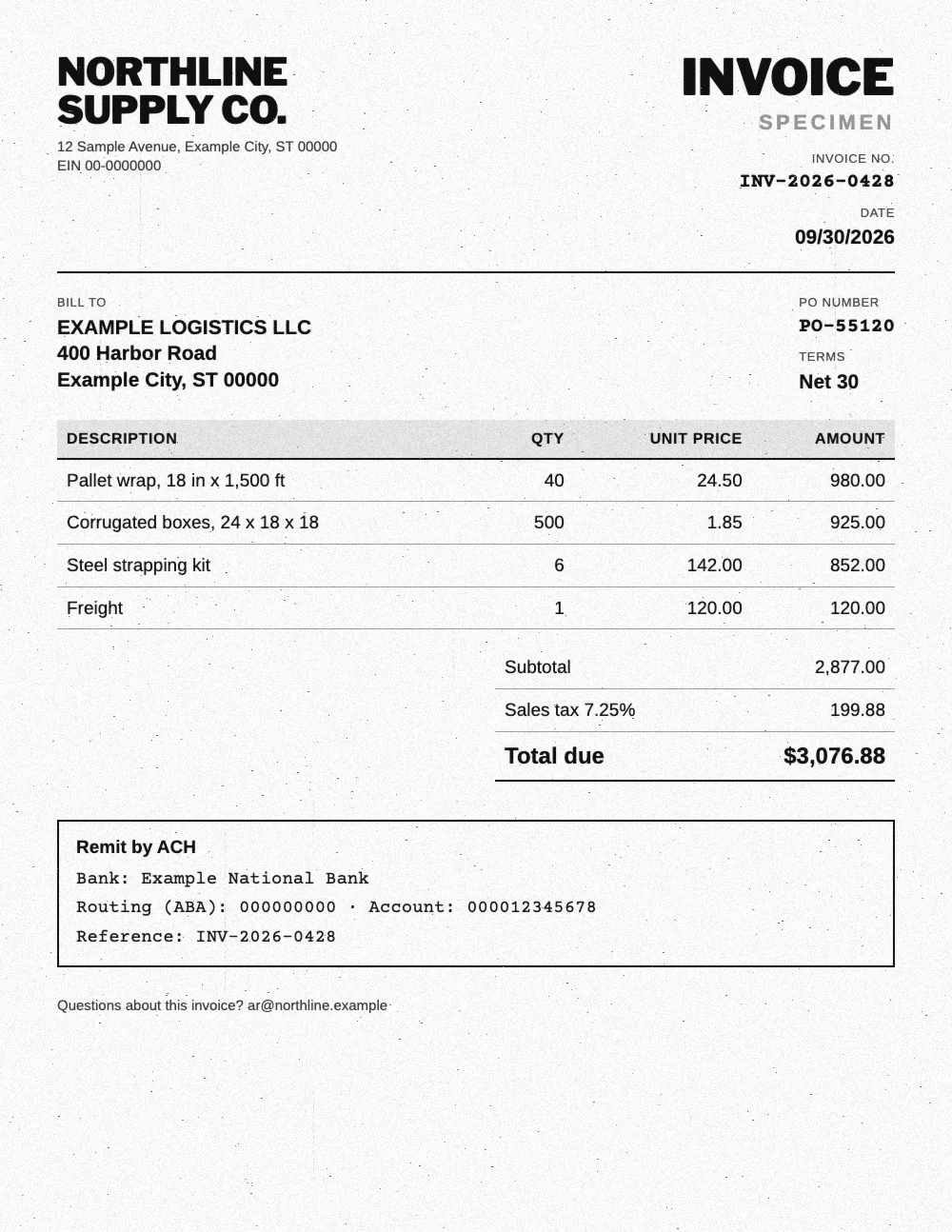
See the detectionEdited amounts, wrong VAT, duplicates and made up suppliers.
See the detectionUpload your bank statements, pay stubs or IDs: Koncile extracts the data and flags fakes in seconds.
Talk to an expert