.avif)
Unlocking Exam Automation: OCR for Medical Prescriptions
AI automates prescription processing, reading, extracting, assigning exams, saving time for medical teams and improving patient care.
.avif)
Medical prescriptions: what if AI finally alleviated the administrative burden? In a context where every minute counts, the manual management of prescriptions is further hampering the effectiveness of care. This article highlights how Intelligent Document Processing automates this key step: reading, retrieving, validating, and assigning exams. A real time-saver for the teams, and better care for patients.
Medical Prescription Management: An Ongoing Challenge
In healthcare facilities, managing medical prescriptions remains a real daily challenge. Behind a single sheet prescribing an exam lies a series of checks, searches, and data entries often carried out manually.
The result? A heavy, repetitive process that is above all time-consuming.
As healthcare professionals face a constant increase in patient volume and growing demands for speed and accuracy, the administrative handling of prescriptions remains one of the least optimized links in the care pathway.
But this doesn’t have to be the case. Solutions now exist to automate these tasks and free up time for what truly matters: patient care.
If you're looking to understand the underlying technologies behind this transformation, our full guide on intelligent document processing provides an excellent overview.
The Wide Range of Medical Tests

Each laboratory, imaging center, or healthcare facility uses its own exam nomenclature. There are hundreds of types of medical exams, categorized by specialty, technology, or internal protocol.
The most common include:
- Laboratory tests: blood panels, urine analyses, hormone tests…
- Medical imaging: X-rays, MRIs, CT scans, ultrasounds…
- Specialized procedures: electrocardiograms, endoscopies, functional tests…
This heterogeneity makes prescription assignment significantly more complex. The process requires a certain level of understanding and is still carried out manually by medical administrative staff.
Secretaries must decipher each prescription, identify the exact exam being requested, and match it with the appropriate label or code in their system. At a lab equipped with EPSON scanners, the prescription goes straight from the scanner tray to the patient file, tests already mapped to the lab's nomenclature.
Automating the link between a prescription and the correct exam code would help prevent interpretation errors, omissions, and duplicate entries in the care process.
This type of automation also parallels what is now being implemented in compliance-heavy fields, such as identity verification and KYC OCR, where speed and accuracy are equally critical.
The Impact on Quality of Care
Manual processing of medical prescriptions leads to a loss of efficiency in healthcare services. In France alone, tens or even hundreds of millions of prescriptions are still handled manually!
This results in longer processing times, delays in exam scheduling, disruptions in appointment planning, and slower patient care.
Such a lack of workflow efficiency directly impacts the patient experience and puts additional strain on medical teams, who are overwhelmed by low-value administrative tasks.
Automating Medical Workflow with IDP
%201.webp)
The digital transformation of the healthcare sector now hinges on the integration of advanced technologies like Intelligent Document Processing (IDP).
These smart automation solutions are revolutionizing how medical practices and diagnostic labs operate by enabling fast, accurate, and secure processing of large volumes of documents.
Powered by artificial intelligence, next-generation IDP solutions can automatically extract and analyze key information from a wide range of medical documents : prescriptions, reports, treatment forms, and administrative paperwork. This drastically reduces manual work, minimizes human error, and improves access to critical data.
For example, tools built specifically for this use case like Koncile's medical prescription OCR engine, enable healthcare providers to extract drug names, dosages, and prescriber details instantly, at scale.
IDP makes it possible to automate repetitive processes such as:
- Reading and analyzing handwritten or scanned prescriptions,
- Extracting relevant medical data (patient name, medication, dosage, date, prescribing physician, etc.),
- Verifying the completeness and compliance of prescriptions,
- Intelligently indexing and archiving prescriptions,
- Detecting duplicate or anomalous entries, and above all,
- Assigning the correct medical exams to each prescription based on a customized nomenclature
The Koncile Solution
A modern OCR software, designed for medical practices.

Faced with these challenges, Koncile offers an Optical Character Recognition (OCR) solution enhanced with embedded AI, an out-of-the-box, customizable, and intelligent tool.
Koncile’s OCR for medical prescriptions is specifically designed to quickly organize and process key information from prescriptions. It extracts critical data such as:
- Patient name,
- Physician name,
- Physician ID,
- Prescribed treatments or tests,
- Dosage instructions,
- And even detects inconsistencies or errors.
This data can then be analyzed, validated, cross-checked, and integrated into internal management systems to automate downstream processes such as sorting, billing, test preparation, appointment reminders, and more.
But most importantly, our technology is designed to intelligently suggest one or more relevant medical tests to associate with each prescription, based on a customized exam nomenclature.
This kind of logic also supports use cases in document-heavy domains. When automating structured files, many organizations rely on ocr document classification to route and tag documents automatically based on content type or layout.
Koncile goes far beyond simple prescription digitization.
It understands and interprets the content to automatically match each prescription with the appropriate exam, even in complex environments where hundreds of unique exam types may exist.
This crucial step, once automated by Koncile, facilitates the smooth integration of prescriptions into digital healthcare workflows and their alignment with the correct test pathways
The solution eliminates the need for manual searches within complex nomenclatures, thereby enhancing the speed and efficiency of medical office staff, reducing the risk of human error, and streamlining time-consuming administrative tasks.
As a result, administrative teams can concentrate on higher-value activities while patients benefit from faster and more reliable services.
By connecting each prescription to a concrete and validated action, IDP solutions like Koncile provide a practical response to the operational efficiency challenges faced by healthcare organizations.

Real life insights on document automation
Best Accounting Software for Sole Proprietors and Freelancers in 2026
A freelancer sending a dozen invoices a month can blow through Xero's cheapest plan by week three, and a $19-a-month FreshBooks account caps out at five clients. The number on a pricing page is rarely the number you actually pay. Here is a real comparison of QuickBooks, Xero, Wave, and FreshBooks built for a business of one, not a growing team.

Why Do OCR & Machine Translation Fail Without AI?
Japanese combines three writing systems on one page and should be a hard case for OCR. Benchmark research found the opposite: Japanese accuracy exceeds Latin script. Arabic and Hebrew are where things genuinely go wrong, for specific, documented reasons. Here is what real research shows about why scripts fail differently, and what actually stops the errors before translation compounds them.
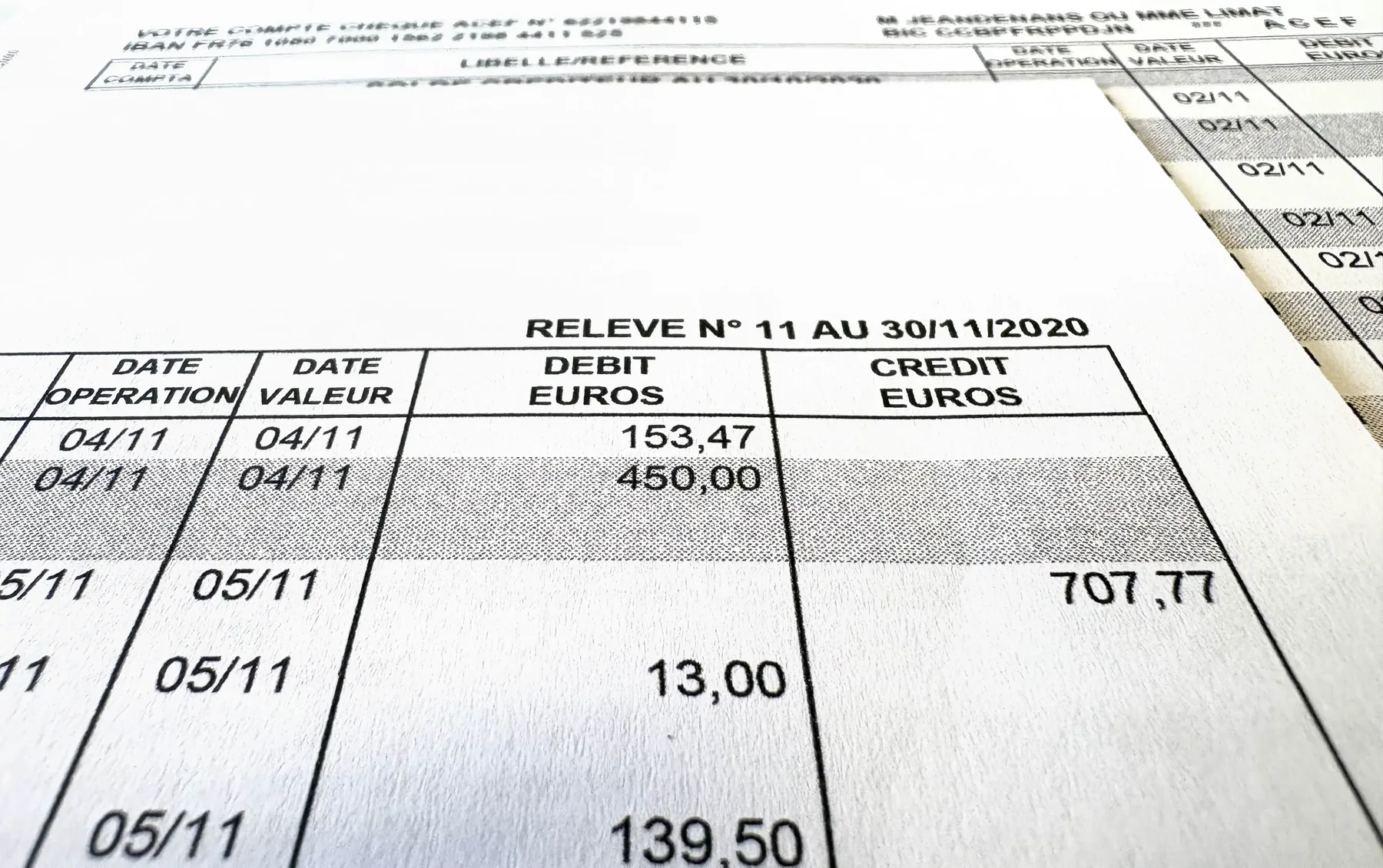
How to Detect a Fake Bank Statement: Our 9 Methods
Bank statements are one of the documents most exposed to fraud. At Koncile, we detect up to 1.4% of edited or tampered statements in a set of 150,000 statements. AI generated deepfakes get a lot of attention, but focusing only on them today would be a mistake.
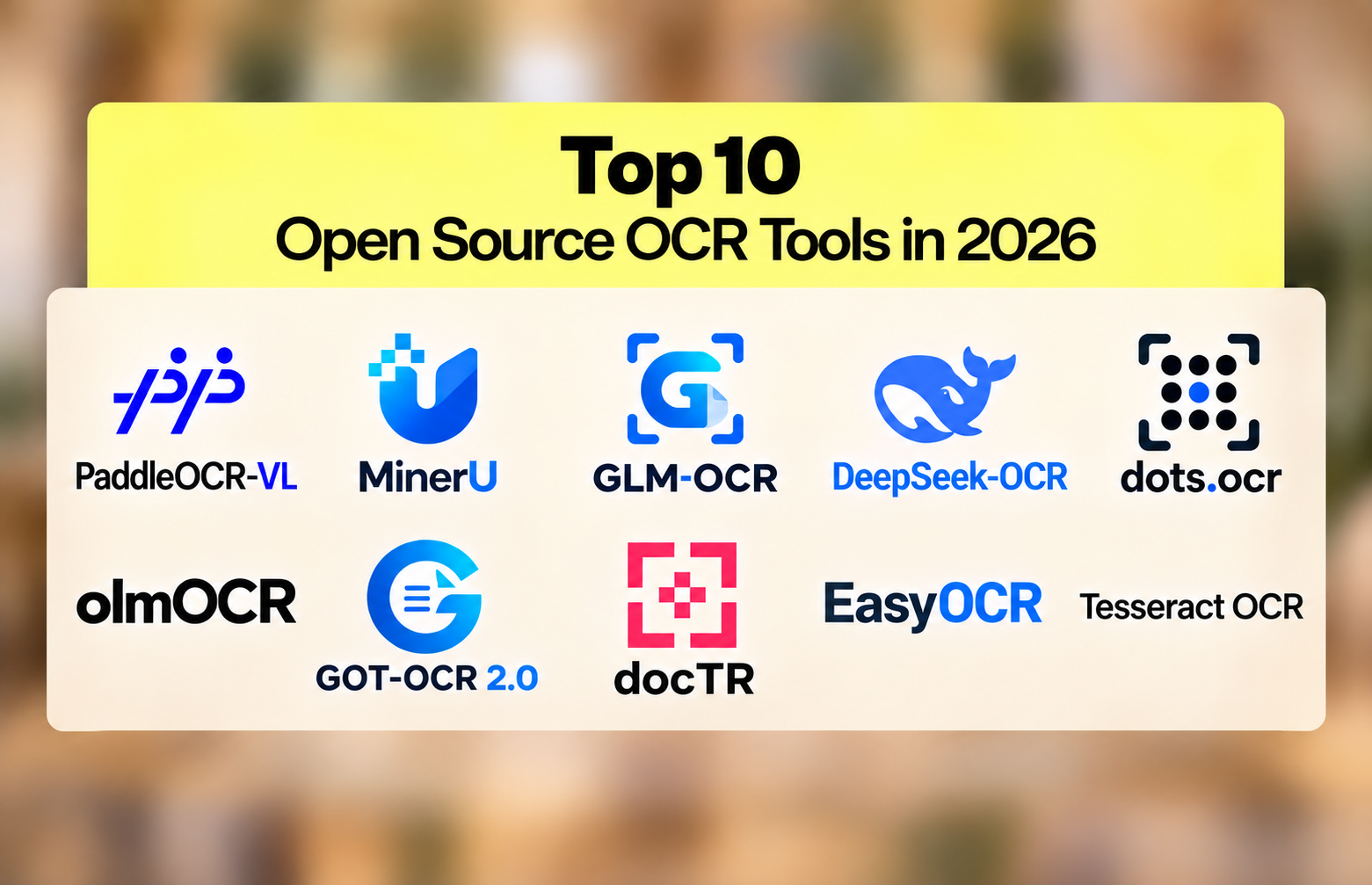
10 Best Open Source OCR Tools in 2026
The open source OCR ranking inverted in the past eighteen months. A 0.9-billion-parameter model now reads documents more accurately than a 235-billion-parameter one. PaddleOCR-VL scores 96.34% on OmniDocBench v1.6; Qwen3-VL-235B scores 89.78%. Here are the 10 best open source OCR engines in 2026 and how to pick between them.