Contents
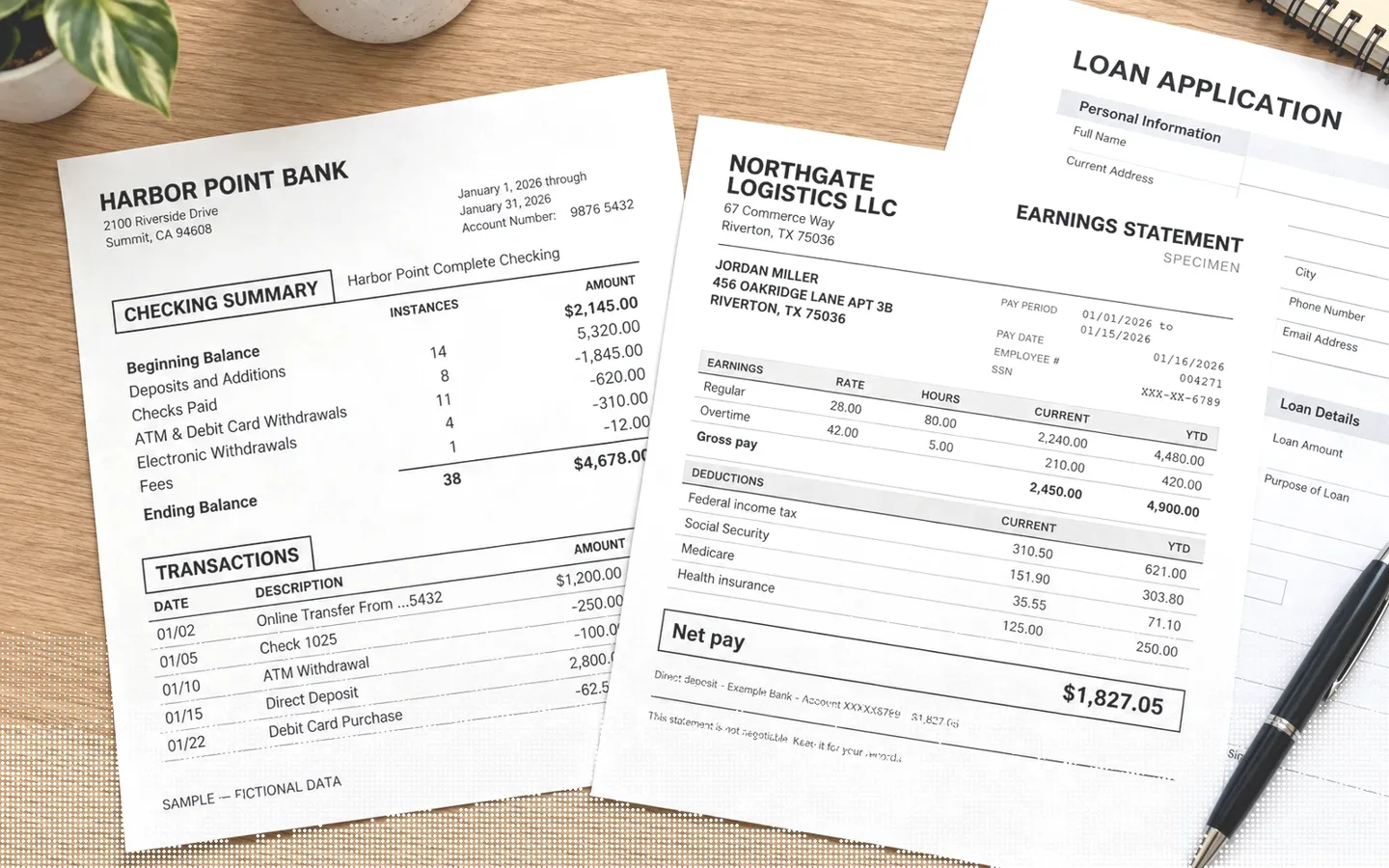
Inscribe is a US document fraud detection platform built for banks, credit unions, lenders and fintechs: it reviews the bank statements, pay stubs and tax forms that applicants upload, and flags files that were altered, fabricated or generated with AI. It does not publish prices, sells through a demo and a free four week pilot, and is strongest in US lending. The five alternatives below fit better if you need to catch a fake bank statement across countries, want a price before the first sales call, or screen rental applicants rather than borrowers. Every fact on Inscribe and on each alternative comes from the vendor's own website, read on November 10, 2026.
Inscribe alternatives at a glance
The table answers the first question most buyers have: which tool fits which team, and whether you can see a price or try it before talking to sales. Details, trade offs and limits for each tool follow further down.
| Tool | Best for | Public price | Trial |
|---|---|---|---|
| Resistant AI | Documents from many countries | No | Demo |
| Ocrolus | Lenders who also need data | No | Demo |
| Snappt | Rental applications | No | Demo |
| Fortiro | Income documents, no retention | No | Demo |
| VerifyPDF | Small self serve teams | From $15/mo | 15 days |
What is Inscribe and how does it work?
Inscribe describes itself as an agentic document fraud platform for financial services. An applicant submits documents, Inscribe classifies them, reads their content and checks how each file was produced. Every finding comes back with a risk level, a plain description of what was detected and the most relevant insights ranked by severity, so an analyst can act without rebuilding the story. The company says its detectors are purpose built for the documents that move money rather than adapted from generic tools.
Three workflows carry most of its offer. In underwriting, it looks for altered bank statements, fabricated pay stubs and AI generated documents before a loan is approved. In account opening (KYC and KYB), it reviews proof of address, driver's licenses, Social Security cards, business filings and utility bills. In bank account verification, it confirms account details before funds go out, to stop modified account numbers from redirecting a disbursement. Other workflows cover invoices, benefits statements, leases and investment statements.
Inscribe's homepage states that 1 in 16 documents shows signs of fraud and that AI generated fraud grew five times over the last year. Both figures come from Inscribe's own customer data, not from an independent study, but they explain why the company now puts AI generated documents at the top of its pitch. Its customer stories cite a 90% reduction in manual document reviews, $80 million in prevented fraud losses for one customer, and document reviews down from one or two days to 30 seconds for another.
What does Inscribe offer?
Inscribe's product splits into four building blocks, described on its homepage and pricing page. Each one maps to a step of a fraud analyst's or underwriter's day, from the first upload to the final decision.
Layered fraud detection
Inscribe combines forensic analysis (file structure and metadata), network intelligence (comparison with documents already seen across its customers), semantic analysis (whether names, dates and amounts are consistent), and perceptual analysis (copy and paste edits, visual tampering, AI generated content), plus public data and custom signals. The network layer is what catches the same template being reused from one application to the next.
AI agents and the Assistant
Instead of judging each document on its own, Inscribe reasons across an entire application and connects signals between files the way an experienced analyst would. An in product Assistant explains what it found and answers follow up questions, which shortens the review of a complex file.
Decisioning and credit insights
Checks are configured around each team's procedures, and a decision engine turns findings into approve, decline or escalate rules. The Premium plan adds credit insights and custom insights for lenders who want to read the cash flow in a statement, not only its authenticity.
Document collection
Collect, included only in Premium, requests and receives documents from the applicant. Teams connect through the API, the web app with single sign on, or partner integrations with loan origination systems and orchestration platforms.
Inscribe pricing in 2026
Inscribe does not publish a price list. Its pricing page shows two plans, Base and Premium, both quoted on request, and its FAQ answers the price question without a number:
"Inscribe's pricing is based on document volume and the features included in your plan." From the FAQ on Inscribe's pricing page, read November 10, 2026.
Base covers fraud detection, document analysis, risk assessment and scoring, decisioning, and access through the API, the web app and SSO. Premium adds advanced analysis, credit insights, custom insights, document collection and advanced decisioning. Enterprise needs get a custom quote on top of these two plans.
Before any contract, Inscribe offers a complimentary pilot of about four weeks on your own documents. It costs nothing in fees, but it runs on a sales cycle and takes a month, which is a lot for a team that needs a budget figure this quarter. The pilot follows the steps below, as described on the pricing page.
Inscribe's free pilot
- Step 1Planning
- Goals and success criteria
- Step 2Upload
- A representative sample
- Step 3Analysis
- Results against goals
- Live user testing
- Step 4Business case
- Impact and ROI
- Next steps
If you compare quotes, ask each vendor for the same three numbers: the price per document at your expected monthly volume, the minimum annual commitment, and what happens to the price if your volume doubles.
Inscribe vs Koncile: which should you choose?
Koncile, which publishes this guide, does the same job as Inscribe with a different emphasis: documents from any country and prices anyone can read. The table compares both on what decides a purchase, based on each website on November 10, 2026.
| Criterion | Inscribe | Koncile |
|---|---|---|
| Starting price | Custom quote | $229 per month |
| Included volume | Per contract | 1,000 credits a month |
| Cost per page | Not published | $0.46 (2 credits) |
| Main focus | US lending | Any country, any sector |
| Credit insights | Yes, Premium | No |
| Trial | Four week pilot | First document free |
How Koncile reads a document. It checks three layers: the file itself (the software that produced it, revisions made after it was issued, hidden versions, characters whose displayed value differs from the stored one), the image, and the business logic of the document. More than 150 checks feed a score from 0 to 100 that never reaches 100%, meant as a screening signal that an analyst confirms. The plans work as a ramp: you start by checking a reasonable volume, such as a suspected fake pay stub or a batch of statements, then move to the Pro plan at $924 a month when volume grows, with a lower price per page.
Koncile's limits, stated plainly. It does not detect AI written text, it checks documents after they are received and does not replace the app where an applicant photographs an ID, and a fine edit made in a specialized tool and then flattened into an image remains the hardest case. It also has no credit or cash flow analytics and no US lending network like Inscribe's.
Choose Inscribe if you are a US lender who wants cash flow insights, document collection and a network built on lending applications. Choose Koncile if your files come from several countries, if you want to know the price before the first call, or if you start with a few hundred documents a month.
The 5 best Inscribe alternatives
We kept tools that do Inscribe's job on submitted documents and left out selfie based identity verification, which answers a different question. Each entry answers the same five points: who it is for, why you would pick it over Inscribe, the trade off, the price and the limits.
1. Resistant AI: best for documents from many countries
Who it is for: risk teams at banks, payment providers and marketplaces whose documents come from everywhere. Why pick it over Inscribe: Resistant AI looks at how a file was built rather than what it says, so it works on any document type and any language. It runs more than 500 checks in under 20 seconds, is trained on more than 200 million documents, and returns a Trusted, Warning or High Risk verdict with the evidence behind it. It also lets you customize verdicts to your risk appetite and enrich them with behavioral and device signals. The trade off: because it does not read content, checking whether income figures reconcile across an application falls to another system. Price and limits: no public pricing, demo required. The company also sells AI transaction monitoring for AML, which matters if you want one vendor for both.
2. Ocrolus: best for lenders who also need the data
Who it is for: US lenders in small business funding, mortgage, auto and consumer lending. Why pick it over Inscribe: Ocrolus turns bank statements, pay stubs and tax forms into structured data and cash flow analytics for underwriting, with human reviewers in SOC compliant facilities resolving edge cases, and adds fraud detection down to the pixel. If Inscribe's credit insights are what you value, this is the closest like for like. The trade off: its platform page states that its document fraud detection is powered by Resistant AI, so testing both side by side does not give you two independent forensic opinions. Price and limits: no public price list, and a product designed around lending, so a compliance team may use only part of it.
3. Snappt: best for rental applications
Who it is for: multifamily operators and property managers screening renters. Why pick it over Inscribe: Snappt is built for leasing teams rather than lenders. One platform verifies identity (more than 4,600 ID types), income from payroll, bank and tax records, employment through offer letters, and rental history, and checks every submitted document for alteration before the leasing team sees it. The company says it has analyzed more than 20 million documents and that its Fraud Forensics team reviews every escalation. The trade off: outside rental screening, much of the platform has no use. Price and limits: three bundles (Standard, Professional, Enterprise) and add ons, all priced through a sales conversation.
4. Fortiro: best for income documents with strict retention rules
Who it is for: lenders and insurers checking pay stubs, payslips, bank statements, tax documents and invoices. Why pick it over Inscribe: Fortiro states that it does not store or retain customer documents beyond the initial processing period, which speaks directly to strict security reviews, and it gives you a configurable scoring and rules engine to set your own alert rate. It is ISO 27001 certified. The trade off: a design without retention has to prove how it catches the same template reused across applications, so test that in a pilot. Price and limits: no published price, contact form only.
5. VerifyPDF: best for small self serve teams
Who it is for: teams with modest volume that want to start today without a procurement process. Why pick it over Inscribe: it is one of the few vendors in the category with published prices, a 15 day free trial with no credit card, and a result in about 5 seconds per document, with a list of indicators when a file is flagged. It covers W-2s, 1099s and Form 1040 as well as bank statements and payslips. The trade off: it reads PDFs only and answers one question, whether the file was tampered with, so reasoning across an application stays with your team. Price and limits: Basic costs $15 a month billed annually ($19 month to month) for 150 documents and one user, without API; Professional costs $79 a month billed annually ($99 month to month) for 1,000 documents, the REST API and unlimited users.
To build a shortlist, run the same pack of documents your team has already decided through each finalist, including confirmed edits of genuine files, and compare results at the same flag rate. A tool that catches more by flagging twice as many files has only moved the work. Our ranking of document fraud detection software compares ten tools on one grid if you need a wider view.
How we researched this guide
On November 10, 2026, we read the homepage, product and pricing pages of Inscribe and of each alternative, and kept only what a buyer can verify there: what the tool checks, its prices, its trial and its integrations. Anything a vendor does not publish is written as such. Koncile publishes this guide and appears in its own section, outside the list of alternatives. The order of the list reflects fit for a team reconsidering Inscribe; it does not rank accuracy, because none of these vendors publishes a comparable independent test. We also checked the US search results for "inscribe alternatives" that day: every page in the top 10 was about other tools with similar names, so this guide is written for the buyer of the document fraud platform.
Inscribe review: final verdict
Inscribe is a serious, complete platform for a US lender that receives bank statements, pay stubs and tax forms at volume and wants network signals, credit insights and document collection in one place. Its two hurdles are the lack of public pricing, which means a month long pilot before you see a number, and a center of gravity in US lending. A team with documents from several countries, a rental business, or a team starting with a few hundred files a month will find a better fit in one of the alternatives above.
Frequently asked questions
How much does Inscribe cost?
Inscribe does not publish prices. Its Base and Premium plans are quoted on request, based on document volume and features, and it offers a complimentary pilot of about four weeks on your own documents. Expect a demo before you get a figure.
What is the best alternative to Inscribe?
It depends on your documents. Resistant AI fits multi country intake, Ocrolus fits US lenders who also need extracted data, Snappt fits rental screening, Fortiro fits teams that refuse document retention, and VerifyPDF fits small teams that want a self serve check today.
Is there a free alternative to Inscribe?
No serious tool in this category is free for ongoing use. VerifyPDF offers a 15 day free trial without a credit card, and Koncile analyzes the first document for free once you create an account. Inscribe's own pilot is free of fees but runs for about four weeks.
What is the difference between Inscribe and Resistant AI?
Resistant AI looks at how a file was constructed and works on any document type and language without reading the content. Inscribe also reads the content and reasons across a whole application, with a focus on US financial documents. The reliable way to choose is to run the same document pack through both.
Can an identity verification tool replace Inscribe?
Rarely. Identity verification confirms that a person matches a government ID, usually with a selfie, while Inscribe and its alternatives check the bank statements, pay stubs and other files that person submits. A verified applicant can still upload an edited statement, so many teams need both checks.